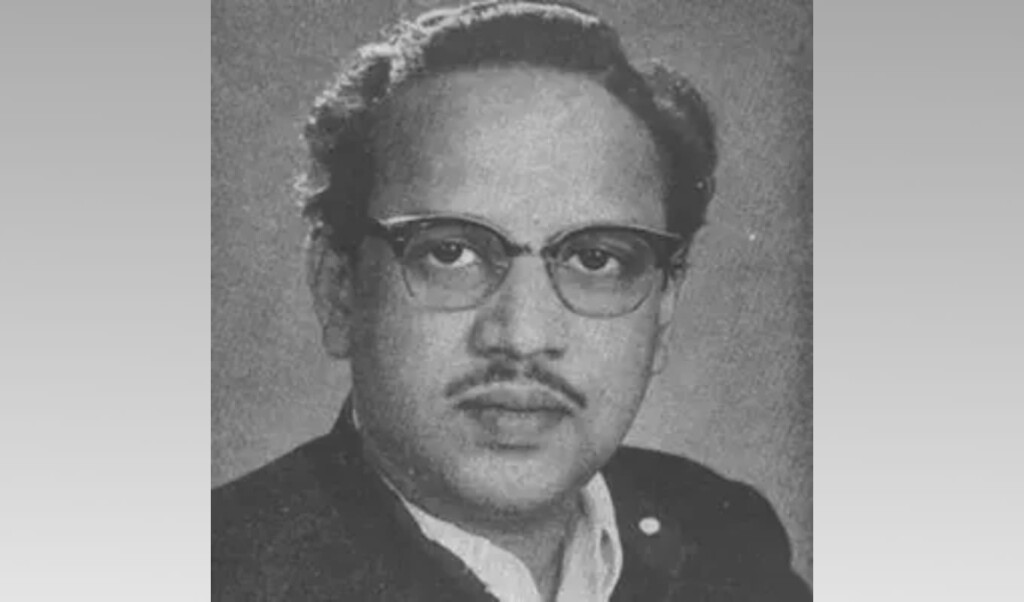
The birth anniversary of the legendary vocalist, lyricist, and music director Satinath Mukhopadhyay has been observed across the cultural spheres of Bengal. Recognised as one of the definitive luminaries from the golden era of modern Bengali music (Adhunik Gaan), his enduring contributions to the arts continue to resonate over three decades after his passing.
Early Life and Classical Foundations
Satinath Mukhopadhyay was born on 7 June 1923 in the city of Lucknow, Uttar Pradesh, where his father, Tarakdas Mukhopadhyay, was stationed for professional reasons. Despite his birth in northern India, his family relocated during his early childhood to Chinsurah (Chuchura) in the Hooghly district of West Bengal. It was within the rich cultural and academic environment of Hooghly that his early education was completed and his musical foundations were established.
Musicianship was deeply rooted in his lineage. His grandfather, Ramachandra Mukhopadhyay, was an accomplished violinist, whilst his father, Tarakdas, was a vocalist. Immersed in this domestic musical setting, Mukhopadhyay developed a profound affinity for Indian classical music. He subjected himself to rigorous training in classical disciplines, including Dhrupad, Dhamar, and Tappa, to forge his signature vocal style.
Although he subsequently moved to Kolkata to pursue higher education, his academic interests were ultimately superseded by his devotion to music. He refined his artistic capabilities under the direct tutelage of the eminent classical maestro Pandit Chinmoy Lahiri. In his professional career, Mukhopadhyay held an administrative post at the Accountant General’s Office (AG Bengal) in Kolkata, though his identity remained defined by his musical pursuits.
Artistry and Masterpieces
Satinath Mukhopadhyay achieved profound acclaim for his work across modern Bengali songs, Nazrul Sangeet, and Bengali ghazals. His vocal delivery was characterized by its exceptional softness, emotional depth, and melodic sweetness. Beyond his performances as a playback singer and recording artist, he was a prolific composer who set masterworks to music for himself and other iconic contemporaries.
His extensive discography includes numerous timeless compositions:
-
“Ajgoto Elo Na Se”
-
“Akash Eto Meghla”
-
“Jibone Jodi Deep Jwalate Nahi Paro”
-
“Moromiya Tumi Chole Gele”
-
“Pashaner Buke Likho Na Amar Nam”
-
“O Akash Pradip Jwelo Na”
-
“Jani Ekdin”
-
“Tumi Sundar Tai Cheye Thaki”
-
“Koto Na Hazar Phul”
-
“Hay Borosha”
In his personal life, Mukhopadhyay remained single-mindedly dedicated to his craft. In 1968, he married the celebrated playback singer Utpala Sen. The partnership created an influential artist-couple within the history of the Bengali music industry.
Summary of Life and Legacy
The following table provides a chronological and biographical overview of the life of Satinath Mukhopadhyay:
| Biographical Dimension | Historical Fact |
| Date of Birth | 7 June 1923 |
| Place of Birth | Lucknow, Uttar Pradesh, British India |
| Childhood Residence | Chinsurah, Hooghly, West Bengal |
| Paternal Lineage | Son of Tarakdas Mukhopadhyay; Grandson of Ramachandra Mukhopadhyay |
| Musical Preceptor (Guru) | Pandit Chinmoy Lahiri |
| Primary Corporate Office | Accountant General’s Office (AG Bengal), Kolkata |
| Musical Genres | Modern Bengali (Adhunik), Classical, Nazrul Sangeet, Ghazals |
| Spouse | Utpala Sen (Married in 1968) |
| Date of Demise | 13 December 1992 |
Satinath Mukhopadhyay passed away on 13 December 1992 whilst undergoing treatment for a thoracic ailment at the PG Hospital (now IPGMER) in Kolkata. On the anniversary of his birth, exponents, students, and admirers of classical and modern Bengali music continue to pay deep tribute, ensuring that his immaculate voice remains etched in the collective cultural consciousness.