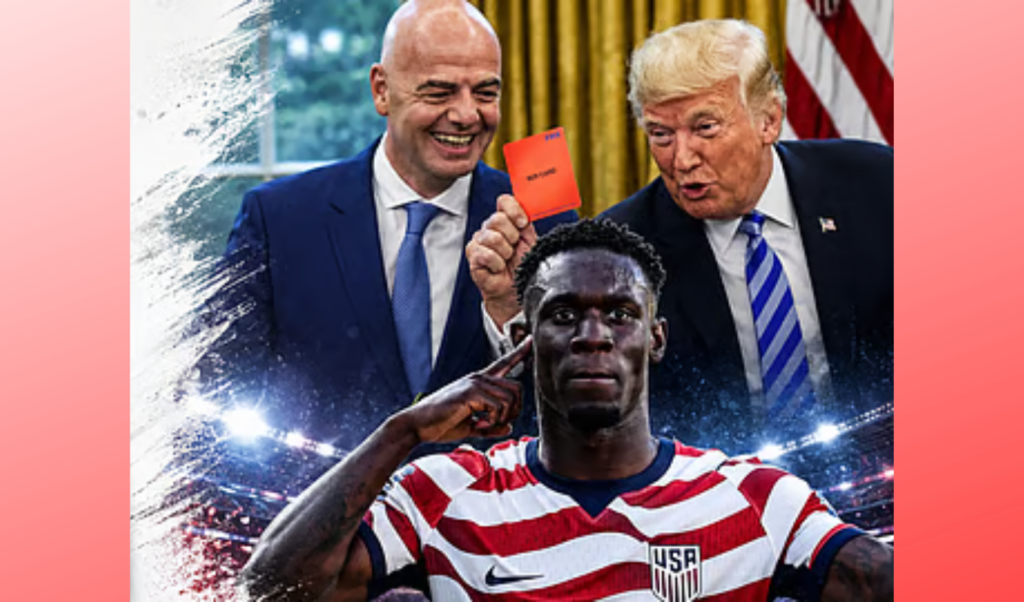
The delicate balance of international football governance has been thrown into turmoil following an unprecedented decision by FIFA to suspend a match ban for United States forward Folarin Balogun. The controversial ruling allows the striker to feature in tomorrow’s crucial Round of 32 clash against Belgium, sparking fierce condemnation from European football’s governing body, UEFA, and Belgian football authorities.
Balogun received a straight red card during the United States’ recent match against Bosnia, an offence that carries an automatic suspension for the subsequent fixture under standard tournament regulations. However, world football’s governing body invoked Article 27 of its Disciplinary Code to issue a one-year stay of execution on the penalty. The clause grants the FIFA Disciplinary Committee the specific authority to suspend the enforcement of previously sanctioned disciplinary measures under exceptional circumstances.
Political Interventions and Institutional Fury
The decision has ignited intense scrutiny regarding political interference in the sport. Reports from high-profile media outlets, including The New York Times, indicate that the ruling was fast-tracked shortly after US President Donald Trump placed a direct telephone call to FIFA President Gianni Infantino, requesting a formal reconsideration of the suspension.
UEFA reacted swiftly, releasing a sharply worded statement that accused FIFA of overstepping its boundaries and compromising the integrity of the sport. Describing the intervention as “incomprehensible and irrational”, the European body expressed deep concern over the long-term ramifications of the decision.
“Like any other sport, football relies on a strict framework of rules,” the UEFA statement read. “These regulations form the very bedrock of fair competition. Whilst certain rules permit a degree of interpretation, this specific instance regarding the lifting of a suspension does not.”
The governing body further emphasised that the global popularity of football relies entirely on the public’s trust in its regulatory consistency. UEFA concluded its remarks with a scathing rejection of the move, stating, “We vehemently protest against such an unprecedented, unbelievable, and unjustified decision.”
Belgian Camp Stunned by Late Decision
The Royal Belgian Football Association (RBFA) expressed total disbelief at the sudden availability of the American forward. In an official communique, the RBFA noted it was “stunned” by the verdict and confirmed it is currently exploring all available legal avenues to protect the principles of fair play and ensure equitable treatment for all competing nations.
The sentiments of the Belgian hierarchy were mirrored on the pitch. Belgium manager Rudi Garcia utilised biting irony to vent his frustration during a pre-match press conference, mocking the timing and substance of the announcement.
“I was unaware that 5 July had suddenly become 1 April in the FIFA World Cup calendar, and that today was April Fools’ Day,” Garcia remarked to reporters.
Belgian goalkeeper Thibaut Courtois also questioned the logistical and psychological impact of the late announcement, which arrived just twenty-four hours before kickoff. Courtois noted that whilst the team remains focused, the timing of the U-turn disrupted their tactical preparations. He suggested that had the decision been communicated earlier, the squad would have been better equipped mentally to adjust their defensive strategies for the impending encounter.