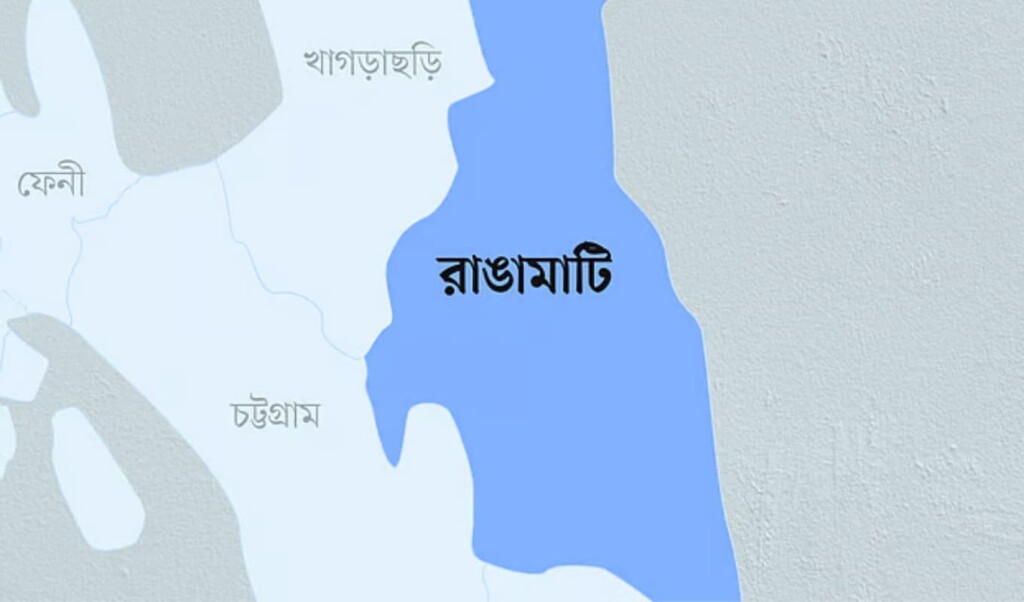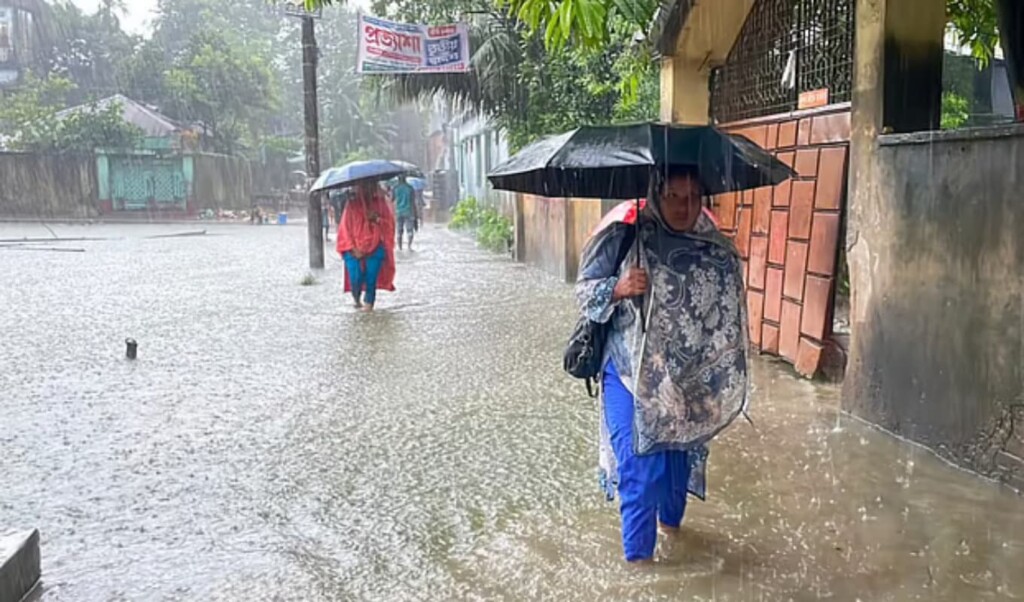
Unremitting torrential rain has once again plunged the port city of Chittagong into chaos, leaving expansive urban areas heavily waterlogged and causing widespread disruption to public life. Over three consecutive days of downpours, key commercial and residential sectors have been submerged under ankle- to knee-deep water, grounding transport networks and prompting several local educational institutions to suspend classes.
Data released by the Patenga Meteorological Office reveals that the coastal city registered 282.8 millimetres of rainfall in the 24 hours concluding at 6:00 am on Monday. With meteorologists defining any precipitation surpassing 88 millimetres as “very heavy rainfall”, the sheer volume of the deluge—which intensified into a continuous onslaught from early Tuesday morning—has overwhelmed the city’s natural and artificial drainage systems.
Commercial and Residential Hubs Submerged
The inundation has severely crippled daily routines across Chittagong’s principal neighborhoods. Rising waters have severely affected the premier commercial zone of Agrabad, alongside Katalganj, Kapasgola, Faridar Para, Chandgaon, Chawkbazar (specifically Telipatti Lane), Halishahar (including blocks K, O, and L), Sonali Residential Area, Bashundhara Residential Area, Rampur, and Anandipur.
In the low-lying sectors of Agrabad and Katalganj, stagnant water levels reached well above knee height, making pedestrian and vehicular navigation nearly impossible. Compounding the gridlock, an uprooted tree on Ishan Mahajan Road in North Kattali entirely obstructed the thoroughfare, forcing local authorities to close the street to all traffic.
Expressing the collective grievance of the city’s workforce, Jobaer Hossain, an employee at a firm based in Agrabad, recounted the immense difficulty of wading through deep water just to access his workplace. Meanwhile, Iftekhar Uddin, a resident of Faridar Para, highlighted how the waterlogged streets had effectively barricaded families inside their homes during the early morning commute.
Tidal Coincidence and Civic Interventions
Pranab Kumar Sharma, the Deputy Chief Waste Management Officer of the Chittagong City Corporation, addressed the media regarding the crisis. He stated that the severity of the waterlogging on Tuesday morning was exacerbated by a high tide in the Bay of Bengal, which temporarily prevented rainwater from discharging into the river networks.
“Because the primary canals and drains had been thoroughly cleared in anticipation of the monsoon, the trapped water began receding rapidly as soon as the tide turned,” Sharma clarified.
He further noted that traditional flooding hotspots, including Muradpur, Bahaddarhat, and the No. 2 Gate intersection, fortunately remained free from major inundation during this particular episode.
Monolithic Expenditure Yields Limited Relief
The latest spell of urban flooding has reignited fierce public debate over the efficacy of long-term infrastructure spending in Bangladesh’s commercial capital. To combat this perennial crisis, four state agencies—including the Chittagong City Corporation, the Chittagong Development Authority, and the Bangladesh Water Development Board—have been co-ordinating four mega-projects.
These specialized drainage and flood-defence initiatives have been under execution for the past eight to ten years. By March of this year, total expenditure across these four projects had mounted to an astronomical 10,408 crore BDT. Despite this monumental financial investment, urban planners note that a definitive resolution to the waterlogging crisis remains frustratingly out of reach, as evidenced by the severe flooding previously witnessed on 28 April this year.