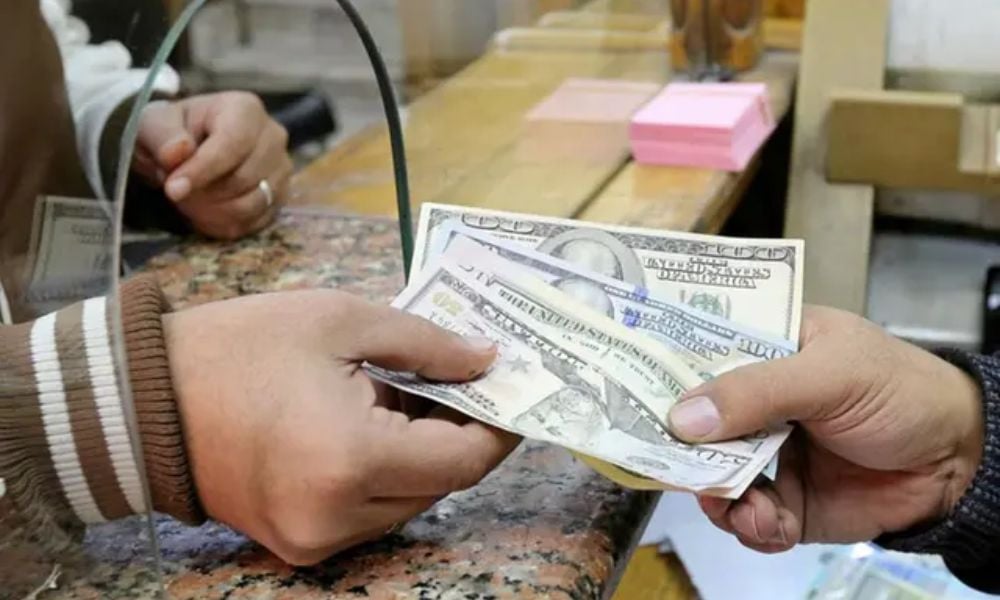
The value of the US dollar has edged higher in Bangladesh’s banking market, reflecting the country’s ongoing efforts to align its foreign exchange regime with broader global economic trends. While the supply of foreign currency has remained relatively stable, recent adjustments linked to the implementation of International Monetary Fund (IMF) reform commitments have resulted in a gradual increase in the dollar’s exchange rate and a corresponding depreciation of the Bangladeshi taka.
According to information from the central bank and commercial banking sources, the average interbank exchange rate for the US dollar increased by 13 paisa on Sunday, while the highest quoted rate rose by as much as 15 paisa. The latest adjustment marks a shift after more than two weeks of relative stability in the interbank foreign exchange market, where both the highest and lowest trading rates had remained unchanged at Tk122.85.
The increase in the interbank rate has also been reflected in customer transactions. Commercial banks have raised their selling rates for import-related dollar purchases, with the highest quoted selling price reaching Tk123.90 per US dollar. Previously, the maximum selling rate stood at Tk123.75.
Financial sector analysts believe the recent movement is largely associated with Bangladesh’s gradual adoption of a more market-oriented exchange rate framework under IMF-supported reforms. At the same time, they note that tighter monitoring by the central bank and continued strength in remittance inflows have significantly narrowed the gap between official exchange rates and those prevailing in the open market.
Although the recent rise in the dollar’s value is relatively modest, it is being closely watched by importers and businesses that rely heavily on foreign currency for trade and international payments. Higher import settlement costs can increase financial pressure on companies, particularly those dependent on imported raw materials and industrial inputs.
According to Bangladesh Bank’s latest figures, the minimum exchange rate for the US dollar has climbed from Tk122.85 to Tk123.00 over recent days, while the highest quoted rate has reached approximately Tk123.85 in interbank transactions. Banks have consequently adjusted their retail selling rates in line with these market developments.
The following are the indicative minimum exchange rates for major foreign currencies in Bangladesh on 13 July 2026:
| Currency | Exchange Rate (Bangladeshi Taka) |
|---|---|
| US Dollar | Tk123.00 |
| Euro | Tk140.37 |
| Pound Sterling | Tk164.88 |
| Canadian Dollar | Tk86.86 |
| Australian Dollar | Tk85.48 |
| Chinese Yuan | Tk18.13 |
| Singapore Dollar | Tk95.19 |
| Indian Rupee | Tk1.29 |
| Malaysian Ringgit | Tk30.32 |
| Saudi Riyal | Tk32.89 |
| Qatari Riyal | Tk33.81 |
| Kuwaiti Dinar | Tk399.24 |
| UAE Dirham | Tk33.68 |
Market participants should note that foreign exchange rates are subject to change throughout the trading day depending on demand, liquidity and prevailing market conditions.
Bangladesh’s foreign exchange market has undergone gradual reforms in recent years as policymakers seek to create a more flexible and transparent pricing mechanism. These measures are intended to improve external sector resilience, support international trade and investment, and strengthen confidence in the country’s financial system. While modest fluctuations in exchange rates are expected under a more market-based framework, businesses and consumers alike continue to monitor movements in the US dollar closely because of their direct impact on import costs, inflation and overall economic activity.