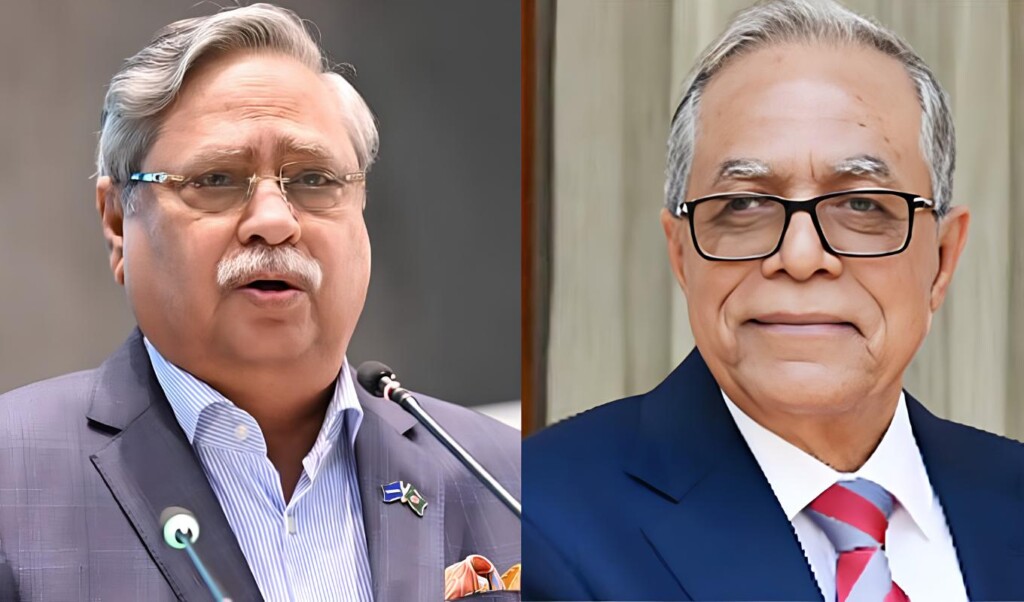
Complaints have been filed with Bangladesh’s International Crimes Tribunal seeking investigations into alleged crimes against humanity involving former presidents Mohammed Shahabuddin and Abdul Hamid.
The complaints were submitted on Sunday, 26 July, by the Bangladesh Azad Party, according to the party’s representatives.
Retired Colonel Hasinur Rahman confirmed the filing, saying the party had asked the tribunal to investigate the roles of Shahabuddin, who recently left office, and former president Abdul Hamid in connection with alleged crimes against humanity.
Speaking about the complaint against Shahabuddin, Hasinur Rahman alleged that the former president could have taken necessary measures during the mass uprising, given his position as commander-in-chief of the country’s three armed forces. He claimed, however, that Shahabuddin did not play an effective role at the time.
The complainants also alleged that until 5 August, Shahabuddin had not publicly protested against allegations involving the so-called Aynaghar detention facilities, enforced disappearances and killings. The party has interpreted what it describes as his silence as tacit consent to the alleged offences and has therefore called for an investigation into his conduct.
During a briefing at the tribunal, the Bangladesh Azad Party also raised allegations concerning the roles of both Abdul Hamid and Shahabuddin during periods when they served as heads of state. The party referred to the Pilkhana killings, the Shapla Chattar violence, allegations of enforced disappearances and killings, and other incidents in which serious abuses have been alleged.
The party argued that the principle of “superior responsibility” could be relevant when examining the accountability of senior officials. Under that principle, the responsibility of a superior may be considered where serious crimes are committed by subordinates and the superior knew, or should have known, about the crimes and failed to take reasonable measures to prevent them or punish those responsible. The precise application of such a principle, however, depends on the evidence and the relevant legal framework.
The Bangladesh Azad Party further alleged that the presidents in office at the time supported the government, provided it with security and failed to protest against alleged wrongdoing despite their positions as commanders-in-chief of the armed forces. The party also accused them of benefiting from the political system that was in place.
Based on these allegations, the party has called for a formal investigation to determine whether the former presidents bear any responsibility for the alleged offences. The filing of a complaint, however, does not itself establish criminal liability. Any such responsibility would have to be assessed through the appropriate legal process and on the basis of evidence.
Separately, another complaint was filed with the International Crimes Tribunal against recently former president Mohammed Shahabuddin. The complaint, submitted by the State Dialogue Forum on Sunday, accuses him of allegedly assisting former prime minister Sheikh Hasina, who was reported to have fled the country during the mass uprising.
The two complaints against the former presidents come amid continuing legal and political scrutiny of the conduct of senior officials during periods of political unrest and alleged human rights abuses in Bangladesh.
Details of any immediate action by the tribunal on the complaints were not provided in the information available. The allegations remain claims at this stage, and any investigation or subsequent proceedings would be required to establish the facts and determine whether there is sufficient evidence to proceed under the law.