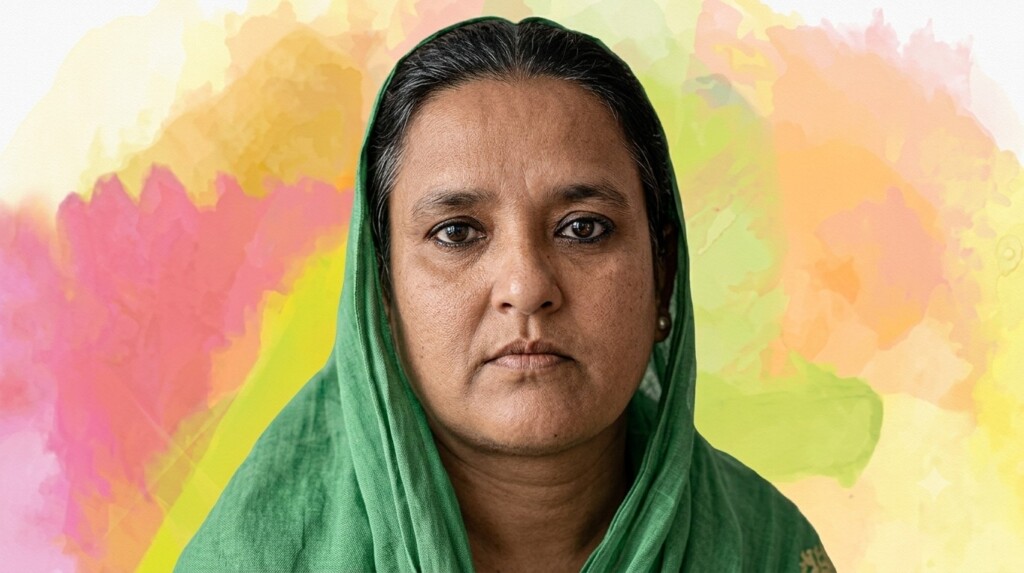
There are some people who remain in the pages of history whose contributions are not always visible. Yet it is upon their silent sacrifices, courage, wisdom and love that some of the greatest chapters of history are written.
Bangamata Begum Fazilatunnesa Mujib was one such remarkable woman. She was the life partner of Bangabandhu Sheikh Mujibur Rahman, a source of inspiration behind his political journey, and an exceptionally courageous companion in the Bengali people’s struggle for liberation.
Begum Fazilatunnesa Mujib was the wife of Bangabandhu Sheikh Mujibur Rahman, the architect of independent Bangladesh and Father of the Nation, and the mother of former Prime Minister Sheikh Hasina. Her contribution to Bangladesh’s struggle for independence and to the nation’s political history was profound, significant and undeniable.
This remarkable woman was born on 8 August 1930 in the village of Tungipara in Gopalganj. Her nickname was ‘Renu’.
She encountered the harsh realities of life at a very young age. She lost her father when she was only three and her mother when she was five. Deprived of the affection of her father, Sheikh Zahurul Haq, and her mother, Hossne Ara Begum, she grew up surrounded by the love and care of close family members.
Her grandfather, Sheikh Kasem, arranged her marriage to Sheikh Mujibur Rahman, the son of his cousin Sheikh Lutfur Rahman. Thereafter, Bangabandhu’s mother, Sayera Khatun, raised her with the same affection and tenderness she extended to her own children.
She received her primary education at Gopalganj Mission School. Later, in accordance with the social customs of the time, she continued her studies under a village tutor.
Yet the limitations of formal education could never restrict her intellect, wisdom or understanding of life. She was exceptionally intelligent, patient, perceptive and courageous. She never allowed adversity to frighten her. Instead, she confronted every crisis with determination, self-confidence and immense patience.
Throughout the difficult turns of Bangabandhu’s long political career, she remained a quiet yet powerful companion. When her husband spent years in prison, she shouldered the entire responsibility of the household without losing heart. She raised their children, cared for the family and, at the same time, remained steadfast in her commitment to Bangabandhu’s political ideals and struggle.
Her compassion extended beyond her own family. She cared deeply for the leaders and activists of the Awami League. She quietly took responsibility for keeping in touch with those imprisoned, supporting their families and arranging medical treatment for those who fell ill.
In Bangabandhu’s political life, she was like a shadow—like a source of reassurance—like an inner reservoir of strength.
When Bangabandhu announced the Six-Point Programme in 1966 as the charter of the Bengali people’s aspirations for freedom, repression and imprisonment by the Pakistani ruling authorities intensified. Bangabandhu was repeatedly imprisoned, and during those difficult periods party leaders and activists would turn to Begum Mujib.
She conveyed political instructions she received from Bangabandhu to the party leaders and activists. Rather than allowing the movement to lose momentum, she encouraged them to move forward with greater determination, courage and resolve.
Her firm position against the initiative to secure Bangabandhu’s release on parole in the Agartala Conspiracy Case and take him towards a so-called compromise was also highly significant. Her courageous and astute role helped intensify the course of the liberation struggle. Her political foresight during that critical moment in history is still remembered with profound respect.
She was not a speaker on political platforms, nor did she hold any political office or position. Yet, from within the privacy of her home, she became one of the quiet forces behind an entire nation’s aspiration for freedom.
Through every struggle, every movement and every crisis faced by the Bengali people, she remained a beacon of inspiration. While standing beside Bangabandhu and giving him courage, she also taught her children to remain responsible towards their country and its people.
Her sacrifice and courage during the great Liberation War of 1971 were equally extraordinary. Her life stands as a powerful example of the immense price one family had to pay for the independence of Bangladesh.
The most tragic chapter of her life came on the fateful night of 15 August 1975. Alongside Bangabandhu Sheikh Mujibur Rahman, the architect of independent Bangladesh, Bangamata was brutally killed by assassins and attained martyrdom.
The day on which the Bengali people lost a woman whose silent sacrifice, tears, courage and inspiration were intertwined with the nation’s journey towards independence remains an indescribably tragic day in the history of Bangladesh.
Bangamata was therefore much more than Bangabandhu’s wife. She was a mother, a fellow freedom fighter, a quiet organiser, a far-sighted political inspiration and an inseparable part of the history of the Bengali people’s struggle for freedom.
Her life teaches us that great history is not created only on the streets. Sometimes, the strongest foundations of history are built quietly within the walls of a home.
Bangamata Begum Fazilatunnesa Mujib remains a unique symbol of that silent strength.
On her birthday, we remember with profound respect this remarkable woman who sacrificed her own comfort and happiness to stand by her husband and children, support her political comrades and, above all, safeguard the Bengali people’s aspiration for freedom.
Bangamata, you remain an enduring source of inspiration in the history of the Bengali people.
Generations of Bengalis will remember your sacrifice, courage and contribution with respect.
On the birth anniversary of the great Bangamata Begum Fazilatunnesa Mujib, we offer our deepest tribute.
With respect, love and endless gratitude.