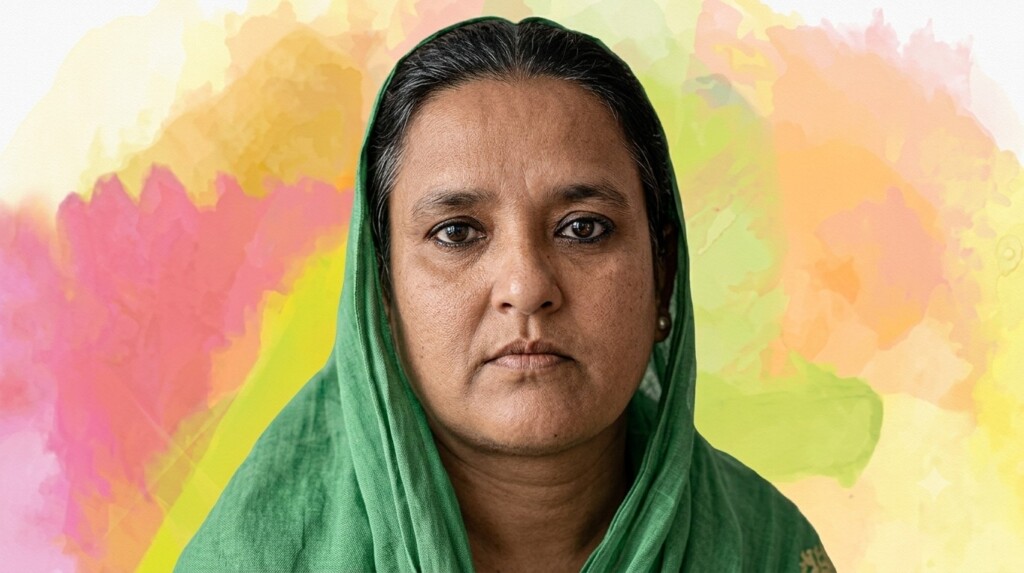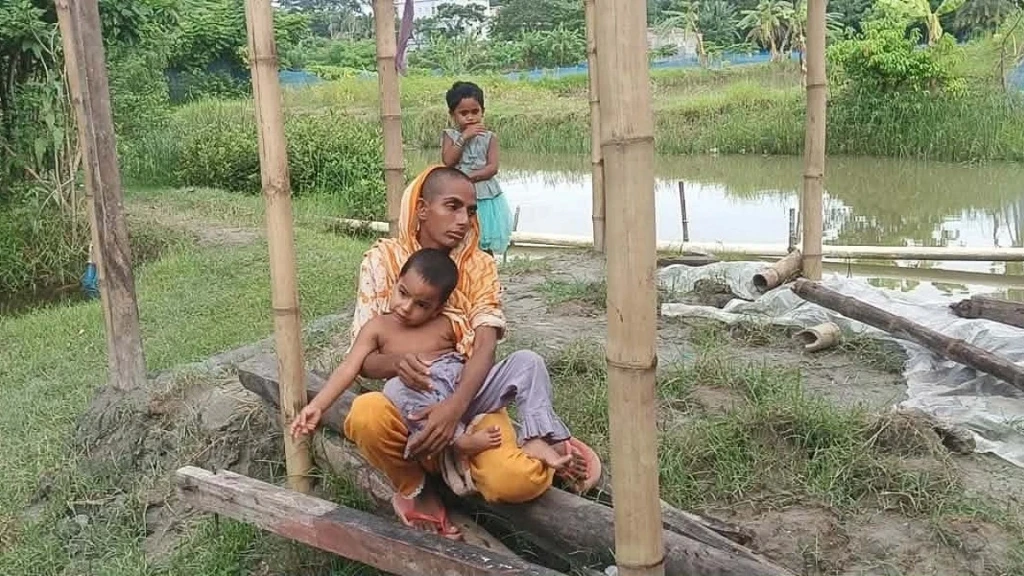
A desperate struggle to keep her family afloat has forced Rehana Khatun, a mother of two from Santoshpur village in Rampal, Bagerhat, to sell her own hair to pay a Tk500 house rent. After losing the rented shanty where she had been living with her children, Rehana now has little more than an unfinished bamboo structure beside the Khulna-Mongla railway line as a possible shelter.
Her plight has deeply moved residents of the area, who say the circumstances facing the family reflect the severe hardship experienced by people living on the margins of society.
According to local residents, Rehana had previously been staying with her two children in a small rented shack. Persistent financial difficulties left her unable to pay the rent for an extended period. Eventually, she lost the shelter and was forced to move with her children to an open piece of government land beside the railway line.
The family now lives in extremely difficult conditions. With help from local people, a bamboo framework has been erected near a railway bridge. Yet the structure remains incomplete because Rehana cannot afford the corrugated metal sheets and fencing needed to turn it into a proper dwelling.
For several months, the bamboo frame has stood without adequate roofing or walls. As a result, Rehana and her children remain exposed to the elements, struggling to cope with intense heat and rain while having no secure place to sleep or keep their belongings.
Local resident Ferdousi Begum said Rehana had once taken temporary shelter at a nearby house because she had nowhere else to go. One day, residents noticed that Rehana had cut off her hair. When asked what had happened, she reportedly broke down in tears and explained that she had sold her hair to raise Tk500 to pay the rent.
The incident has left many residents distressed.
Rahim Sheikh described Rehana’s circumstances as extremely difficult and said she was struggling to raise her two children without a secure home. He urged the authorities to take prompt steps to arrange suitable accommodation for the family.
Another resident, Mahidul Islam, said local people had already tried to help by constructing the bamboo framework. According to him, the structure could become a basic home if corrugated sheets and fencing could be provided. He appealed to financially capable and compassionate people in the community to support the family.
A visit to the area reportedly showed the unfinished bamboo structure standing beside the railway line at the entrance to Santoshpur village. It is there that Rehana hopes to establish a home for her children, despite the fact that the structure is still unsuitable for habitation.
Rehana said she continues to endure hardship by thinking about her two children. She said the family faces difficulties not only with housing but also with food, leaving her with few options when the rent became due.
Her experience highlights how a relatively small financial shortfall can become a serious crisis for a family living without a stable income or secure housing. For someone already struggling to meet basic daily needs, losing rented accommodation can quickly lead to homelessness and exposure to unsafe living conditions.
Residents have called for Rehana’s family to be considered for suitable government housing assistance and for immediate efforts to make the existing structure habitable. They have also appealed to local authorities, charitable organisations and financially capable members of society to come forward.
For Rehana, however, the immediate need is simple: a safe roof over her children’s heads. After being forced to sell her hair merely to find Tk500 for rent, she is now hoping that help will arrive before another basic necessity becomes an impossible burden.