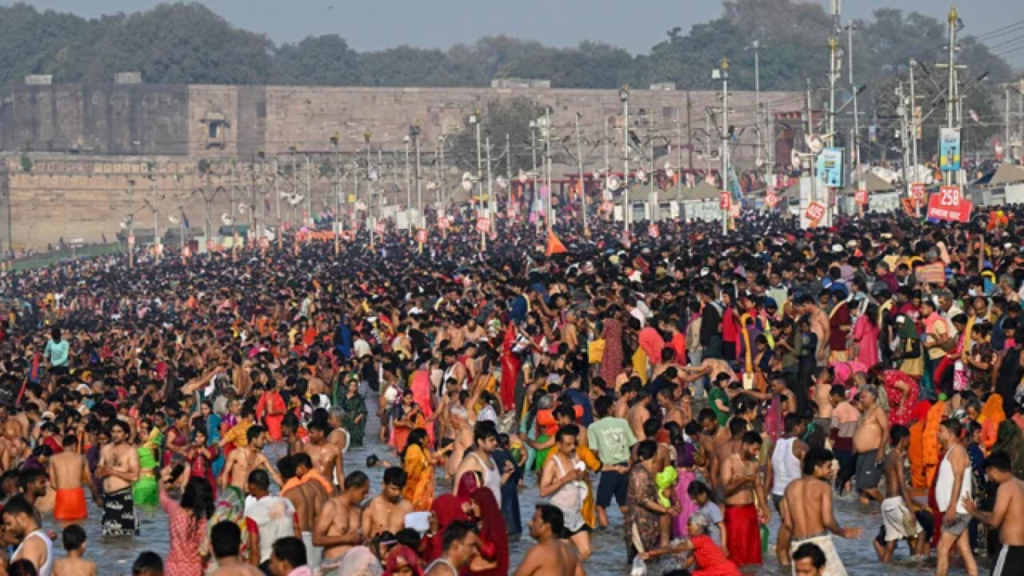
PRAYAGRAJ, India, Feb 26, 2025 (BSS/AFP) – The Kumbh Mela, one of the largest religious gatherings in the world, comes to a close today, marking the end of six weeks of sacred rituals and devotion. The festival, held in Prayagraj, Uttar Pradesh, saw its final ceremonial river baths as millions of pilgrims sought spiritual purification.
Despite being marred by two tragic stampedes that claimed dozens of lives, the event has been hailed as a resounding success by Prime Minister Narendra Modi’s Hindu nationalist government. The administration sees the festival as a symbol of Hindu resurgence and national prosperity, reinforcing its image as the protector of India’s spiritual heritage.
A Festival Rooted in Mythology
The Kumbh Mela, deeply embedded in Hindu mythology, traces its origins to an epic battle between deities and demons over a pitcher containing the nectar of immortality. The festival, which began on January 13, coincides with Maha Shivratri, a significant Hindu festival dedicated to Lord Shiva.
This year’s Kumbh Mela has been touted as the “grandest” in history by both Modi and Uttar Pradesh Chief Minister Yogi Adityanath, a firebrand Hindu monk and close ally of the Prime Minister.
According to official estimates, over 620 million devotees participated in the festival—a staggering number, even for a country of 1.4 billion people. These figures, which have raised eyebrows, were reportedly calculated using artificial intelligence and surveillance cameras, though they remain impossible to independently verify.
Deadly Stampedes Mar the Celebration
The grandeur of the festival was overshadowed by two tragic stampedes. On January 29, a chaotic crowd surge led to at least 30 deaths and 90 injuries, yet officials initially downplayed the incident, insisting that no one was seriously injured—despite graphic footage from the scene.
Earlier this month, another stampede at New Delhi’s main railway station resulted in 18 deaths, as frantic devotees rushed to board trains bound for Prayagraj.
These twin tragedies have somewhat dampened the government’s boasts of impeccable event management, but they did little to deter the millions of faithful who continued to flock to the festival.
Faith Overcoming Fear
Even as concerns over overcrowding and sanitation persisted, devotees remained undeterred. Pilgrims embraced the sacred waters, driven by the belief that a holy dip washes away sins and ensures salvation.
Despite stomach-churning pollution levels in the rivers, millions took part in the final ritual baths today, marking the culmination of this centuries-old spiritual gathering.
A Legacy of Faith and Challenge
While the Kumbh Mela 2025 will be remembered for its unprecedented scale, it will also stand as a testament to the resilience of faith in the face of adversity. As the festival concludes, questions remain about crowd control, infrastructure preparedness, and safety measures—challenges that future administrations will need to address.