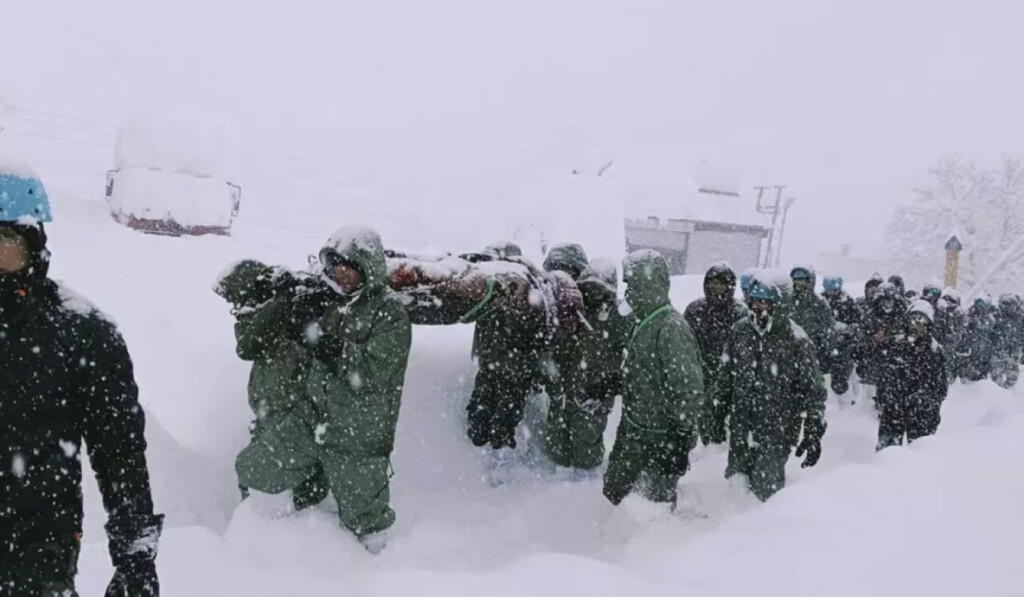
DEHRADUN, India, 2nd March 2025 – Indian rescue teams have been working tirelessly in sub-zero temperatures on Sunday, as they continue their efforts to locate four workers still missing after an avalanche struck a remote border area. Snowfall is exacerbating the risk of further avalanches, complicating the search operation.
More than 50 workers were buried under snow and debris when the avalanche hit a construction camp on Friday near the Tibet border in the northern Himalayan state of Uttarakhand. According to officials, rescue teams have successfully freed 50 workers from the rubble, though tragically, four of them later succumbed to their injuries.
On Saturday evening, state authorities revised the number of missing workers from five to four, after one worker, previously feared buried in the avalanche, was found to have safely made his way home. Details surrounding whether he had been buried in the avalanche remain unclear.
The state disaster relief team confirmed that all the steel containers, where the workers had been staying during the avalanche, had been located, but no further survivors were found inside.
Rescue operations are using military helicopters, drones, and sniffer dogs in an effort to locate the missing individuals. Additionally, soldiers are set to employ ground-penetrating radar to aid in the search.
Due to the ongoing risk from continuous snowfall, Uttarakhand’s Chief Minister Pushkar Singh Dhami has instructed officials to relocate other workers from high-risk areas to safer locations, as reported by the Times of India.
The avalanche struck at an altitude of over 3,200 metres (10,500 feet), where temperatures have dropped to as low as minus 12 degrees Celsius (10 degrees Fahrenheit).
Avalanches and landslides are common in the higher Himalayan regions, especially during the winter months. Experts have warned that climate change is intensifying these weather events, while the rapid pace of development in these fragile areas is increasing the risks associated with deforestation and construction projects.
In 2021, nearly 100 people lost their lives in Uttarakhand when a massive glacier chunk broke off and fell into a river, triggering flash floods. Additionally, devastating monsoon floods and landslides in 2013 killed around 6,000 people and prompted calls for a review of development plans in the region.
Context:
The Himalayan region, particularly in states like Uttarakhand, has long been vulnerable to natural disasters, but the growing concerns over climate change and increased infrastructure projects have highlighted the need for more sustainable development practices. As rescue teams continue their efforts, there is increased scrutiny on how development and environmental protection can be balanced in such a sensitive and disaster-prone area.