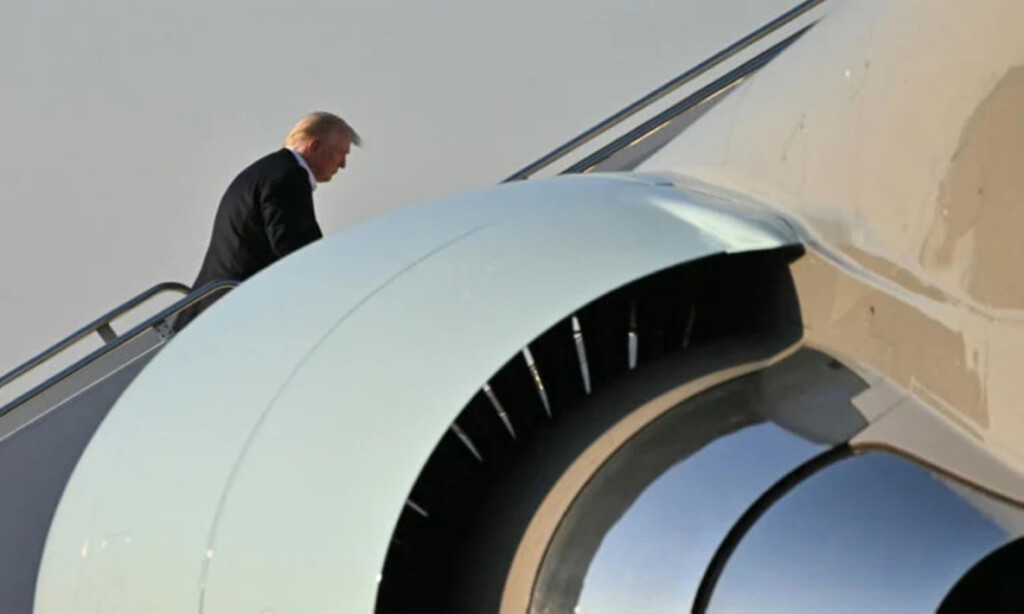
WASHINGTON, March 3, 2025 (BSS/AFP) – US President Donald Trump responded to growing criticism on Sunday regarding his increasingly close relationship with Russia over the Ukraine conflict, asserting that the United States should be less focused on Vladimir Putin.
“We should spend less time worrying about Putin, and more time worrying about migrant rape gangs, drug lords, murderers, and people from mental institutions entering our country – so that we don’t end up like Europe!” Trump posted on his Truth Social platform on Sunday night.
Trump’s shift in approach to both the war and Russia became apparent just days earlier, when he publicly chastised Ukrainian President Volodymyr Zelensky during a White House encounter. The heated exchange, in which Trump labelled the Ukrainian leader as “disrespectful,” led to Zelensky leaving the White House without the anticipated agreement on sharing mineral rights.
Trump’s growing rapport with Russian President Vladimir Putin has raised concerns across Europe, as well as among members of the US Democratic Party, who have expressed national security apprehensions.
“The White House has become an arm of the Kremlin,” said Democratic Senator Chris Murphy, a vocal critic of Trump. “It appears America is trying to align itself with dictators,” Murphy stated earlier in an interview with CNN.
In contrast, Trump’s Republican Party largely backs his stance, with senior figures even suggesting that Ukrainian President Zelensky should step down to facilitate a peace deal with Moscow.
“We need a leader that can deal with us, eventually deal with the Russians, and end this war,” National Security Advisor Mike Waltz remarked in a CNN interview on Sunday.
Further Context:
Trump’s approach to the ongoing conflict in Ukraine has evolved in recent months, with many questioning his perceived alignment with Putin. While critics view this shift as a potential risk to global stability, his supporters argue that a different diplomatic strategy might lead to a quicker resolution of the war. The debate continues to divide political leaders in both the US and Europe, as the geopolitical landscape remains uncertain.