PARIS, 4 March 2025 (BSS/AFP) – Lithuania is set to become the first European Union nation to formally withdraw from a multilateral arms regulation treaty when it exits the international agreement prohibiting the use of cluster munitions on 6 March, citing growing security concerns.
Since the United Nations was established 80 years ago, only five formal withdrawals from multilateral arms treaties have occurred, three of which have been initiated by Russia since 2021, according to an AFP analysis of the UN disarmament office registry.
Lithuania’s contentious decision comes amid heightened geopolitical tensions, particularly regarding Russia’s invasion of Ukraine, with several nations questioning the efficacy of existing disarmament treaties.
Key Arms Treaties and Withdrawals
Cluster Munitions
Prior to Lithuania’s scheduled withdrawal, no country had previously exited the Convention on Cluster Munitions or any of the four other humanitarian disarmament treaties.
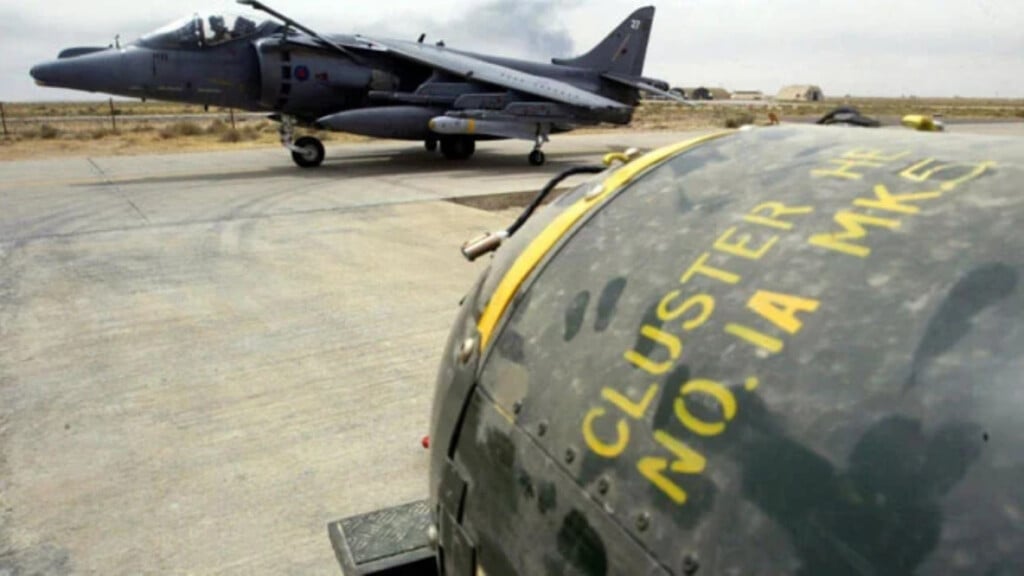
Cluster munitions are deployed from aircraft or artillery, dispersing multiple smaller explosives over a wide area. Many fail to detonate immediately, effectively becoming landmines that can pose risks for years.
Lithuania signed and ratified the Convention on Cluster Munitions in 2011, committing to cease production, trade, and stockpiling of these weapons. However, on 6 September 2024, the government officially announced its withdrawal, citing “evolving regional security dynamics and geopolitical threats.”
A statement from Vilnius declared that the “current security environment necessitates maintaining a full spectrum of defensive tools, including cluster munitions, to ensure national security and protect our citizens.”
Neither Russia nor Ukraine, both of which have used cluster munitions in their ongoing war since 2022, are parties to the treaty. Other notable non-signatories include the United States, Iran, Israel, and both North and South Korea.
Russia and the United States
In November 2023, amidst the ongoing Ukraine conflict, Russia withdrew from two significant international treaties: the Comprehensive Nuclear-Test-Ban Treaty and the Treaty on Conventional Armed Forces in Europe, which limits military deployments from the Atlantic to the Urals.
Moscow had already exited the Open Skies Treaty in 2021, a pact that allowed signatories to conduct unarmed surveillance flights over each other’s territories. The United States had left the same treaty in 2020 during President Donald Trump’s administration.
Bilateral Agreements
Among bilateral agreements, the United States withdrew from the Anti-Ballistic Missile Treaty in 2002, leading to its collapse. In 2019, both the United States and Russia abandoned the 1987 Intermediate-Range Nuclear Forces Treaty, which had placed restrictions on medium-range nuclear and conventional missiles.
The last remaining strategic arms control agreement between the two Cold War adversaries—the New START Treaty—is set to expire in February 2026. If no renewal is agreed upon, for the first time since 1972, there will be no nuclear arms control framework between Washington and Moscow.
North Korea’s Withdrawal
North Korea declared its withdrawal from the Treaty on the Non-Proliferation of Nuclear Weapons (NPT) in 2003, but its status remains disputed. Since Pyongyang failed to observe the treaty’s mandatory three-month notice period, its departure has not been officially recognised under international law.
Supplementary Context:
The withdrawal of Lithuania from the Convention on Cluster Munitions signals a broader shift in global security priorities, with more nations prioritising national defence over arms control commitments. The growing trend of treaty exits, particularly among nuclear powers and nations with active security threats, raises concerns about the future of international arms regulation and stability.
Experts warn that without effective diplomatic efforts, the erosion of global arms treaties could lead to a new era of military escalation and proliferation, undermining decades of work towards disarmament and non-proliferation.