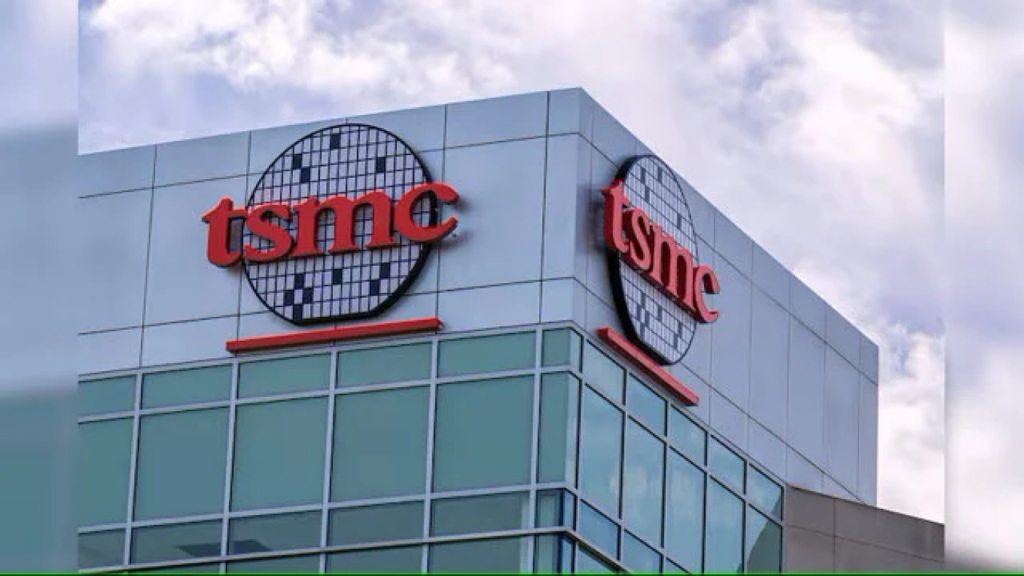
WASHINGTON, 4 March 2025 (BSS/AFP) – Taiwanese semiconductor giant TSMC has pledged to invest at least $100 billion in the United States to establish “cutting-edge” manufacturing facilities, President Donald Trump announced on Monday. This move marks the latest significant financial commitment by a private company since Trump returned to office.
Taiwan Semiconductor Manufacturing Co.’s latest investment will be in addition to its existing commitments and will fund the construction of five advanced fabrication plants, Trump stated at a White House event, alongside TSMC’s chief executive, C.C. Wei.
Much of this investment will be directed towards the state of Arizona, where TSMC— the world’s largest chipmaker—has already made substantial investments. The initiative is expected to generate “many thousands” of high-paying jobs, Trump said.
Strategic Shift Amid Geopolitical Tensions
TSMC has long faced increasing pressure to relocate more of its production outside Taiwan due to concerns that a potential conflict with Beijing could disrupt global semiconductor supply chains. During former President Joe Biden’s tenure, the company committed over $65 billion to establish three manufacturing facilities in Arizona, one of which commenced production in late 2024.
The Trump administration has intensified this pressure, recently considering the imposition of a 25 per cent tariff on all semiconductor chips produced outside the United States.
In response, Taiwan’s government has announced that it will review TSMC’s investment plan “in accordance with the law,” taking into account both the company’s growth and the overall competitiveness of Taiwan’s semiconductor industry. Cabinet spokeswoman Michelle Lee reiterated Taiwan’s commitment to maintaining strong cooperation with the US in high-tech sectors.
Taiwan’s Department of Investment Review stated that while the government has the authority to veto the investment, such decisions are typically made due to incomplete documentation rather than political considerations.
Expanding US Presence and AI Development
TSMC’s chief executive C.C. Wei confirmed that the company’s total US investment now stands at approximately $165 billion.
“We are going to produce many chips to support AI progress and enhance smartphone technology,” Wei stated.
According to TSMC, the new investment will enable the expansion of its US operations to include “three new fabrication plants, two advanced packaging facilities, and a major research and development centre,” supporting an estimated 40,000 construction jobs over the next four years.
The ‘Silicon Shield’ Debate
Taiwan’s dominance in semiconductor production has often been regarded as a “silicon shield” that deters potential military aggression from China, which views the island as part of its territory. Analysts warn that shifting too much chip production overseas could weaken Taiwan’s strategic position.
“Stripping Taiwan of its technological sector could reduce the power of its ‘silicon shield’,” said James Yifan Chen, assistant professor at Tamkang University’s Department of Diplomacy and International Relations.
“Taiwan without its semiconductor industry would be like Ukraine without nuclear weapons,” he added.
Economic and Political Ramifications
Since reclaiming the presidency, Trump has urged businesses to invest in US manufacturing, backing up his rhetoric with tariff threats. His administration has already imposed a 10 per cent tariff on Chinese goods and is set to introduce a 25 per cent levy on imports from Canada and Mexico starting Tuesday.
Trump has made a point of inviting executives from major corporations, including OpenAI and Oracle, to the White House to showcase large-scale investments in American industry. Since his inauguration on 20 January, companies have announced investment plans exceeding $1 trillion, including Apple’s commitment to inject $500 billion into the US economy over the next four years.
While these substantial figures align with Trump’s economic strategy, critics caution that similar lofty promises made during his first term often failed to materialise.
Background Context:
The global semiconductor industry has been at the centre of geopolitical tensions, particularly between the US, China, and Taiwan. Semiconductors are crucial for AI, defence, and consumer electronics, making their production a matter of national security. The CHIPS and Science Act, introduced under the Biden administration, aimed to boost domestic chip production, setting the stage for TSMC’s continued expansion in the United States.