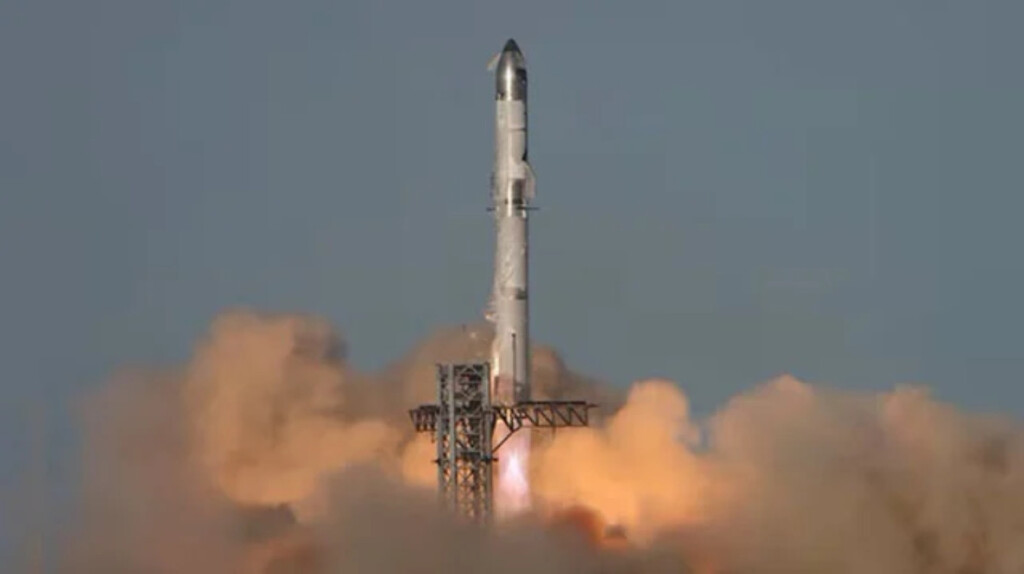
BOCA CHICA, United States, 7 March 2025 (BSS/AFP) – Elon Musk’s SpaceX has suffered another setback with its ambitious Starship programme as the upper stage of its colossal rocket was once again lost in a fiery explosion. However, the booster was successfully recovered in a near-repeat of the previous test.
Minutes after liftoff and booster separation, live footage revealed the upper stage tumbling uncontrollably before the video feed was abruptly cut off. Subsequent images circulating online depicted red-hot debris falling over the Bahamas.
“We can confirm that we lost contact with the ship. Unfortunately, this is a recurrence of what happened during the last flight,” stated SpaceX spokesman Dan Huot, referencing the January test that similarly ended in upper-stage disintegration over the Caribbean.
The fallout from the failed upper-stage performance had immediate consequences for US air travel. The Federal Aviation Administration (FAA) swiftly activated a “debris response area,” leading to brief flight delays at major airports, including Newark, Philadelphia, and Miami.
The FAA has now mandated that SpaceX conduct a mishap investigation before any further launches can take place.
Eighth Starship Test
The test marked the eighth uncrewed orbital attempt for Starship, which launched from SpaceX’s Starbase facility in Boca Chica, Texas, shortly after 5:30 pm (2330 GMT). The mission proceeded after previous launch attempts on Monday and Wednesday had to be postponed.
While the upper stage was lost once again, the Super Heavy booster was successfully recovered—an impressive feat, as it was caught by the launch tower’s mechanical “chopstick” arms for the third time.
Standing at 403 feet (123 meters), Starship is the largest and most powerful rocket ever built. It is envisioned as a fully reusable vehicle that plays a crucial role in Musk’s long-term goal of colonising Mars.
NASA is also counting on a modified version of Starship for its Artemis programme, which aims to return astronauts to the Moon within this decade. However, before the rocket can be approved for such missions, SpaceX must demonstrate its reliability, crew safety, and its ability to perform complex in-orbit refuelling—critical for deep-space travel.
Following a similar failure in January, the FAA had initially grounded Starship. While the agency later permitted this latest test to proceed, it has yet to conclude its investigation into the prior incident.
Regulatory Scrutiny and Potential Conflicts of Interest
SpaceX has often found itself at odds with US regulators. During Joe Biden’s presidency, Musk publicly clashed with the FAA over what he described as excessive regulatory scrutiny of SpaceX’s operations, particularly regarding safety and environmental concerns.
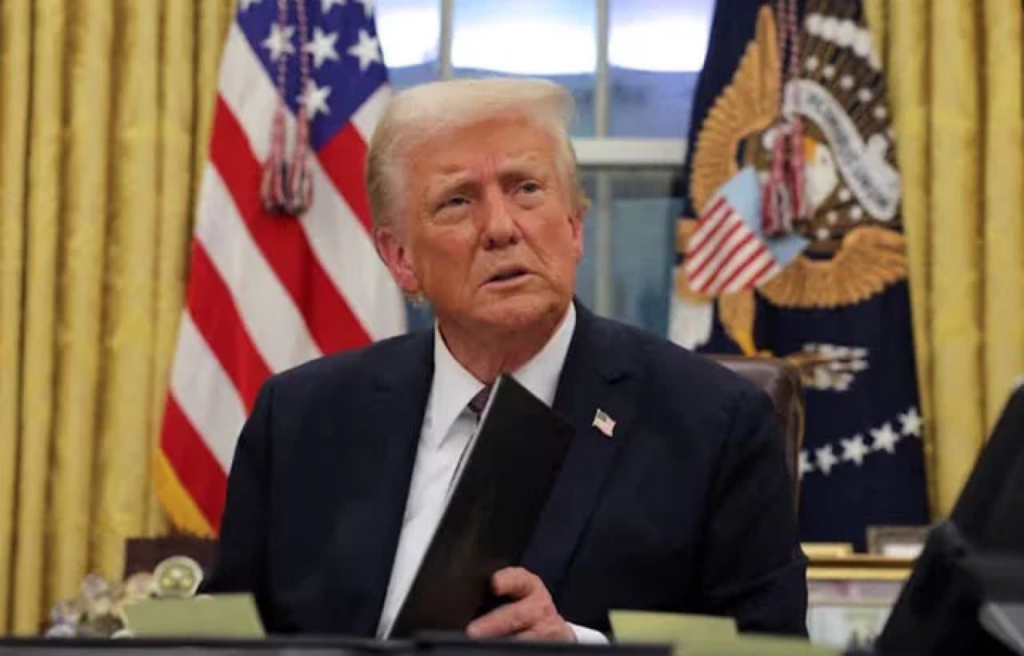
However, with Donald Trump’s return to power, Musk’s new role as chief advisor on cost-cutting initiatives has raised concerns about his influence over federal agencies, including the FAA.
Recent reports suggest that a SpaceX engineer visited FAA headquarters, warning employees that their jobs could be at risk if they did not prioritise the deployment of thousands of the company’s Starlink satellite terminals to enhance national airspace infrastructure.
At present, telecom provider Verizon holds the contract for upgrading the FAA’s systems, but industry analysts speculate that this agreement could be under threat, potentially favouring SpaceX instead. SpaceX has denied these allegations, asserting that “recent media reports about SpaceX and the FAA are false.”
Broader Implications
Despite these challenges, SpaceX remains the dominant player in global spaceflight, owing to its “fail fast, learn fast” philosophy. The company continues to push the boundaries of reusability, cost reduction, and deep-space travel, key to its long-term ambitions.
However, the repeated loss of Starship’s upper stage raises questions about the technical reliability of the vehicle, particularly in meeting NASA’s lunar objectives and Musk’s Mars vision.
Industry experts suggest that SpaceX must refine its aerodynamic control systems and stage separation mechanisms to enhance Starship’s stability during ascent. Furthermore, regulatory scrutiny is likely to intensify given Musk’s expanding influence over US government agencies.
For now, SpaceX must successfully complete an FAA-mandated mishap investigation before Starship can return to flight. Whether the next test will bring more success remains to be seen.