CALI, Colombia, 8 March 2025 (BSS/AFP) – Colombian guerrillas have taken 29 soldiers and police officers hostage following a gunfight in a key coca-producing region, the government confirmed on Friday, dealing a fresh blow to the country’s already fragile peace process.
Authorities have attributed the mass abduction to a dissident faction of the Revolutionary Armed Forces of Colombia (FARC), which refused to accept the 2016 peace agreement and has since been engaged in drug trafficking, extortion, and illegal mining. The incident took place in the Cauca region of southwest Colombia, a major hub for global cocaine production.
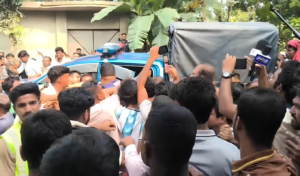
Officials reported that guerrillas, aided by local civilians, overpowered security forces attempting to reassert state control over two municipalities. Footage released by the government depicted armed groups hurling rocks at an armoured vehicle engulfed in flames, while riot police retaliated with smoke grenades amid a chaotic exchange of gunfire.
Colombian President Gustavo Petro blamed the FARC splinter group known as the Central General Staff (EMC), accusing them of manipulating civilians to attack military personnel.
However, a statement from self-described “local communities” disputed this, claiming they acted in self-defence against military aggression, alleging the army used machine guns and live rounds against them. The group expressed outrage at the government’s campaign to eradicate 8,000 hectares (approximately 20,000 acres) of coca crops in the region.
According to the statement, 28 security personnel—not 29, as claimed by officials—were taken captive, including a police lieutenant colonel and an army major, purportedly to prevent further military offensives.
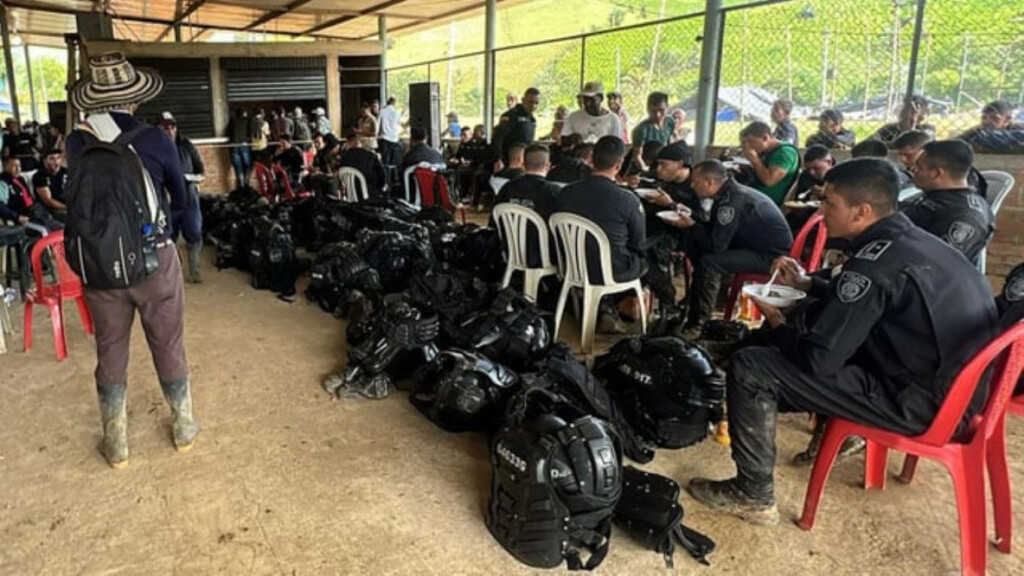
Images released by a local community organisation showed the captured officers seated in an open-sided structure, being served food.
Challenge to ‘Total Peace’ Policy
Since October, the Colombian government has been conducting military operations to reclaim territory in Cauca from the EMC, which rejected the peace deal and has continued to expand its influence through illicit activities.
The hostage situation poses a significant challenge for Petro’s administration, which is already grappling with a surge in violence across various regions. His “total peace” initiative, aimed at negotiating with all armed groups, has been met with setbacks, as factions use the ceasefire periods to consolidate their power.
Colombian police director Carlos Fernando Triana condemned the abductions and demanded the “immediate release” of the hostages, vowing that security forces would remain in the region to uphold the rule of law.
The Ministry of Defence has labelled the rebels’ actions as war crimes, accusing them of forcibly recruiting minors and coercing civilians to expel state forces, ultimately denying local communities access to essential services such as healthcare, education, and employment.
Rising Violence Across Colombia
The unrest in Cauca is emblematic of the wider instability gripping Colombia, as armed groups battle for control of drug production and trafficking routes. A faction of the EMC is currently engaged in peace talks with the government, but another faction withdrew from negotiations last year and has since resumed attacks on security forces, prompting retaliatory military operations.
In a separate incident on Friday, a Colombian soldier was killed, and seven others were wounded in two attacks attributed to National Liberation Army (ELN) guerrillas in the Catatumbo region, which borders Venezuela. The attacks occurred just a day after President Petro visited the region.
The Colombian government has initiated an ambitious economic development and coca crop substitution programme in the area, but continued insurgent attacks have resulted in at least 76 deaths and the displacement of 55,000 people since mid-January.
With tensions escalating and peace negotiations faltering, Colombia faces a critical test in its efforts to curb violence and reassert state control in lawless regions.