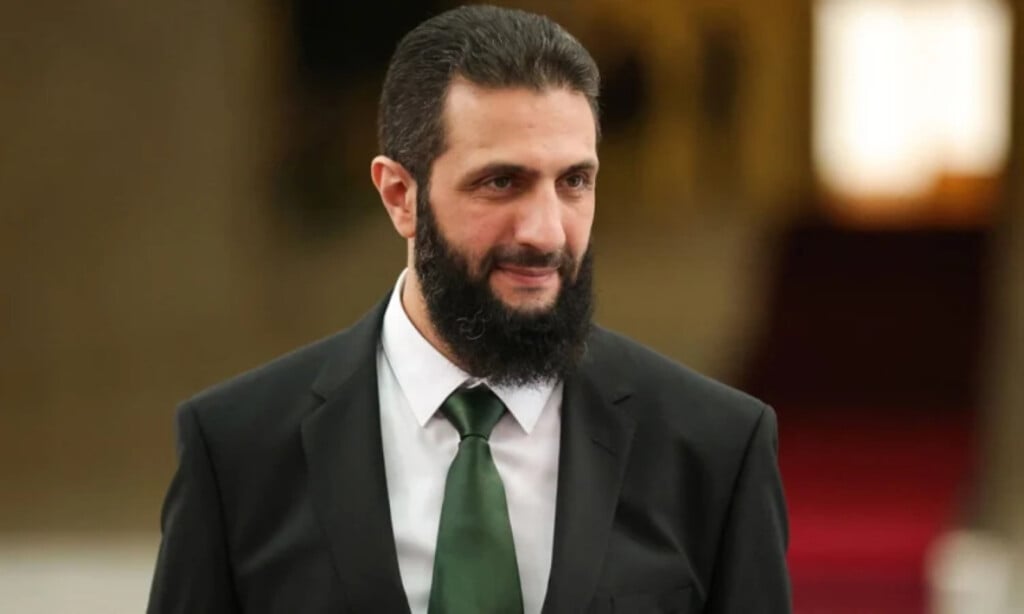
DAMASCUS, 9 March 2025 (BSS/AFP) – Syrian President Ahmed al-Sharaa has called for national unity and peace following reports that more than 1,000 people have been killed in coastal Syria in the worst outbreak of violence since the overthrow of Bashar al-Assad.
The clashes, which erupted on Thursday, have pitted the new security forces against loyalists of the former regime along the Mediterranean coast, particularly in the Alawite heartland where Assad’s influence had been strongest.
Since then, the conflict has escalated into the most significant challenge faced by Sharaa’s Islamist-led coalition since it toppled Assad in December.
“We must preserve national unity and civil peace as much as possible, and, God willing, we will be able to live together in this country,” Sharaa stated from a mosque in Damascus.
Alarming Casualty Figures
The Syrian Observatory for Human Rights has reported that at least 745 Alawite civilians have been killed in the provinces of Latakia and Tartus. The Britain-based monitor claims many victims were executed by security forces or pro-government fighters, often accompanied by the looting of homes and properties.
Additionally, the fighting has led to the deaths of 125 members of the security forces and 148 pro-Assad fighters, bringing the total death toll to at least 1,018.
The official news agency, SANA, reported on Saturday that security forces had been deployed in Latakia, as well as the towns of Jableh and Baniyas further south, to restore order.
A resident of Baniyas, 67-year-old Samir Haidar, told AFP that two of his brothers and his niece had been killed by “armed groups” who entered people’s homes. He also alleged that there were “foreigners among them.”
Though an Alawite himself, Haidar had been a member of the leftist opposition against the Assad family and had spent more than a decade imprisoned under their rule.
Government Response and Security Measures
Defence Ministry spokesman Hassan Abdul Ghani stated that security forces had “reimposed control” over areas affected by attacks from Assad loyalists.
“It is strictly forbidden to approach any home or attack anyone inside their homes,” he said in a video released by SANA.
Authorities have imposed emergency measures, including school closures in Latakia and Tartus for at least two days due to the “unstable security conditions.” Power outages have also been reported in Latakia, reportedly caused by attacks on infrastructure by Assad loyalists.
The Syrian Observatory stated that the violence began following the arrest of a wanted individual in a predominantly Alawite village, which led to intense clashes.
A source from the Defence Ministry confirmed that roads leading to the coast had been blocked to prevent further “violations,” though it was not specified who was responsible.
Latakia’s security director, Mustafa Kneifati, told SANA, “We will not allow sedition or the targeting of any component of the Syrian people.”
Ongoing Tensions and Fears of Reprisals
President Sharaa’s Islamist group, Hayat Tahrir al-Sham (HTS), which led the offensive that ousted Assad in December, has its origins in the Syrian branch of Al-Qaeda and remains designated as a terrorist organisation by multiple governments, including the United States.
Since taking power, HTS has sought to soften its image, pledging to protect Syria’s religious and ethnic minorities. However, fears of reprisals persist, especially in Alawite communities that were long associated with Assad’s brutal rule, which included widespread torture and forced disappearances.
Social media has been flooded with posts detailing the deaths of Alawite civilians, with users sharing accounts of murdered friends and relatives. The Syrian Observatory has reported several “massacres” in recent days, with women and children among the victims.
Activists have released footage appearing to show dozens of bodies in civilian clothing outside a house, with visible bloodstains and the sound of women wailing. Other videos allegedly depict men in military uniforms executing individuals at close range. AFP, however, has not been able to independently verify these reports.
Leaders of Syria’s three main Christian churches, along with the spiritual leader of the country’s Druze minority, have issued statements urging an end to the bloodshed.
A Troubling Future for Syria
Aron Lund, a researcher at the Century International think tank, warned that the ongoing violence signals a troubling future for the country.
“The new government lacks the tools, incentives, and local support base to engage with disgruntled Alawites,” he explained. “All they have is repressive power, and much of that is wielded by jihadist zealots who see Alawites as enemies of God.”
The situation remains precarious, with fears that the violence could spiral into wider sectarian conflict, deepening Syria’s long-standing divisions.