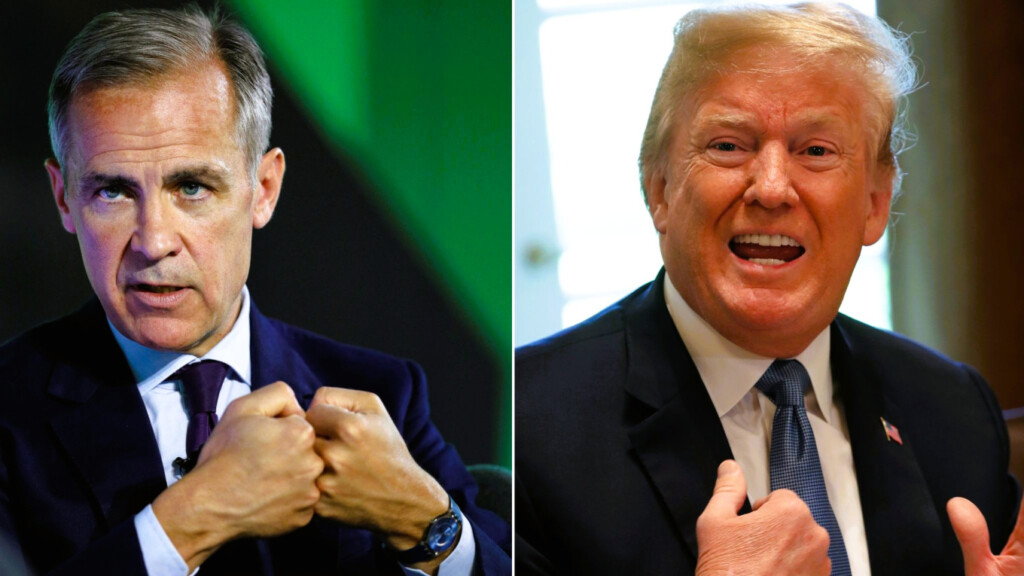
Mark Carney, a name that might not have graced dinner table conversations – unless, of course, you’re the type to discuss monetary policy over dessert – is poised to become Canada’s next prime minister. With a career spanning global financial institutions and central banks, Carney’s ascent from the quiet town of Fort Smith to the tumultuous arena of international politics is nothing short of remarkable.
Carney’s early life was rooted in the Canadian heartland. He earned a bachelor’s degree in economics from Harvard University in 1988, followed by a master’s and doctoral degrees from Oxford University in 1993 and 1995, respectively.
His professional trajectory took off at Goldman Sachs, where he spent 13 years navigating the labyrinth of global finance. His roles spanned various geographies – London, Tokyo, New York, and Toronto – and responsibilities, including co-head of sovereign risk and managing director in investment banking. Notably, he was involved in pivotal events such as South Africa’s post-apartheid entry into international bond markets and Russia’s financial crisis in 1998.
In 2008, Carney was appointed Governor of the Bank of Canada, just as the global financial crisis was unfolding. His decisive actions, including interest rate cuts and liquidity support, are credited with helping Canada weather the economic storm better than many of its peers. His reputation as a crisis manager was further solidified during his tenure as Governor of the Bank of England from 2013 to 2020, where he navigated challenges like Brexit and early COVID-19 economic uncertainties.
Despite his extensive financial background, Carney had no formal political experience before his recent plunge into the political arena. His election as leader of the Liberal Party, succeeding Justin Trudeau, marks a significant shift in Canada’s political landscape. Carney’s technocratic expertise and outsider status may have been appealing to a populace weary of traditional politicians.
Facing the Trump Challenge
As Carney prepares to step into the role of prime minister, he confronts a formidable challenge: managing Canada’s relationship with a United States led by President Donald Trump. The recent imposition of tariffs on Canadian goods by the Trump administration has escalated tensions, with Trump making provocative remarks about annexing Canada as the 51st state. Carney’s response has been firm, emphasizing that Canada will not bow to American demands and is prepared to implement retaliatory measures until the U.S. shows respect.
“We didn’t ask for this fight. But Canadians are always ready when someone else drops the gloves,” Carney has said. “The Americans, they should make no mistake, in trade, as in hockey, Canada will win.”
Carney’s extensive experience in managing financial crises could prove invaluable in navigating the current trade tensions. His tenure at the Bank of Canada during the 2008 financial crisis showcased his ability to implement swift and effective monetary policies, helping Canada emerge relatively unscathed. Similarly, his leadership at the Bank of England during Brexit demonstrated his capacity to maintain economic stability amid political upheaval.
A New Chapter for Canada
Carney’s transition from central banker to prime minister is unprecedented in Canadian history. His technocratic approach, coupled with a commitment to standing up against external pressures, signals a new direction for Canada’s domestic and foreign policy. As he steps into this role, the natio watches with cautious optimism, hopeful that his expertise will steer Canada through the choppy waters ahead.