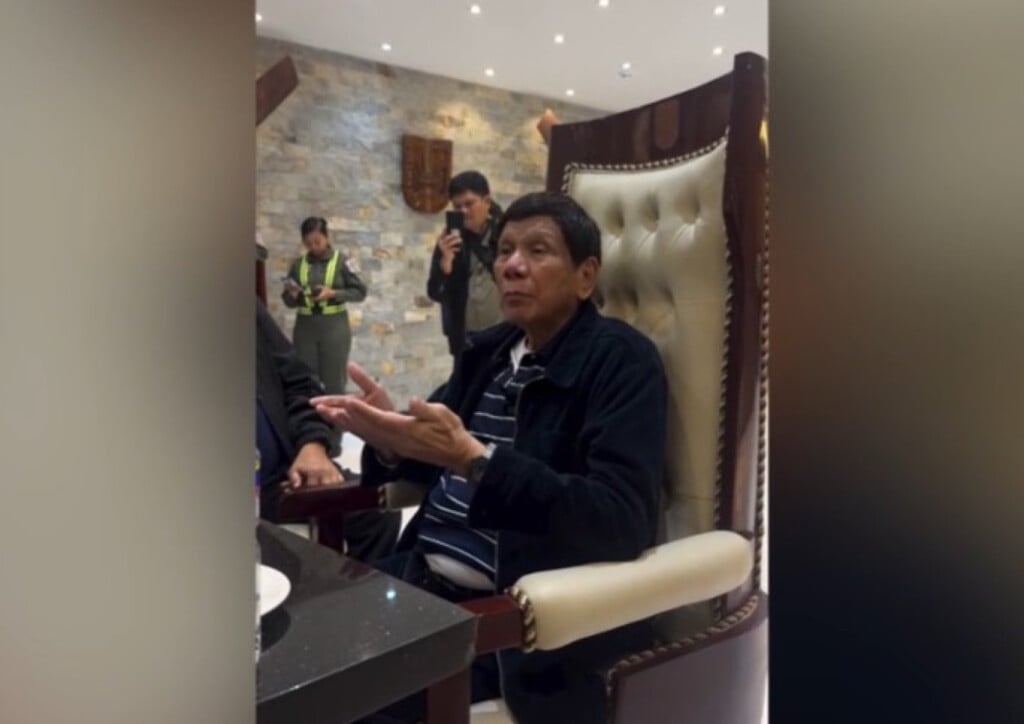
The arrest of former Philippines President Rodrigo Duterte at Manila’s international airport today (March 11, 2025) has sent shockwaves through the country and the international community. Duterte, 79, was taken into custody on orders from the International Criminal Court (ICC), which has been investigating alleged crimes against humanity linked to his deadly war on drugs.
With his arrest, a complex legal process now unfolds – one that could lead to his trial in The Hague. But what happens next? Here’s a breakdown of the legal procedures and possible outcomes for the former leader.
Where Is Duterte Now?
It remains unclear where Philippine authorities are holding Duterte following his arrest. While the government has confirmed he is in custody and in good health, officials have yet to announce when he will be transferred to The Hague.
The ICC arrest warrant, issued on March 7, says that Duterte must be detained to “ensure his appearance before the court,” as he was expected to ignore a summons. It also noted that despite no longer being president, he “appears to continue to wield considerable power.”
The Next Step: Duterte’s Transfer to ICC Custody
The ICC operates differently from traditional extradition processes. Instead of an extradition hearing, national authorities must determine three key factors before surrendering Duterte:
- The arrest warrant applies to him.
- He was arrested following the correct legal procedure.
- His rights have been respected.
Once these conditions are met, the Philippine government must inform the ICC Registry when it is ready to proceed with the transfer. Duterte will then be flown to the ICC Detention Centre in The Hague, Netherlands, where he will await further proceedings.
The Initial Court Appearance
Once Duterte arrives at The Hague, he will appear before the Pre-Trial Chamber of the ICC. This hearing serves to:
- Confirm that he has been informed of the charges against him.
- Ensure that he understands his rights under the Rome Statute.
- Allow him to apply for interim release while awaiting trial.
The Confirmation of Charges Hearing
Within a reasonable timeframe after his surrender, the Pre-Trial Chamber will hold a confirmation of charges hearing, where ICC prosecutors will present evidence against Duterte. The judges have three options:
- Confirm the charges and move the case to trial. If this happens, a Trial Chamber will be constituted, and proceedings will formally begin.
- Decline to confirm the charges. This would not necessarily end the case – prosecutors could submit new evidence and refile the charges.
- Adjourn the hearing and request more evidence or investigation. If judges find that the available evidence is insufficient or points to a different crime, they may ask the prosecution to modify the charges.
In some cases, the Pre-Trial Chamber may proceed even without the accused present.
Duterte’s Trial: What to Expect
If the case moves forward, the trial will take place at ICC headquarters in The Hague. Several key factors will shape the proceedings:
- Public vs. Closed Hearings: While ICC trials are generally public, parts of the proceedings may be held behind closed doors to protect victims and witnesses.
- Duterte’s Presence: The accused must be physically present for the trial.
- A Possible Guilty Plea: If Duterte admits guilt, the Trial Chamber will assess whether his admission is sufficient for conviction. However, if the court deems that a full trial is necessary – particularly in the interests of justice for victims – it may proceed with the standard trial process.
Potential Outcomes of the Trial
The trial could take years, but if found guilty, Duterte could face a prison sentence. The ICC does not impose the death penalty. Instead, the court can sentence convicted individuals to a maximum of 30 years or life imprisonment in severe cases.
On the other hand, if the trial chamber determines there is insufficient evidence, Duterte could be acquitted.
Duterte’s arrest marks a significant moment in the global fight for accountability against crimes against humanity. His case will be closely watched, not only as a test of the ICC’s effectiveness but also as a defining moment for justice in the Philippines.