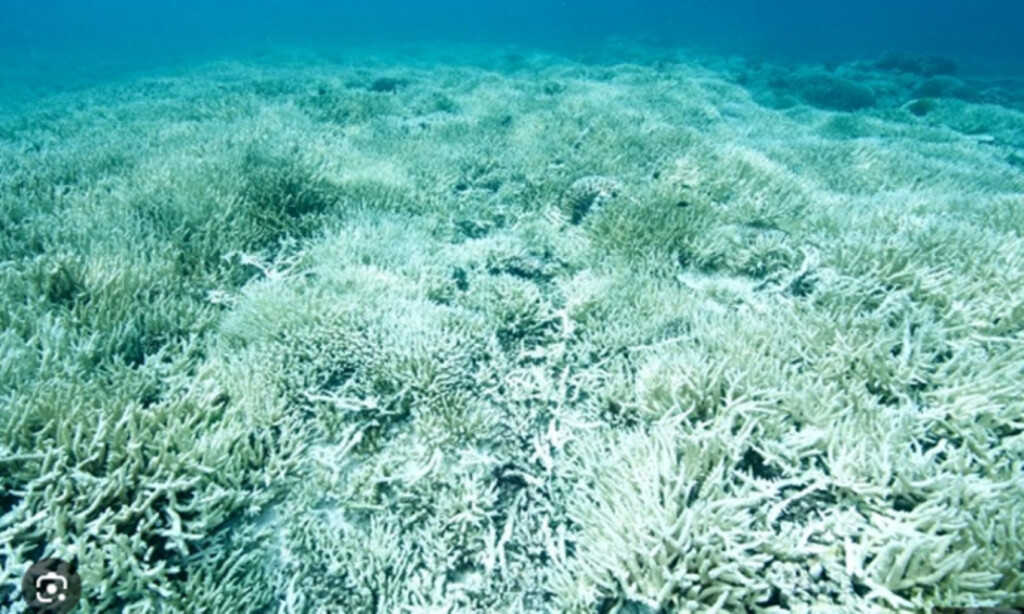
SYDNEY, 26 March 2025 (BSS/AFP) – Scientists have recorded alarming levels of coral bleaching off Australia’s western coast, with vast sections of the renowned Ningaloo Reef turning a ghostly white due to extreme marine heatwaves.
A prolonged period of unusually high ocean temperatures has “cooked” the reef, said ocean scientist Kate Quigley, describing what could be the worst mass-bleaching event in the region in years. The Ningaloo Reef, a UNESCO-listed marine park famed for its vibrant coral ecosystems and migrating whale sharks, is now facing severe ecological distress.
‘Unprecedented’ Coral Bleaching
Quigley, a research scientist with the environmental charity Minderoo Foundation, expressed deep concern over the scale and severity of the bleaching.
“Warm oceans have just cooked the corals this year,” she told AFP. “It wouldn’t be amiss to throw in the word ‘unprecedented’. It has gone deep – it’s not just the top of the reef that is bleaching, but many different species of coral.”
The 300-kilometre-long Ningaloo Reef, one of the world’s largest fringing reef systems, is experiencing its most significant bleaching since 2011. According to the Australian Bureau of Meteorology, sea surface temperatures in Western Australia have been up to three degrees Celsius above average in recent months.
The US National Oceanic and Atmospheric Administration (NOAA) confirmed that the waters surpassed the critical “bleaching threshold” in mid-January, triggering widespread stress among coral populations.
Bleaching: A Precursor to Death
Coral bleaching occurs when sustained warm water temperatures force corals to expel the symbiotic algae living within their tissues, stripping them of their colour and essential nutrients.
“Bleaching is a sickness, but it does not mean outright death,” Quigley explained. “However, if it is severe enough, the corals will die.”
This event is not isolated to Western Australia. Government reports indicate that smaller patches of bleaching have also been observed at the northern tip of the Great Barrier Reef on the east coast.
Quigley noted that it is rare to see bleaching in both reef systems at the same time.
“What we’re seeing is the level of ocean warming is so great, it’s overriding the local conditions in some places. It’s just shocking. When we take a national snapshot, it’s extremely concerning.”
A Growing Climate Crisis
The Great Barrier Reef, one of the world’s most famous natural wonders, has suffered five mass bleaching events in the past eight years. While the current damage is not yet classified as a mass bleaching event, scientists fear that continued warming trends could escalate the crisis.
The year 2024 was the hottest on record globally, with extended marine heatwaves triggering ecological disruptions worldwide. Scientists have repeatedly linked these extreme weather patterns to climate change, warning that further inaction could lead to catastrophic losses of coral reef ecosystems.
Despite Australia’s dependence on coal, gas, and mineral exports – industries that have driven decades of economic prosperity – the country is increasingly experiencing severe climate-related disasters, including heatwaves, bushfires, and droughts.
The bleaching of Ningaloo Reef serves as yet another stark reminder of the urgent need for climate action to protect the planet’s fragile marine ecosystems.