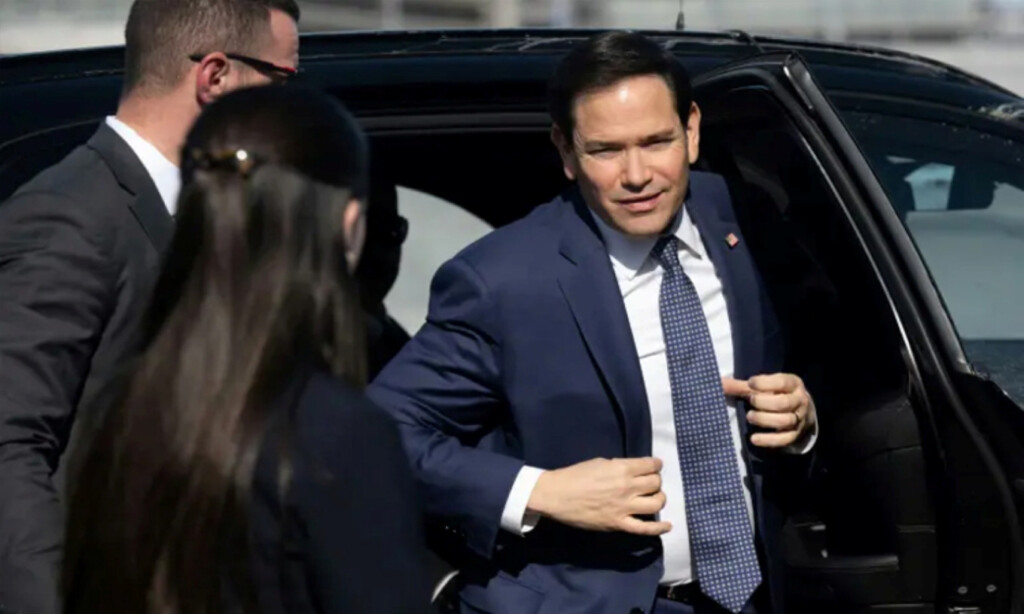
WASHINGTON, 26 March 2025 (BSS/AFP) – US Secretary of State Marco Rubio is set to embark on a Caribbean tour this Wednesday, aiming to explore solutions for the crisis in Haiti and to extend support to Guyana amid its ongoing dispute with Venezuela over territorial waters.
Rubio, a key member of Donald Trump’s administration, will begin his visit in Jamaica, where he will attend a summit of the Caribbean Community (CARICOM). He will then travel to Guyana and Suriname, with the trip marking his second visit south of the US border since assuming office. This trip comes as the Trump administration places a heavy emphasis on curbing migration and addressing regional instability.
During the summit, Rubio will engage with Caribbean leaders, including those from Haiti, Jamaica, Barbados, and Trinidad and Tobago, to discuss Haiti’s ongoing struggles and regional issues, according to the State Department.
Haiti’s Struggles and the International Mission
Haiti, the poorest nation in the Western Hemisphere, has been grappling with severe challenges for years. The country has seen the collapse of government institutions, escalating gang violence, and the deterioration of basic public services. The crisis has been exacerbated by the absence of effective law enforcement, leaving large parts of the country, particularly the capital Port-au-Prince, in chaos.
In response, a Kenyan-led international security mission, supported by former US President Joe Biden’s administration, was deployed in an attempt to restore order. However, the mission has faced significant challenges, and violence has intensified once more. The International Organization for Migration reported that over 60,000 people were displaced in a single month due to gang violence.
Rubio has authorised an exception to sweeping cuts in US foreign assistance, allowing continued US support for the Haiti mission. However, the Trump administration has yet to announce any new initiatives for stabilising Haiti, beyond a controversial decision to revoke deportation protections for thousands of Haitian immigrants residing in the United States.
Mauricio Claver-Carone, the US special envoy for Latin America, stated that Rubio hopes to consult with Caribbean leaders to gain insight into their perspectives on the situation in Haiti. He acknowledged the dire circumstances, saying, “We are developing a strategy to continue supporting the Haitian National Police in order to address the crisis.”
Rubio, who visited the Dominican Republic last month, called for an expansion of the international mission in Haiti to effectively tackle the gang violence, suggesting that a broader strategy could pave the way for discussions about Haiti’s future, including potential incentives for domestic manufacturing.
Guyana’s Growing Importance
In addition to Haiti, Rubio’s visit will focus on Guyana, which has become an increasingly important ally for the US, particularly following the discovery of significant oil reserves in the country. Guyana now holds the world’s largest crude oil reserves per capita, and the US has shown a growing interest in the region, particularly as the country’s oil resources are concentrated in the Essequibo border area, a region disputed with Venezuela.
In recent weeks, tensions have flared between Guyana and Venezuela after a Venezuelan military vessel allegedly entered Guyanese waters, which the Venezuelan government denied. Guyana’s President Irfaan Ali rejected an offer from Venezuelan President Nicolás Maduro to meet and resolve the issue diplomatically.
Claver-Carone has likened Guyana’s strategic importance to that of Gulf Arab nations, where the US has stationed military forces in response to threats from Iran. He stressed the need for continued cooperation with Guyana to ensure its security, especially in light of the Venezuelan threat.
Rubio’s visit is the third consecutive trip by a US Secretary of State to Guyana, underlining the growing geopolitical significance of the country.
Tensions with Venezuela and Regional Concerns
The visit also comes amidst a broader shift in US foreign policy toward Venezuela. The Trump administration has taken a hardline stance on Venezuela, severing a key deal between US oil giant Chevron and Venezuela’s state-run oil company, PDVSA. Additionally, the US has threatened new tariffs on countries that continue to purchase Venezuelan oil, with a new tariff set to take effect on 2 April.
Despite this, Guyana’s cooperation with the US remains steadfast. However, Caribbean nations, including Guyana, have voiced concerns about another potential move by the Trump administration – fines for the use of Chinese-made container ships. Ali has urged early discussions with Rubio to address these concerns and minimise the impact of such measures on the region.
As Rubio heads to the Caribbean, his discussions with regional leaders will likely play a crucial role in shaping US policy in the region, particularly in relation to Haiti’s recovery and Guyana’s growing prominence on the global stage.