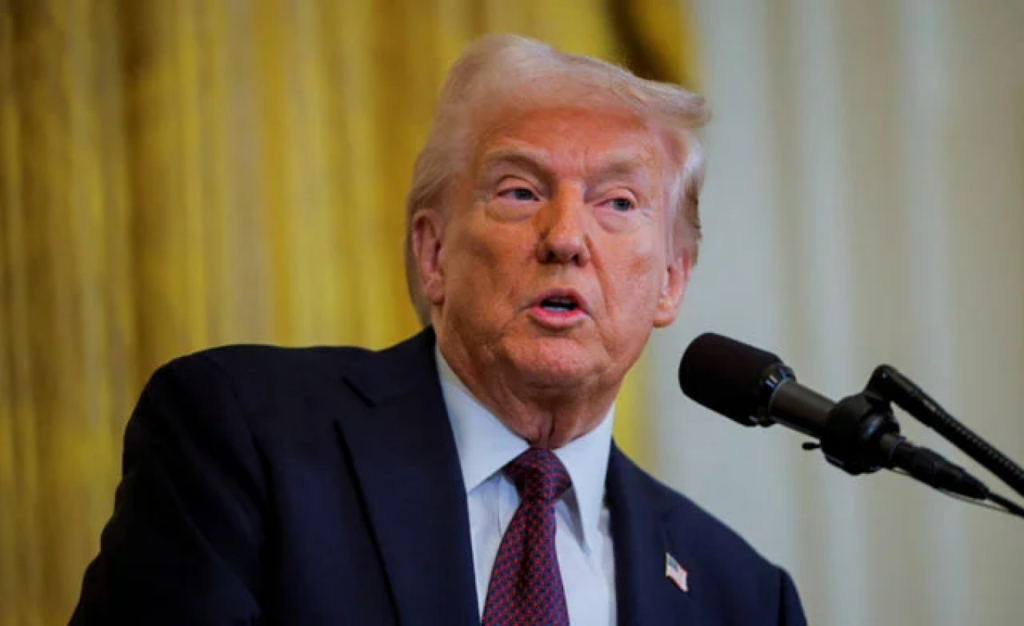
WASHINGTON, 30 March 2025 (BSS/AFP) – United States President Donald Trump stated on Saturday that he “couldn’t care less” if automakers raised car prices in response to his newly imposed import tariffs, insisting that higher prices would only benefit domestic manufacturers.
Reports have surfaced suggesting that Trump warned auto executives against price hikes, but in an interview with NBC News, he downplayed the concerns.
“I couldn’t care less. I hope they raise their prices, because if they do, people are going to buy American-made cars. We have plenty,” Trump told NBC host Kristen Welker.
Sweeping Import Tariffs
On Thursday, Trump announced a 25 percent import tariff on cars and light trucks manufactured outside the United States. The measure, set to take effect on 3 April 2025, aims to bolster the domestic automotive industry and reduce reliance on foreign-made vehicles.
However, car parts imported from Mexico and Canada—both key US trade partners—will receive temporary exemptions as officials seek to address complexities in the supply chain. Nonetheless, the President has made clear his intention for the import levy to be a permanent fixture of US trade policy.
Potential Impact on Consumers and Industry
Despite Trump’s confidence in the policy’s benefits, analysts and industry leaders warn that the tariffs could lead to increased costs for American consumers and a potential slowdown in vehicle sales.
Stock prices for major US automakers, including General Motors, Ford, and Stellantis, saw declines following the announcement, reflecting investor concerns over the broader economic impact.
| Key Policy Details | Impact |
|---|---|
| 25% tariff on imported cars | Potential price increase for foreign cars |
| Effective from 3 April 2025 | Immediate impact on vehicle pricing |
| Exemptions for parts from Mexico/Canada | Supply chain adjustments required |
| Intended as a permanent measure | Long-term industry restructuring expected |
Trump’s Response to Industry Concerns
When asked by NBC News about mounting worries within the auto industry, Trump was dismissive, saying, “The message is ‘congratulations.’ If you make your car in the United States, you’re going to make a lot of money.”
The policy has received mixed reactions—while some argue it could revive American manufacturing jobs, others fear it may drive up production costs and ultimately hurt consumers. As the tariff implementation date approaches, economists and industry experts will be closely monitoring its effects on both the market and the broader economy.