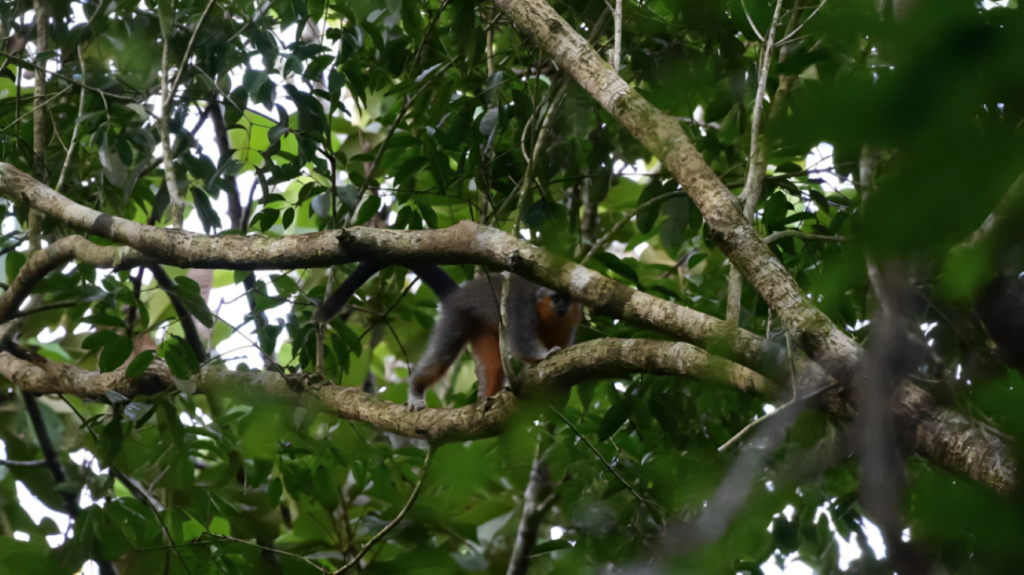
Sinop, Brazil – 4 April 2025 – On a quiet morning in 2024, small-scale farmer Armando Schlindwein had an unexpected visitor: a rare orange-bearded monkey perched atop the roof of his farmhouse, located on the fringes of Brazil’s Amazon rainforest.
The visitor, a Groves’ Titi monkey (Plecturocebus grovesi), also known locally as the zogue-zogue, had likely ventured out from one of the last surviving patches of forest in search of safety. Listed as “Critically Endangered” by the International Union for Conservation of Nature (IUCN), the species is found only in Brazil’s central Mato Grosso state and is facing an existential crisis due to rampant deforestation.
“This little creature is endangered. We need to do something to preserve it,” said 62-year-old Schlindwein, whose encounter with the monkey inspired a grassroots conservation effort.
Creating a Path Back to the Forest
With the assistance of local environmental NGOs, including the Ecotono Institute and the Movement of People Affected by Dams (MAR), Schlindwein and his neighbours initiated a reforestation project on a deforested hectare (2.5 acres) of land. Together, they planted 47 native tree species, creating a potential corridor that would allow the monkey family—four adults and one infant—to safely return deeper into the forest.
“Saving them is a daily task,” Schlindwein remarked.
The goal is to triple the available habitat for the monkeys within five to seven years, allowing future generations to migrate and thrive.
A Species at Risk
Groves’ Titi monkeys are about the size of a domestic cat and known for their distinctive orange facial hair. Despite their charming appearance, their numbers are estimated in the low thousands, with population decline fuelled by both environmental and man-made disruptions.
Conservation Snapshot: Groves’ Titi Monkey
| Scientific Name | Plecturocebus grovesi |
|---|---|
| Common Name | Groves’ Titi or Zogue-zogue |
| Conservation Status | Critically Endangered (IUCN Red List) |
| Endemic Region | Mato Grosso, Brazil |
| Estimated Habitat Loss | 42% (as of 2019), projected to reach 86% |
| Key Threats | Deforestation, monoculture farming, flooding from hydroelectric plants |
A Forest Shrinking Fast
The monkeys live in what is infamously called the “Arc of Deforestation”, one of the most rapidly devastated regions of the Amazon. According to a 2019 study cited in the Primates in Peril report (IUCN, 2022–23), 42% of the Groves’ Titi’s habitat has already been lost. Without intervention, 86% of their range could vanish within the next 25 years.
“When offspring are born and need to migrate to continue the reproductive cycle, they have nowhere to go,” said primatologist Gustavo Rodrigues Canale of the Federal University of Mato Grosso.
Hydroelectric Projects and Fragmented Forests
The troubles don’t end with deforestation. Locals have reported that the Sinop Hydroelectric Plant (UHE)—partly owned by French energy firm EDF—has created artificial lagoons that the monkeys cannot cross.
“There used to be a stream with trees here,” explained Anthony Luiz, a spokesman for MAR. “Now there’s a 300-metre-wide lagoon from the hydro project, blocking their path.”
Worse still, environmentalists say that felled trees have been left to rot, disrupting aquatic ecosystems and fueling fires during the dry season, displacing monkeys and other wildlife.
Company Response and Monitoring
In response, Sinop Energia, which operates the plant, claimed that it complies with all environmental regulations and maintains active monitoring of wildlife, including a specific programme for threatened primates as required by law. However, conservationists argue that such efforts fall short of addressing the larger ecological consequences.
Hope Through Sustainable Models
According to the IUCN’s Primates in Peril report, long-term solutions include:
Creating biological reserves
Replacing monoculture farming with agroforestry
Implementing agroecological food production systems
These sustainable models could offer both livelihood and habitat security in a region where the line between farming and forest continues to blur.