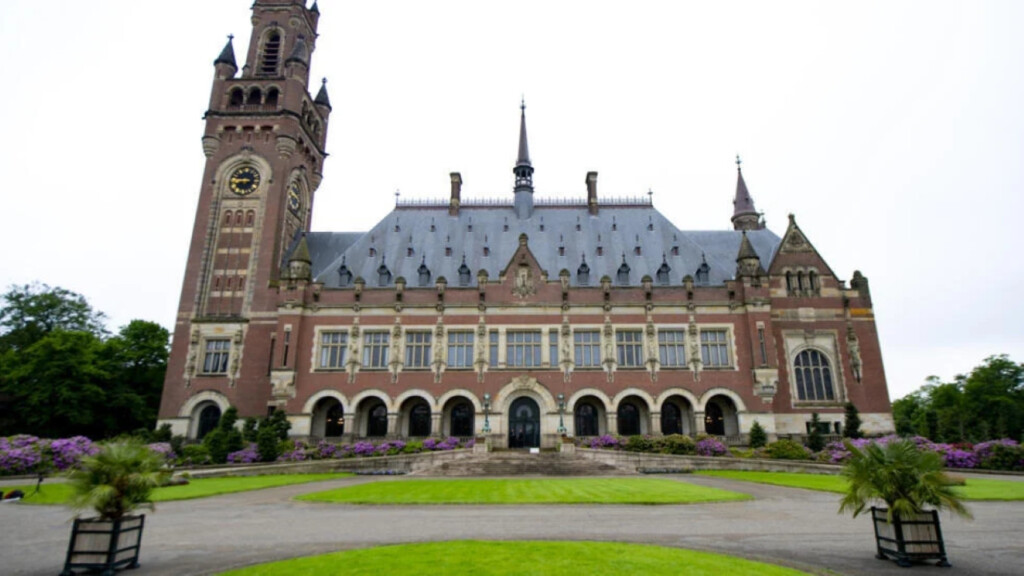
The Hague, 10 April 2025 (BSS/AFP) – Sudan has brought a landmark case before the International Court of Justice (ICJ), accusing the United Arab Emirates (UAE) of being the “driving force” behind what it terms a genocide in Darfur, through alleged support to the Rapid Support Forces (RSF) – a paramilitary group engaged in a brutal conflict with Sudan’s military.
Sudan’s Legal Accusation Against the UAE
In its opening statement at the ICJ in The Hague, Sudan’s acting Justice Minister, Muawia Osman, asserted that the UAE played a central role in the Darfur atrocities by providing direct logistical and military support to the RSF.
“The ongoing genocide would not be possible without the complicity of the UAE, including the shipment of arms to the RSF,” said Osman.
He further accused the UAE of aiding and abetting acts of mass killing, systematic rape, forced displacement, and large-scale looting in the Darfur region – particularly targeting the Masalit ethnic group.
Sudan is seeking a court ruling to compel the UAE to:
Cease all support to the RSF.
Provide full reparations to war victims, including financial compensation.
Acknowledge its alleged role in international crimes.
UAE’s Response: ‘Political Theatre’
Responding to the accusations, Reem Ketait, a senior UAE official, dismissed the case as a “blatant misuse” of the ICJ, stating:
“Sudan’s submission is entirely without legal or factual merit… What Sudan needs now is not political theatre, but an urgent ceasefire and sincere negotiations between the warring factions.”
The UAE has consistently denied supplying arms or backing the RSF, and has instead called for a return to peace talks.
Background: A Conflict Escalating Since 2023
Since the outbreak of civil war in Sudan in 2023 between the national army and the RSF, tens of thousands have died, and millions displaced. Darfur, already scarred by earlier genocides in the early 2000s, has once again become a theatre of ethnic violence and humanitarian catastrophe.
Estimated Toll Since 2023 Conflict Began:
| Indicator | Estimated Number |
|---|---|
| Deaths (civil and combat) | 50,000+ |
| Displaced persons | 8.5 million |
| Refugees to neighbouring states | 2 million+ |
| Masalit community fatalities | Thousands |
Note: Independent verification of statistics from conflict zones remains difficult due to lack of access and ongoing hostilities.
Jurisdictional Hurdles at the ICJ
Despite the gravity of the charges, Sudan’s case may struggle to move forward due to jurisdictional limitations. When the UAE acceded to the 1948 Genocide Convention in 2005, it entered a reservation to Article IX, which allows countries to bring each other to the ICJ over disputes related to genocide.
International law expert Michael Becker from Trinity College Dublin remarked:
“The ICJ can be expected to conclude that it lacks jurisdiction over the dispute because of the UAE’s reservation.”
Sudan, however, argues that such a reservation is incompatible with the core principles of the Genocide Convention, which upholds global collective responsibility to prevent and punish genocide.
Broader Diplomatic Context
The hearing at the ICJ coincides with international diplomatic efforts to revive Sudanese peace negotiations. On Wednesday, the United States and Saudi Arabia urged both Sudanese factions to return to talks.
Additionally, the Sudan-UAE case follows other recent high-profile ICJ cases involving genocide, including those against Myanmar (Rohingya crisis) and Russia (Ukraine invasion).
While ICJ rulings are binding, enforcement is notoriously weak. For example, the court ordered Russia to cease military action in Ukraine—an order widely ignored.