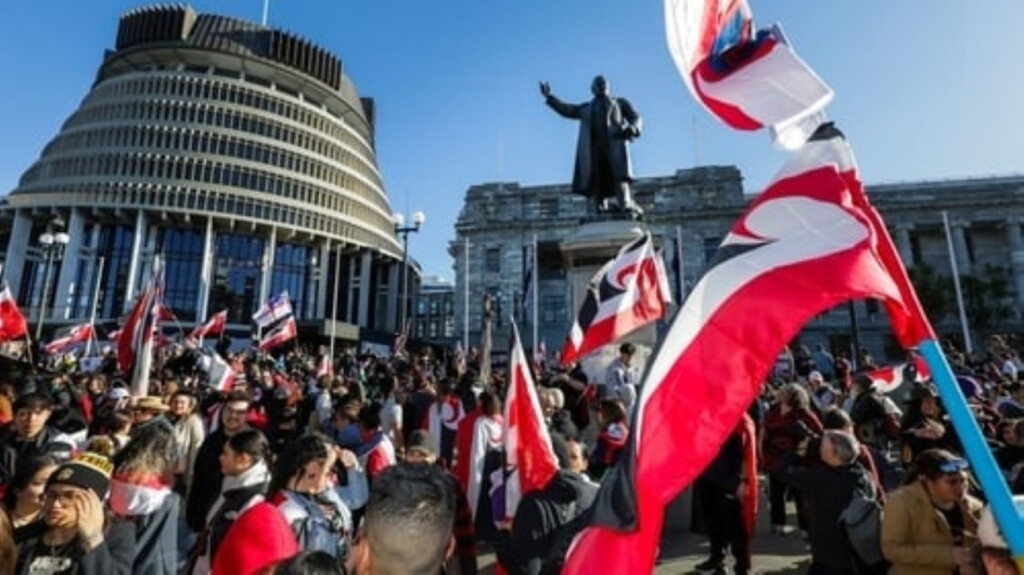
SYDNEY, 10 April 2025 (BSS/AFP) – New Zealand’s Parliament has overwhelmingly voted down a controversial bill that aimed to redefine the principles of the nation’s founding Treaty of Waitangi, sparking emotional scenes and a symbolic Māori folk song in the chamber.
Historic Rejection of Treaty Principles Bill
In a resounding decision, 112 Members of Parliament voted against the Treaty Principles Bill, with only 11 supporting it. The bill had sparked widespread outcry for what many considered an attack on Indigenous rights.
As the results were announced, the chamber echoed with the voices of lawmakers and observers singing a Māori waiata (folk song) – a moving expression of unity and nationhood, marking a symbolic victory for Māori and their supporters.
Background: The Treaty of Waitangi
The Treaty of Waitangi, signed in 1840 between 540 Māori chiefs and representatives of the British Crown, is considered New Zealand’s founding document. While the English and Māori versions of the treaty differ in wording and interpretation, its principles have evolved to ensure:
Recognition of Māori as tangata whenua (the people of the land)
Protection of Māori interests and taonga (treasures, including language and land)
Partnership between Māori and the Crown
| Key Treaty Principles | Purpose |
|---|---|
| Partnership | Shared governance between Māori and the Crown |
| Protection | Safeguarding Māori rights and cultural heritage |
| Participation | Inclusion of Māori in decision-making processes |
These principles have underpinned affirmative actions, cultural protections, and political recognition for Māori in modern New Zealand.
Contentious Bill and Public Backlash
The bill, introduced by David Seymour, leader of the ACT Party (a junior partner in the coalition government), argued that Māori had been granted “special rights” not afforded to other New Zealanders, and called for a redefinition of the Treaty’s modern interpretation.
Seymour, a vocal opponent of affirmative action, claimed the bill aimed to restore equality by removing what he described as preferential treatment based on ethnicity.
However, critics contended that the bill sought to dismantle hard-won Indigenous rights and undermine efforts to close long-standing social disparities between Māori and non-Māori populations.
Public Response: Largest Civic Pushback in Recent History
The proposal triggered one of the largest public mobilisations in the nation’s history:
Over 35,000 demonstrators marched through the capital, Wellington, in 2024 to protest the bill.
A record-breaking 300,000 public submissions were made to the parliamentary committee – 90% opposed the bill.
| Public Response to Treaty Principles Bill |
|---|
| Demonstrations in 2024 |
| Submissions Received |
| Percentage Opposed |
Ongoing Inequities
Māori, who make up around 17% of New Zealand’s population (approximately 900,000 people), continue to experience deep-rooted socio-economic challenges:
Higher rates of poverty and incarceration
Lower life expectancy
Disparities in education and health outcomes
Supporters of the Treaty and its principles argue that retaining a bicultural framework is crucial to addressing these ongoing inequities.