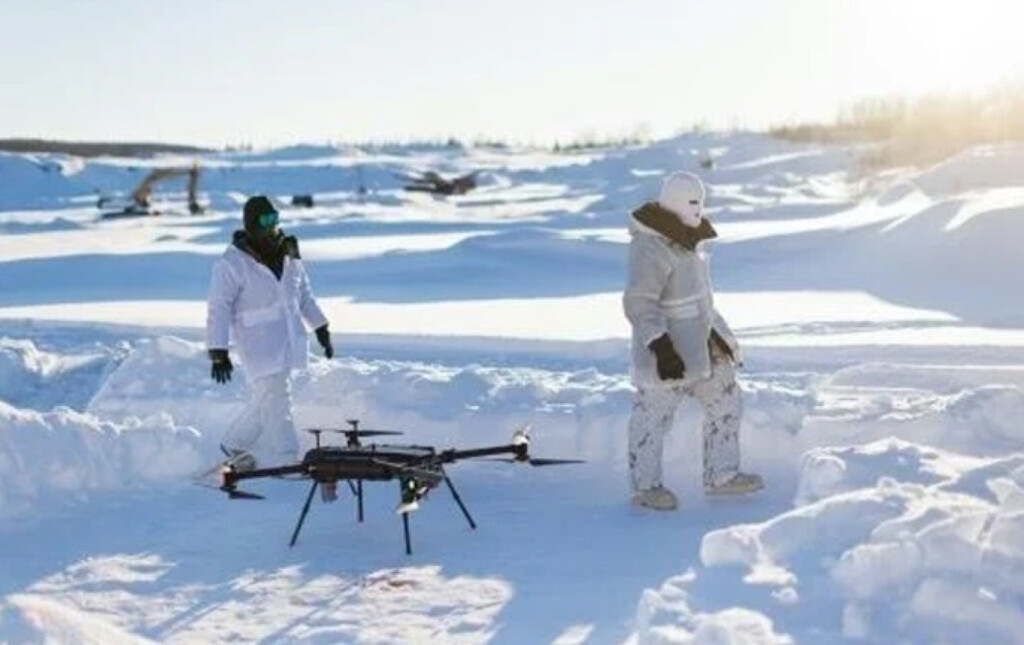
TUKTOYAKTUK, CANADA, 12 April 2025 (BSS/AFP) – Canadian armed forces are intensifying preparations for Arctic operations, adapting to one of the harshest environments on Earth amid growing global interest in the polar north. With climate change accelerating ice melt and opening once-inaccessible routes, the region is becoming a critical frontier in military strategy and sovereignty.
🇨🇦 Defending the North: A New Military Priority
The Canadian Arctic, comprising 40% of the nation’s landmass, is at the centre of this renewed defence focus. As Arctic accessibility increases due to rising temperatures, so too does the risk of geopolitical competition—especially over the region’s abundant natural resources, including oil, gas, minerals, and freshwater reserves.
Colonel Darren Turner, commander of Operation Nanook, explained:
“Once a route is opened, they will come. That is something we need to be prepared to interdict and control.”
🧊 Operation Nanook: Training in the Extreme
Established in 2007, Operation Nanook—named after the Inuit word for polar bear—is Canada’s annual military exercise in the Arctic. This year’s training saw troops deployed on the frozen tundra near Tuktoyaktuk, where they tested cold-weather diving, infrared reconnaissance, and survival tactics in temperatures plunging to -26°C.
| Operation Nanook 2025 Highlights | Details |
|---|---|
| Location | Tuktoyaktuk, Northwest Territories |
| Temperature | As low as -26°C |
| Key Activities | Diving in freezing water, thermal imaging, survival skills |
| Objective | Build troop readiness for Arctic deployment |
| Planned Infrastructure | 3 new Arctic military hubs |
💬 Voices from the Ice
Air Force Captain Jonathan Vokey, a helicopter pilot, noted the unique challenges of flying in the Arctic:
“In normal conditions, I use the treeline to gauge my altitude. Here, there is nothing but white snow—it’s hard on the body, and on the aircraft.”
Corporal Cassidy Lambert, experiencing her first Arctic deployment, said the environment required a new mindset:
“I’m from Newfoundland and Labrador—our winters are wet and damp. The Arctic is going to be a little different.”
Rifleman Steven Breau highlighted a lesser-known danger:
“Sweat can be your enemy. If you overheat, it gets wet, then it freezes—and that’s how you get frostbite.”
🛰️ Sovereignty and Surveillance
Canada’s strategic investment in the Arctic has recently taken a major leap. Prime Minister Mark Carney, just weeks into his premiership, travelled to Iqaluit to announce a multi-billion-dollar radar upgrade critical for Arctic monitoring and national defence.
| Recent Arctic Initiatives by Canada | Purpose |
|---|---|
| New radar system announced (2025) | Monitor northern approaches |
| 3 Arctic military hubs planned | Enhance rapid deployment capability |
| Increased funding for Arctic operations | Bolster national sovereignty |
🌍 A Global Flashpoint
Though still remote, the Arctic is increasingly on the radar of global powers. Former U.S. President Donald Trump stirred controversy by suggesting Greenland, an autonomous Danish territory, should be annexed for American security interests.
Canadian military leaders remain wary. While direct confrontation with Chinese or Russian forces during Operation Nanook is considered “highly unlikely,” Major Andrew Melvin warned of possible intelligence-gathering by foreign powers.
“It is possible that either the PRC (People’s Republic of China) or the RF (Russian Federation) intelligence services will attempt to collect information during the exercise,” he said.
🧭 The North as Canada’s Compass
For Colonel Turner, the Arctic represents far more than a tactical zone. It symbolises Canada’s sovereignty and national purpose:
“It’s part of our raison d’être… it’s deeply tied to who we are as a nation.”
As the polar ice recedes and the strategic landscape shifts, Canada is making it clear: the Arctic is no longer just a remote frontier—it is now a line of defence.