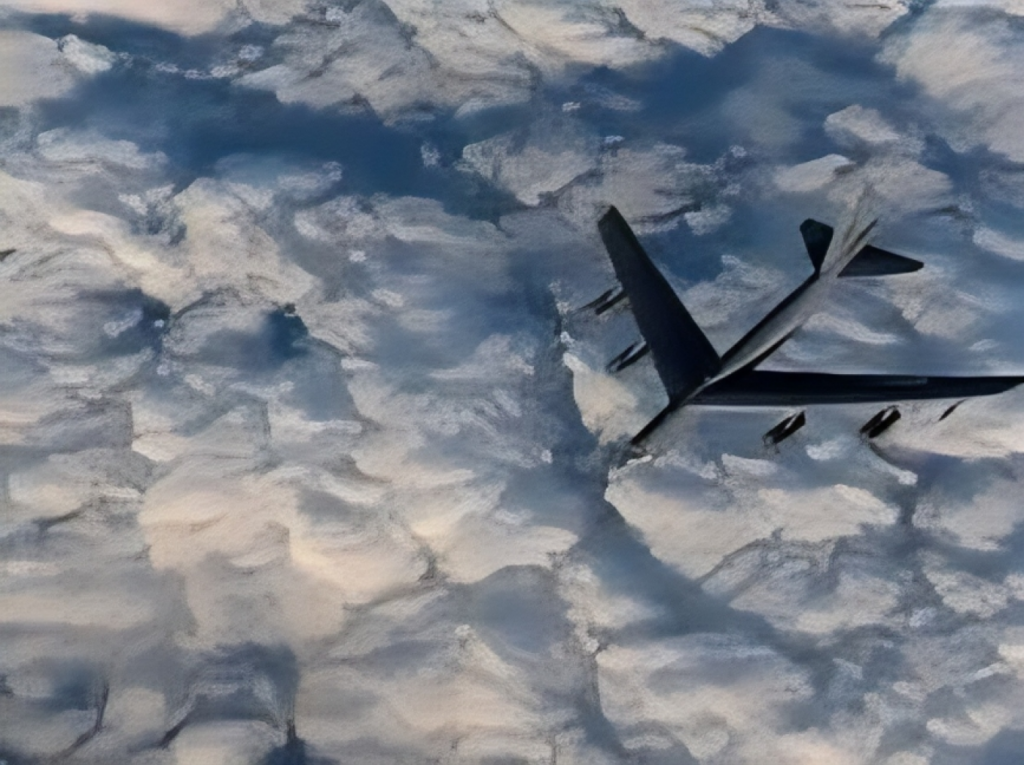
United States aviation regulators have launched an inquiry into a serious near-miss incident involving a Delta-operated passenger aircraft and a US Air Force B-52 bomber over North Dakota. The situation, which prompted emergency evasive action from the commercial flight crew, is raising fresh concerns about coordination between military and civilian aircraft in shared airspace.
The close call occurred on Friday, 18th July, when SkyWest Airlines Flight 3788, operating as a Delta connection, was on approach to Minot International Airport after departing from Minneapolis.
Details of the Incident
| Flight | SkyWest Airlines Flight 3788 (Delta connection) |
| Departure Airport | Minneapolis–Saint Paul International Airport |
| Destination | Minot International Airport, North Dakota |
| Incident Date | Friday, 18 July 2025 |
| Military Aircraft Involved | B-52 Stratofortress bomber (US Air Force) |
| Airspace Type | Shared civil-military airspace |
As the aircraft approached Minot, the SkyWest pilot noticed another aircraft closing in from the right and executed an abrupt right turn to avoid a collision.
“I don’t know how fast they were going, but they were a lot faster than us. I felt it was safest to turn behind it,”
said the pilot to passengers in an audio recording obtained from the flight.
He apologised for the “aggressive manoeuvre,” reassuring passengers that “this is not normal at all.”
FAA and Airline Responses
The Federal Aviation Administration (FAA) released a statement confirming the investigation into the event involving SkyWest Flight 3788, adding that the flight was cleared for approach but executed a go-around upon spotting another aircraft in its path.
SkyWest Airlines issued its own statement confirming:
- The aircraft was on final approach.
- Guidance from the control tower directed the flight.
- A go-around was performed for safety when another aircraft appeared unexpectedly.
US Air Force Statement and Radar Discrepancies
According to a statement from Minot Air Force Base, the B-52 bomber had been conducting a pre-approved flyover at the North Dakota State Fair and had been in radio contact with air traffic controllers at Minot International Airport. The base reported:
“The tower did not advise of the inbound commercial aircraft,”
adding that the B-52 was instructed to fly two miles westbound after completing the flyover.
This lapse in communication appears to be at the heart of the investigation.
A key issue appears to be that Minot International Airport’s control tower does not use radar, which is not uncommon for smaller or more remote American airfields. In contrast, the nearby Air Force base does have radar capability, but it appears there was no coordination regarding the commercial jet’s presence.
In a video recorded by passenger Monica Green and later verified by Storyful, the pilot is heard saying:
“He [tower] said ‘Turn right’. I said there’s an aeroplane over there. And he says ‘Turn left’. I don’t know why they didn’t give us a heads-up… the Air Force base does have radar and nobody said, ‘Hey, there’s also a B-52 in the pattern.’”
Passenger Experience
Green, who shared the encounter on Instagram, told NBC News that she was left feeling “sick to my stomach” after the sudden evasive manoeuvre. She described the plane veering sharply and seeing only grass through the window, with no visible skyline:
“I just remember the plane going, like, sideways… and just looking straight out the window and just seeing grass.”
Broader Safety Concerns
This latest incident comes less than six months after a tragic collision between a US Army helicopter and an American Airlines jet near Washington’s Reagan National Airport, which resulted in the deaths of 67 people. That accident triggered an ongoing federal and congressional review into how civilian and military aircraft share US airspace.
The Minot near-miss adds fresh urgency to improving communication protocols between military bases and civilian aviation authorities, particularly in areas where radar systems are lacking or not shared.