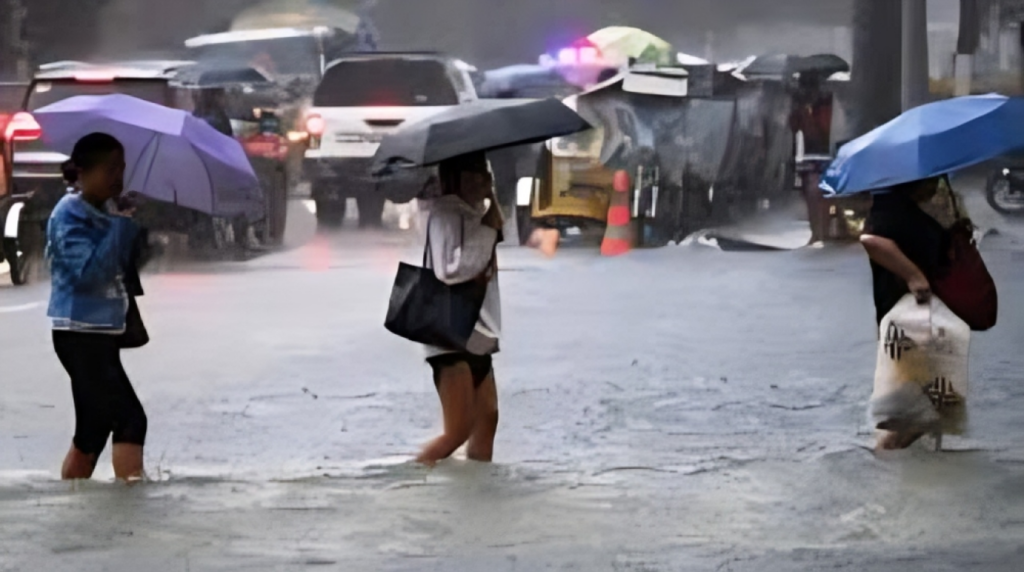
Torrential rains that caused severe flooding in the Philippines brought life to a standstill in the capital, Manila, on Tuesday. Tens of thousands of residents were forced to evacuate their homes, and at least two individuals are believed to be missing, following widespread flooding triggered by the overflowing of the Marikina River.
Flooding Disrupts Life in Manila and Surrounding Provinces
Schools and government offices in Manila, along with neighbouring provinces, were closed after a night of intense rainfall that saw the region’s Marikina River breach its banks. The floods left a large part of the capital inundated, with homes and streets submerged under several feet of water.
Key Evacuations:
| Area Affected | Number of Evacuated People | Evacuation Sites |
| Marikina River Area | 23,000 | Schools, village halls, and covered courtyards |
| Quezon & Caloocan Cities | 25,000 | Temporary shelters in schools and community centres |
More than 23,000 people living in flood-prone areas along the Marikina River were evacuated overnight, seeking refuge in schools, village halls, and open courtyards. An additional 25,000 people were evacuated in the metropolitan areas of Quezon and Caloocan.
“These people are usually from low-lying areas near creeks feeding into the river,” explained Wilmer Tan of the Marikina Rescue Office. The river reached an alarming height of 18 metres (59 feet), exacerbating the scale of the disaster.
Tragedy Strikes: Two Missing in Caloocan
One of the most tragic incidents occurred when an elderly woman and her driver were swept away by the raging waters of a swollen creek in Caloocan while attempting to cross a bridge. John Paul Nietes, an assistant supervisor at the emergency operations centre, reported that the car was found later the same night, but as of Tuesday morning, both individuals remained missing.
“The car was recovered last night, but we haven’t found either of them,” said Nietes. “The car window was broken, so the hope is that they managed to escape.”
Receding Waters and Continuing Danger
While floodwaters began to recede on Tuesday morning, thousands of people were still unable to return to their homes due to the dangerous conditions. As the region continued to battle the monsoon rains, the National Disaster Risk Reduction and Management Council confirmed that at least three people have lost their lives, and seven others are still missing in the central and southern parts of the country. These fatalities occurred after Tropical Storm Wipha passed by the Philippines on Friday, triggering severe flooding.
The Philippines experiences an average of 20 storms or typhoons each year, many of which affect the nation’s poorest regions, where the most vulnerable communities live.
The Growing Threat of Climate Change
The country’s vulnerability to destructive storms is only increasing. Climate change is exacerbating the frequency and intensity of these natural disasters, making already vulnerable areas even more prone to flooding.
“This is hard, because if the rain continues… the river will swell,” said 61-year-old Avelina Lumangtad, a street sweeper from Manila, as she stood beside a flooded thoroughfare. “The floods are dangerous.”
With the continued threat of storms and rising floodwaters, residents and emergency responders remain on high alert. While the water levels were gradually decreasing, the risks posed by ongoing rainfall and swelling rivers meant that many families are still displaced, and efforts to locate the missing continue.
A Nation on Edge
The Philippines’ consistent battle with storms and floods highlights the urgent need for enhanced disaster preparedness and climate adaptation measures. As the global climate crisis intensifies, the country faces an increasing frequency of extreme weather events that leave its most vulnerable populations at risk.
The scale of this flooding event in the capital underscores the broader challenges the Philippines faces in coping with the effects of climate change, as well as the need for coordinated response efforts to protect lives and property from future disasters.