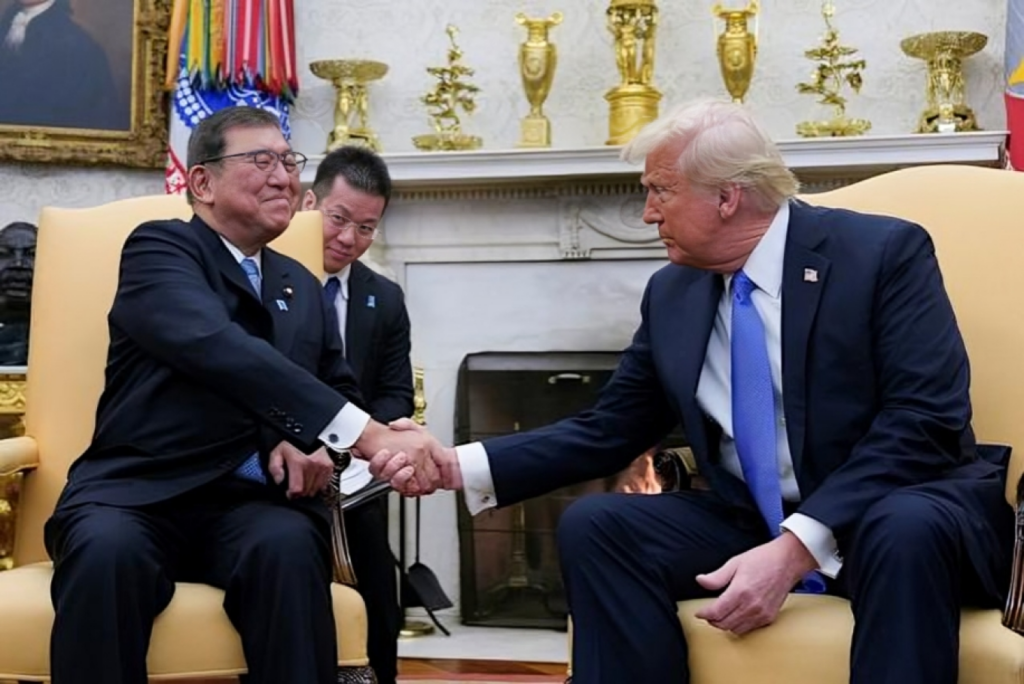
US President Donald Trump declared on Tuesday a “massive” trade deal with Japan, which reduces a threatened 25 per cent tariff to 15 per cent ahead of the 1 August deadline.
Trump has threatened to impose punitive tariffs on dozens of countries if they fail to reach agreements with the United States by next month. So far, the President has announced trade accords with Japan, Britain, Vietnam, the Philippines, and Indonesia, while negotiations continue with other partners.
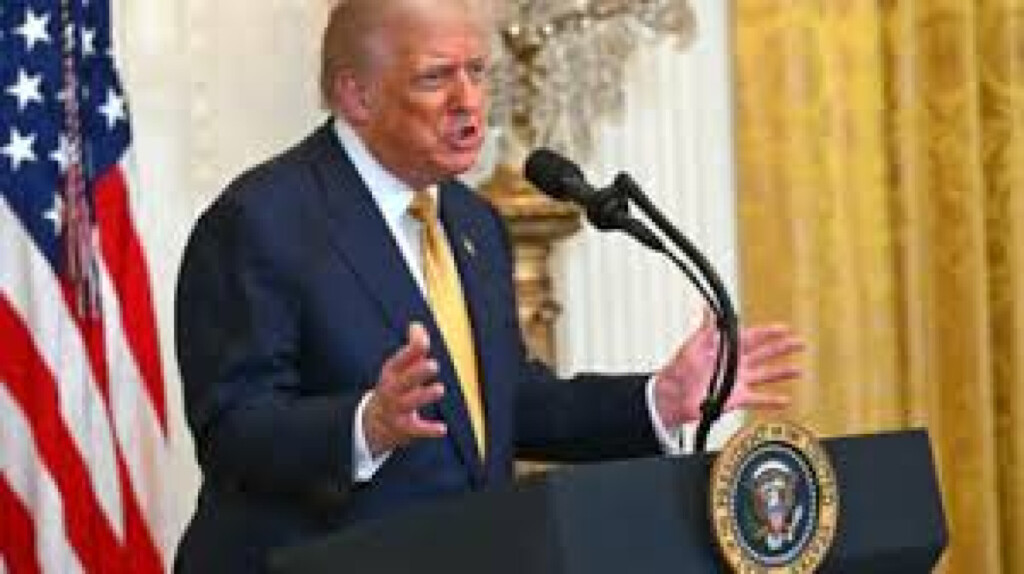
Speaking on his Truth Social platform, Trump said,
“We just completed a massive Deal with Japan, perhaps the largest Deal ever made.”
He further claimed,
“Japan will invest, at my direction, $550 billion into the United States, which will receive 90% of the profits.”
Although details on this substantial investment plan remain vague, Trump asserted the deal “will create hundreds of thousands of jobs.”
| Key Element | Details |
| Tariff reduction | From 25% to 15% on Japanese imports |
| Investment commitment | $550 billion directed investment by Japan |
| Job creation forecast | Hundreds of thousands of jobs |
| Current tariffs before deal | 10% on Japanese imports, 25% on autos, 50% on steel and aluminium |
| Tariffs on autos (post-deal) | Reduced to 15% |
Japanese imports into the United States have already been subject to a 10 per cent tariff, which was set to rise to 25 per cent on 1 August without a deal. Duties of 25 per cent on Japanese automobiles—an industry that accounts for roughly eight per cent of Japanese jobs—had also been imposed, along with 50 per cent tariffs on steel and aluminium.
Japanese Prime Minister Shigeru Ishiba confirmed in Tokyo on Wednesday that the auto tariff had been cut to 15 per cent. He said,
“We are the first country in the world to reduce tariffs on automobiles and auto parts, with no limits on volume.”
He added,
“We think it is a great achievement that we were able to get the largest cut among countries which have trade surpluses with the US.”
Following the announcement, Japanese auto stocks surged on Wednesday, with Toyota shares soaring more than 12 per cent.
US-bound shipments of Japanese vehicles fell by 26.7 per cent in June, fuelling fears that Japan could slip into a technical recession. Last year, vehicles accounted for around 28 per cent of Japan’s 21.3 trillion yen ($142 billion) exports to the US—the world’s largest economy.
In contrast, US-made cars sell poorly in Japan, with only a few hundred sold annually by manufacturers such as General Motors, compared with millions of Toyotas purchased by US consumers—an ongoing frustration for President Trump.
Rice Imports and Agricultural Concerns
Trump has also pressed Japan to increase imports of US rice, which has seen price surges recently in Japan, as well as US oil and gas.
On Tuesday, he stated,
“Japan has agreed to open their country to trade including cars and trucks, rice and certain other agricultural products, and other things.”
Rice imports are a sensitive topic in Japan, and Prime Minister Ishiba’s government—which recently lost its majority in the upper house elections—had previously ruled out concessions on this front.
Ishiba emphasised on Wednesday that the deal “does not sacrifice Japan’s agricultural sector,” despite the President’s remarks.
Additional Trade Agreements and Ongoing Negotiations
Under pressure to finalise trade deals before his 1 August tariff deadline, Trump also announced earlier on Tuesday a pact with the Philippines, which will face 19 per cent tariffs on its exports to the US.
Similarly, the White House revealed details of a deal with Indonesia, involving eased restrictions on critical mineral exports and tariffs reduced to 19 per cent from a threatened 32 per cent.
However, US officials noted that Indonesian goods suspected of being transshipped to avoid higher duties will be subject to a 40 per cent tariff.
Following a series of escalating trade tensions with China, the two economic giants agreed to a temporary reduction in tariffs, with a further round of negotiations scheduled next week in Stockholm.
Since returning to the White House in January, Trump has imposed sweeping 10 per cent tariffs across allies and competitors alike, along with steeper duties on steel, aluminium, and automobiles.
Legal challenges remain ongoing against Trump’s broad tariffs, which do not discriminate by sector.