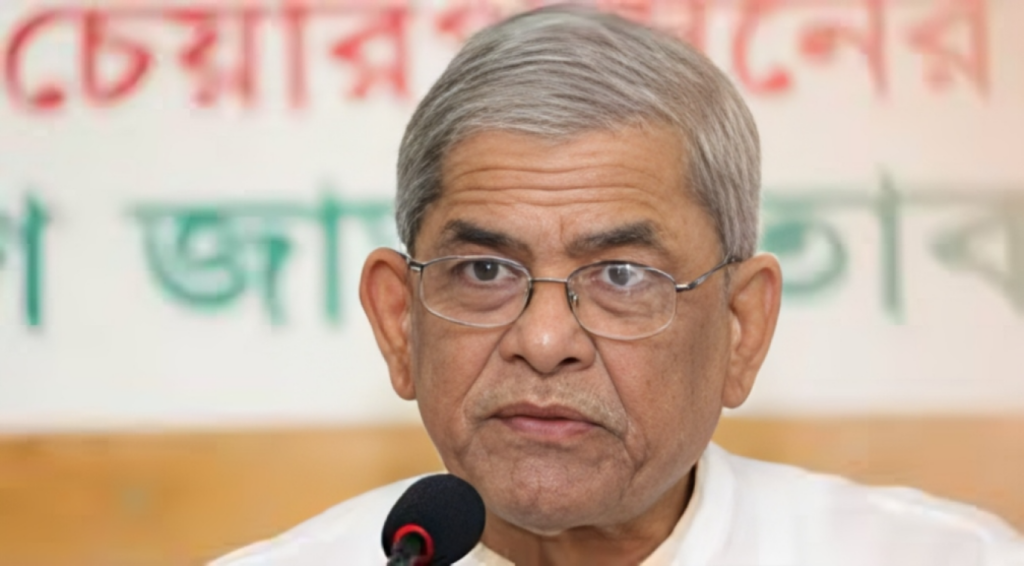
Bangladesh Nationalist Party (BNP) Secretary General Mirza Fakhrul Islam Alamgir has expressed sincere gratitude to the interim government following the arrest of former Chief Justice ABM Khairul Haque.
Speaking to journalists at the BNP Chairperson’s office in Gulshan, Fakhrul remarked:
“I sincerely thank the government for taking action against him, even after such a long overdue.”
Strong Accusations and Call for Justice
Mirza Fakhrul levelled severe allegations against the former top judge, stating:
“He is a great enemy of Bangladesh who inflicted serious damage from a position of highest authority. Entrusted with guiding the nation’s legal path, he betrayed both the people and the state.”
The senior BNP leader further called for a comprehensive investigation into all allegations against Khairul Haque and urged for a fair and transparent judicial process. He stated:
“He should be subjected to exemplary punishment so that no one in a similar position dares to betray the country again.”
Arrest and Background
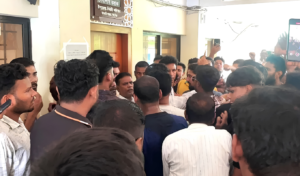
The Detective Branch (DB) of the Dhaka Metropolitan Police (DMP) arrested Khairul Haque earlier this morning. He had also served as the former Chairman of the Law Commission.
| Name | ABM Khairul Haque |
| Former Position | Chief Justice of Bangladesh |
| Term as CJ | 1 October 2010 – 17 May 2011 |
| Other Roles | Chairman, Law Commission (post-retirement) |
| Key Legal Legacy | Delivered verdict nullifying the Thirteenth Amendment |
| Controversial Ruling | Declared caretaker government system illegal on 10 May 2011 |
The Appellate Division bench, led by Justice Khairul Haque, had delivered a landmark ruling on 10 May 2011, which nullified the Thirteenth Amendment to the Constitution, thereby abolishing the caretaker government system — a decision that has remained politically contentious and widely debated across the nation.
Fakhrul’s remarks underscore long-standing political dissatisfaction within the BNP, which had long criticised the judiciary’s role during Khairul Haque’s tenure. His arrest now marks a significant development in Bangladesh’s evolving political and legal landscape.