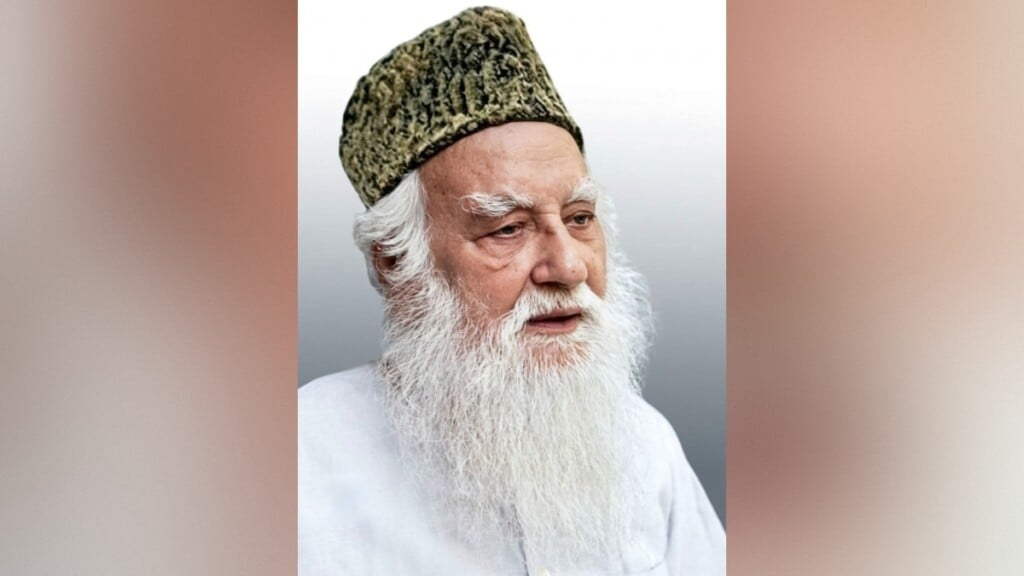
In the tapestry of Bengali history, certain individuals transcend their era to become enduring symbols of a nation’s struggle, courage, and pursuit of rights. Mawlana Abdur Rashid Tarkabagish was one such uncompromising freedom fighter and visionary leader. From the anti-British colonial movement to the Language Movement, and from advocating for peasant rights to the struggle for democracy and emancipation, he remained at the forefront of every pivotal historic chapter.
Mawlana Abdur Rashid Tarkabagish was born on 27 November 1900 into a traditional Pir (spiritual) family in Tarutia village, located in the Salanga region of Sirajganj district. His father was Shah Syed Abu Ishaq and his mother was Azizunnesa. Raised in an environment grounded in religious ethics, humanism, and civic duty, he developed an innate sense of patriotism from an early age.
One of the most illustrious chapters of his life was the historic Salanga Movement. On 27 January 1922, amidst the height of the anti-British Non-Cooperation Movement and the boycott of foreign goods, thousands of people gathered at Salanga Market under his leadership. The British imperial police launched a brutal crackdown and opened fire on the assembled crowd, soaking the soil of Salanga with blood. The tragic event, in which a large number of protestors lost their lives or were wounded, remains enshrined in history as the “Salanga Massacre” or “Salanga Uprising.” Tarkabagish’s heroic stance as the primary leader of this resistance earned him a legendary status in the anti-colonial movement.
His political journey only intensified in the decades that followed. During the Language Movement of 1952, his active leadership significantly strengthened the Bengali nation’s struggle for linguistic rights. He voiced the demand for state language status for Bengali in the Constituent Assembly of Pakistan without hesitation. On 12 August 1955, he created history by becoming the first parliamentarian to deliver a speech in Bengali in the Constituent Assembly of Pakistan—a bold statement asserting Bengali self-identity and linguistic pride.
From 1956 to 1967, he served as the President of the Awami League. Alongside his parliamentary roles, he actively participated in numerous socio-political movements, including the peasant movement, the Khilafat Movement, and the Tebhaga Movement. His stance against exploitation and deprivation remained steadfast, and his voice against injustice was utterly uncompromising.
Tarkabagish’s political philosophy was never merely about power; it was fundamentally about securing the rights of ordinary citizens. Rooted in moral principles, national consciousness, democratic values, and a deep commitment to the oppressed, his long political career was driven by public service. He was simultaneously a charismatic mass leader, the voice of farmers and workers, and a fearless soldier in the fight for Bengali rights.
On 20 August 1986, during the final hours of the night, he passed away at the then-PG Hospital (now Bangabandhu Sheikh Mujib Medical University) in Dhaka. Although his mortal remains returned to the earth, the history of his relentless struggle continues to illuminate our path.
From the blood-soaked fields of Salanga to the streets paved for linguistic and national rights, his footprint remains indelible across every turning point in the struggle for the liberation of the Bengali people. On his death anniversary, we pay our deepest respects, humble tributes, and profound gratitude to this legendary leader. May his name remain forever immortalized in the annals of history.