A controversial waste-to-power project at Aminbagh in Dhaka is returning to the spotlight as final agreements approach. Originally formulated under the previous Awami League administration in December 2021, the initiative involved a deal with the state-owned China Machinery Engineering Corporation (CMEC) to establish a 42.5-megawatt plant. At that time, the tariff was fixed at approximately 0.21 US dollars per unit under a “no electricity, no payment” framework. Based on the exchange rates of that era, the cost translated to slightly over 18 Taka per unit.
Four and a half years later, the dollar-denominated tariff remains virtually unchanged, yet the local currency equivalent has climbed to roughly 25 Taka per unit. State Minister for Local Government Mir Shahe Alam recently noted that the facility aims to feed around 42 megawatts into the national grid within the next eighteen months, with the government purchasing the power at this elevated rate. Although the core pricing model has not shifted in foreign currency terms, domestic currency depreciation has driven up the cost by 35 to 40 percent.
This prolonged delay raises serious questions regarding project management and financial accountability. If the stagnation stemmed from investor inaction or bureaucratic hurdles, placing the entire burden of currency devaluation onto state coffers and local consumers invites scrutiny. Furthermore, rapid advancements in renewable energy technology since 2021 could have provided leverage to renegotiate lower tariffs.
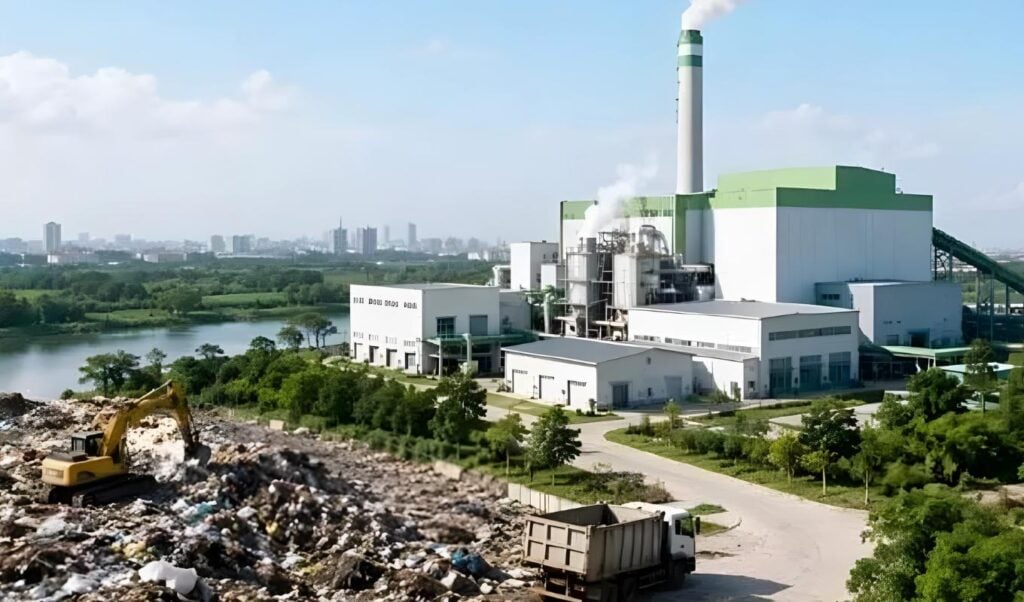
Proponents of the scheme argue that evaluating the project solely on electricity generation overlooks its broader environmental utility. Dhaka generates colossal volumes of municipal waste daily, straining existing landfills and driving up disposal costs. The plant is designed to handle roughly 3,000 tonnes of waste daily at the Aminbagh site, curbing greenhouse gas emissions and mitigating urban pollution. Government officials maintain that offsetting waste management expenses and cleaning up the metropolis provide intangible economic benefits that balance out the high tariff.
Nevertheless, critics contend that these environmental advantages existed during the initial signing in 2021. Re-engaging with the same contractor under identical dollar terms without seeking cost reductions during contract renewals remains a contentious issue, particularly at a time when authorities are scrutinizing high-cost energy agreements. While the “no electricity, no payment” clause protects the state from paying before generation begins, currency risk remains a persistent hazard. Any future depreciation of the Taka will instantly inflate the local expenditure, ultimately relying on taxpayer funds and state subsidies to bridge the financial gap.