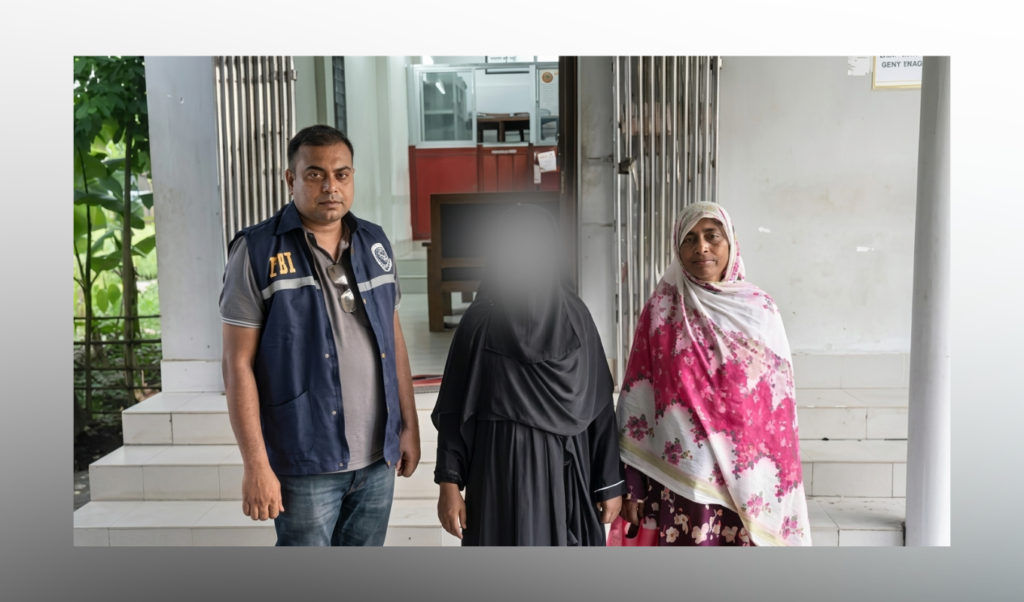
In a dramatic turnaround that highlights the perils of hasty legal accusations, the Police Bureau of Investigation (PBI) has located a 36-year-old woman in Dhaka, six weeks after her mother filed a high-profile case alleging she had been abducted, ransomed, and murdered in Khulna.
The case originated on 11 July, when Ayesha Khatun, a resident of Naksha village in Coyra Upazila, disappeared under mysterious circumstances. Weeks after her departure, her mother, Amena Khatun, approached the Khulna Senior Judicial Magistrate’s Court on 3 August to lodge a criminal complaint. In her petition, Amena alleged that Ayesha’s husband, Islam Sardar, acting alongside two accomplices, had forcibly bundled her daughter into a microbus on the Masjidkur Bridge. The complaint further claimed that the abductors demanded a ransom of 500,000 taka and subsequently killed Ayesha and concealed her body when the money failed to materialise.
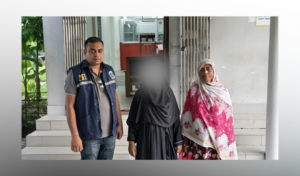
Recognising the gravity of the allegations, the court directed the PBI to initiate a comprehensive inquiry. PBI officers turned to advanced digital forensics and information technology, meticulously tracing digital footprints across regional transport routes and urban networks. The investigation culminated on Thursday, when a specialized team tracked Ayesha to a location in Dhaka, where she was residing completely unharmed.
Interrogations and judicial statements delivered to the Khulna court on Friday unravelled a starkly different narrative. Ayesha admitted that she had abandoned her household voluntarily following persistent marital discord with her husband. Unwilling to remain in the marriage, she had initially sought refuge with her parents. However, when her family insisted she return to her husband’s home, a frustrated Ayesha resolved to cut ties entirely. She fled to the capital, deliberately refraining from using mobile phones or electronic communications to evade detection by both relatives and law enforcement.
PBI Police Superintendent Reshma Sharmin confirmed the findings, noting that the sensitive nature of the case required swift, meticulous investigative work to prevent an innocent family from facing unjustified legal prosecution. Following her formal testimony before the magistrate on Friday afternoon, the court ordered that Ayesha be released into the custody of her family.
The case underscores a recurring strain on Bangladesh’s judicial and investigative infrastructure, where domestic disputes occasionally morph into spurious criminal cases involving claims of kidnapping and homicide. Through the timely application of technological tracking, investigators successfully cleared the accused husband of severe murder charges, bringing a complex marital dispute to a definitive conclusion.