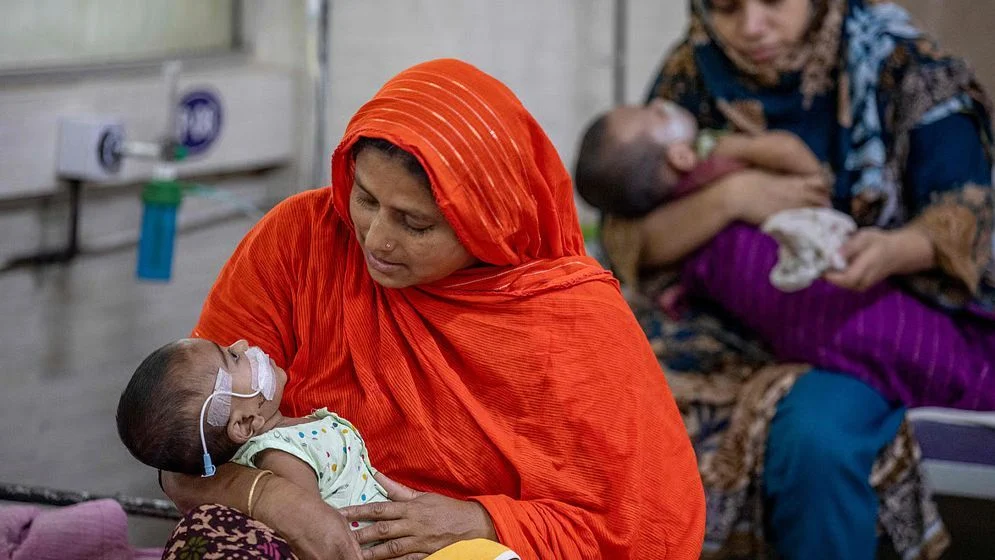
Four more children have died over the past twenty-four hours from complications associated with measles, bringing the total death toll from the outbreak to 967.
According to the latest epidemiological update released on Sunday afternoon by the Directorate General of Health Services (DGHS), health authorities recorded 1,516 new cases of children exhibiting measles or related symptoms within the same period. While no fatalities were officially confirmed as resulting strictly from laboratory-verified measles during this recent daily window, the combined toll of confirmed cases and symptomatic presentations continues to place a heavy burden on paediatric wards nationwide.
Since the outbreak’s current tracking period began on 15 March, health officials have registered a cumulative total of 967 deaths linked directly to measles or its clinical symptoms. This figure comprises 868 fatalities among children presenting with matching symptoms and 99 deaths officially confirmed as active measles cases.
The relentless transmission of the virus has strained healthcare infrastructure. Over the past day alone, 365 children were diagnosed with active measles, while another 1,151 patients presented with suspicious symptoms. Hospital admissions surged correspondingly, with 1,090 children admitted for inpatient care, whilst 1,028 recovered sufficiently to be discharged home.
Cumulative data issued by the health directorate indicates that 156,829 suspected cases have been flagged nationwide since 15 March. Among these, 19,218 cases have been independently verified as confirmed measles. Public health facilities have admitted a total of 137,347 patients for intensive management during this timeframe, with 132,292 individuals successfully treated and discharged back to their families.
Medical professionals continue to urge parents to ensure their children receive timely vaccinations, noting that routine immunisation remains the most effective safeguard against the rapid spread of the virus within local communities. Health workers are actively monitoring high-risk regions to curb further transmission as treatment centres manage the steady influx of young patients.