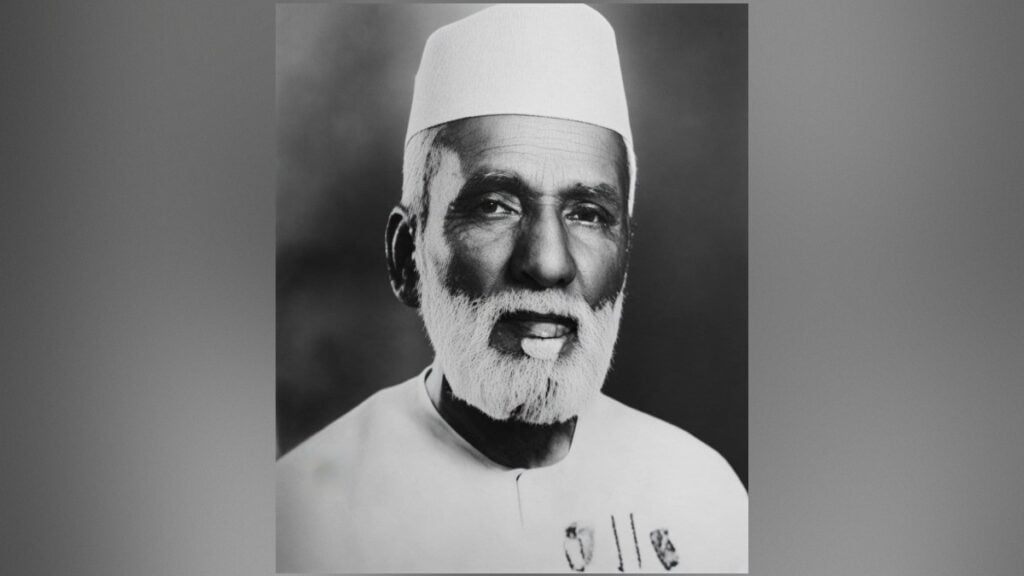
In the vast realm of Subcontinental classical music, the names of certain artists extend far beyond the pages of history; their melodies, devotion, and artistic legacy continue to echo across generations. Ustad Ayet Ali Khan was one such rare genius. As a dedicated practitioner of classical music, an extraordinary master of the sitar and surbahar, and a visionary composer, he carved a unique niche for himself in the region’s musical tapestry.
Born on 26 April 1884 in Shibpur village, located in the Nabinagar Upazila of Brahmanbaria, Ayet Ali Khan hailed from a renowned musical lineage. He was born to Sabdar Hossain Khan and Sundari Begum. He was the younger brother of the legendary maestro and ‘Samrat’ of Indian classical music, Ustad Alauddin Khan. Music was an inherent family heritage, one that Ayet Ali Khan enriched through his rigorous practice, innate intellect, and profound creativity.
Alongside his vocal training, he possessed exceptional mastery over musical instruments, achieving acclaim for his sitar and surbahar performances. His recitals were characterized by emotional depth, melodic sweetness, and a seamless blend of strict classical grammar with personal creativity.
Beyond his accomplishments as a performer, Khan was an innovator and craftsman. He designed and invented two distinct musical instruments, the Manohara and the Mantranad. Furthermore, he is credited with creating several new ragas, including Chandrasarang. His artistic journey was not limited to performance alone; it extended to expanding the structural horizons of classical music itself.
His career was closely tied to courtly music traditions. He served as a court musician in the princely states of Maihar and Rampur. His musical reputation earned him an invitation from Nobel Laureate Rabindranath Tagore to join the music department at Visva-Bharati University in Santiniketan, where he taught for a period. His presence in Santiniketan strengthened the creative interplay between Bengali cultural expressions and broader Indian classical traditions.
Between 1951 and 1965, he performed regularly on Pakistan Radio, bringing his surbahar recitals to a much wider audience. Through radio broadcasts, his music moved beyond royal courts and exclusive gatherings into the homes of everyday music enthusiasts.
In his personal life, Khan presided over a large family. He was the father of eleven children: Ambia Khanam, Ustad Abed Hossain Khan, Bahadur Hossain Khan, Mobarak Hossain Khan, Mamata Khanam, Sheik Sadi Khan, Tansen Khan, Yasmin Khanam, Beethoven Khan, Kohinoor Khanam, and Rizia Begum. Several of his children pursued musical careers, continuing the family’s artistic traditions. Due to their premature deaths, the youngest two children feature less prominently in historical records.
His contributions were formally recognized with numerous honours over his lifetime and posthumously. He received the Governor’s Gold Medal in 1960 and the Pride of Performance award in 1966. Following his passing, he was awarded the Shilpakala Academy Award in 1976 and the Independence Award—Bangladesh’s highest civilian honour—in 1984.
An artist’s true lifespan is rarely bounded by dates of birth and death. While physical existence ends, created melodies endure within collective memory and cultural heritage. On 2 September 1967, Ustad Ayet Ali Khan passed away, yet his musical contributions remain an enduring part of the region’s classical music legacy.