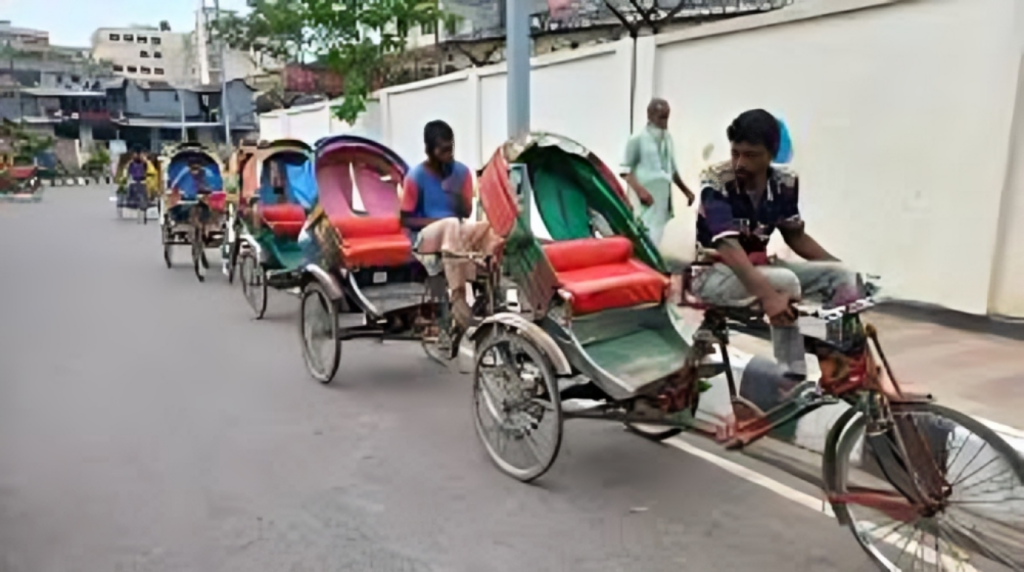
Unregulated and unsafe battery-powered three-wheelers—commonly referred to as electric auto-rickshaws or easy bikes—are increasingly dominating the roads across the country, including the capital city. Their uncontrolled movement, particularly on national highways, has caused severe disruptions to the traffic system. In a bid to resolve this persistent issue, the Ministry of Road Transport and Bridges has drafted a policy proposal.
Despite multiple previous attempts to remove these vehicles from the roads, each effort was thwarted by public protests. The absence of a clear legal or regulatory framework has only exacerbated the disorder. It is estimated that over 5 million battery-powered rickshaws are currently operating in the country, with approximately 800,000 to 1 million in Dhaka alone.
To bring order to this growing sector, the Road Transport and Highways Division of the Ministry has prepared a draft titled “Electric Three-Wheeler Management Policy 2025”. The proposal is presently under review, with input being sought from relevant departments before finalisation.
Features of the Proposed Policy
The draft policy outlines a structured approach to managing electric three-wheelers, focusing on safety, regulation, and sustainability. Below is a breakdown of its main features:
Licensing & Registration
| Requirement | Details |
| Vehicle Registration | Mandatory via Bangladesh Road Transport Authority (BRTA) |
| Driver’s Licence | Compulsory for all electric rickshaw drivers |
| Fitness Certificate | Required for every vehicle |
| Tax Token | Compulsory |
| Registration Certificate | Must be displayed in all registered vehicles |
| Training | Drivers to undergo training organised by BRTA at district levels |
Operational Regulations
| Factor | Specification |
| Route Restrictions | Operation allowed only on designated routes |
| Highway Access | Not permitted on highways; may operate on service lanes |
| Vehicle Speed | Max 30 km/h for slow-speed, 50 km/h for medium-speed rickshaws |
| Area-based Usage | Medium-speed rickshaws in city areas; slow-speed in districts, upazilas, unions |
| Fleet Ownership Limits | Individuals: max 3 medium-speed or 5 slow-speed vehicles Companies: max 25 |
Regulation for Manufacturers & Importers
| Requirement | Details |
| BRTA Listing and BIDA Registration | Mandatory for all producers and importers |
| Import Guidelines | Only new, BSTI-approved parts can be imported |
| Chassis Numbers | Must be engraved and traceable |
| Charging Infrastructure | Stations to be set up per guidelines by the Power Division |
Vehicle Specifications
- Strict limits have been proposed on vehicle length, width, height, and weight.
- All specifications must comply with safety and design standards defined in the policy.
One-Year Transition to Safer Models
Existing unauthorised and unsafe slow-speed electric rickshaws will be allowed a one-year period for conversion to approved models. Post-deadline, non-compliant vehicles will face legal action under the new regulatory framework.
Balancing Safety with Socioeconomic Reality
While the draft policy acknowledges the role of electric rickshaws in providing affordable transport and livelihoods for many, it raises serious concerns about their safety and unregulated operation. The government aims to allow their operation only on designated routes (excluding highways), ensuring both road safety and socio-economic continuity.
Additional Secretary Nikhil Kumar Das commented:
“We have formulated a realistic policy to eliminate irregularities. Based on stakeholders’ feedback, it will be finalised soon.”
The government believes that, once implemented, the Electric Three-Wheeler Management Policy 2025 will mark the end of long-standing chaos in the sector.