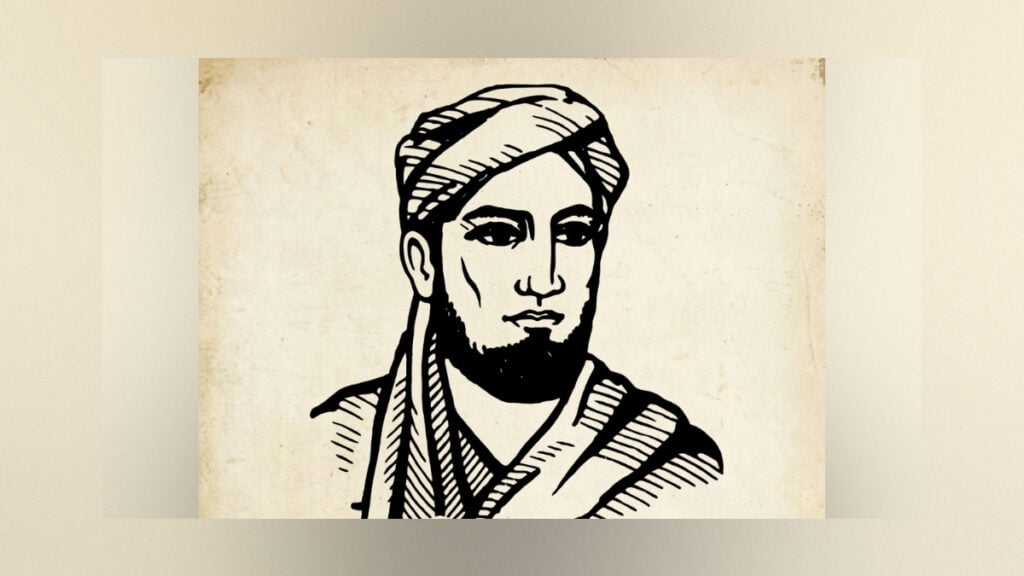
Muhsinuddin Ahmad, better known as Dudu Miyan, remains a notable figure in the history of nineteenth-century Bengal. His life was closely associated with the Faraizi Movement, which began as a religious reform initiative under his father, Haji Shariatullah, but acquired a wider social and agrarian dimension under his leadership.
Dudu Miyan was born in 1819 in Bahadurpur village in the Madaripur region. His father, Haji Shariatullah, was the founder of the Faraizi Movement, which emerged among Bengali Muslims in the first half of the nineteenth century. Dudu Miyan received his early education from his father before being sent to Makkah at the age of about 12 for further study.
He spent roughly five years there pursuing religious and other studies and returned to Bengal around 1837. His time abroad became an important part of his education before he assumed a much larger role in the affairs of rural Bengal.
Taking over the Faraizi Movement
Haji Shariatullah died in 1840, after which Dudu Miyan took charge of the movement. Under his leadership, the Faraizi cause developed beyond its earlier focus on religious reform and became increasingly connected with the economic and social concerns of cultivators.
Nineteenth-century rural Bengal was marked by tensions surrounding land revenue, rents and the authority of zamindars. In several areas, indigo cultivation also created serious disputes between European planters and cultivators. Peasants frequently found themselves in a vulnerable position within this complex rural system.
Dudu Miyan sought to organise cultivators and strengthen their collective ability to resist what they considered unjust demands. His leadership helped give the Faraizi Movement a distinctly agrarian character, bringing questions of social dignity and economic hardship into its activities.
The movement also developed an organised local structure. Faraizi leaders and khalifas operated in different areas, helping maintain communication among followers and addressing local disputes. The use of panchayat-style mechanisms for arbitration gave the movement an important role in parts of rural society.
A movement rooted in the countryside
One of the defining aspects of Dudu Miyan’s leadership was his emphasis on the condition of ordinary cultivators. The Faraizi organisation attempted to provide a collective response to disputes involving landlords and indigo interests.
In some areas, tensions escalated into confrontations involving armed retainers associated with landlords and planters. These conflicts contributed to the authorities’ growing concern over the movement and its leadership.
Dudu Miyan’s influence was not based solely on religious authority. His organisational network allowed the movement to operate across a sizeable part of eastern Bengal, creating channels for cooperation and local dispute settlement among its followers.
The movement’s expansion also brought repeated legal and administrative pressure. Complaints and cases were brought against Dudu Miyan and his followers amid the wider conflicts between the Faraizis and sections of the landed and commercial interests in rural Bengal.
Arrest during the 1857 uprising
The relationship between Dudu Miyan and the colonial authorities became particularly tense during the events of 1857. As rebellion spread across parts of the Indian subcontinent, the British authorities regarded influential figures with strong local followings with heightened suspicion.
Dudu Miyan was arrested during this period and detained in Alipore Jail in Calcutta. Historical accounts differ over the precise details and duration of his detention. Some sources place his release around 1859-60, while other historical accounts give a later date.
His imprisonment marked a difficult phase in his life. After his release, he moved to Dhaka, where he spent his final years. His health reportedly deteriorated during the later part of his life.
Dudu Miyan died in Dhaka in 1862, aged approximately 42 or 43. Historical accounts differ slightly over the exact date, with 24 September commonly cited and some sources mentioning 25 September.
His grave is traditionally identified as being in the Bangshal area of Old Dhaka.
His wider historical significance
Dudu Miyan’s place in history cannot be understood solely through the religious dimension of the Faraizi Movement. His leadership reflected the changing realities of rural Bengal, where questions of land, rent, agricultural production and social authority were becoming increasingly important.
Under him, the movement connected religious reform with the everyday concerns of cultivators. Its organisational network helped bring together sections of the rural population and provided mechanisms for collective action and local arbitration.
The movement also illustrates the complicated relationship between religious reform and agrarian resistance in nineteenth-century Bengal. Its activities were shaped by the social and economic conditions of the period, while conflicts with landlords, indigo planters and colonial authorities contributed to its political significance.
Dudu Miyan’s leadership therefore forms part of the broader history of peasant mobilisation in Bengal. His followers sought greater protection from practices they regarded as exploitative, while the colonial administration increasingly monitored the movement because of its influence among rural communities.
His life lasted little more than four decades, but the movement he led left a lasting mark on the history of eastern Bengal. The Faraizi tradition continued after his death, although its character and influence changed over time.
For many accounts of nineteenth-century Bengal, Dudu Miyan represents the point at which a religious reform movement became closely intertwined with the social and economic concerns of the countryside. His story offers an important window into the struggles of cultivators during a period of profound change under colonial rule.
Remembering Dudu Miyan is therefore also a way of remembering the wider history of Bengal’s rural society, its religious reform movements and the efforts of cultivators to organise around questions of dignity, justice and economic security.