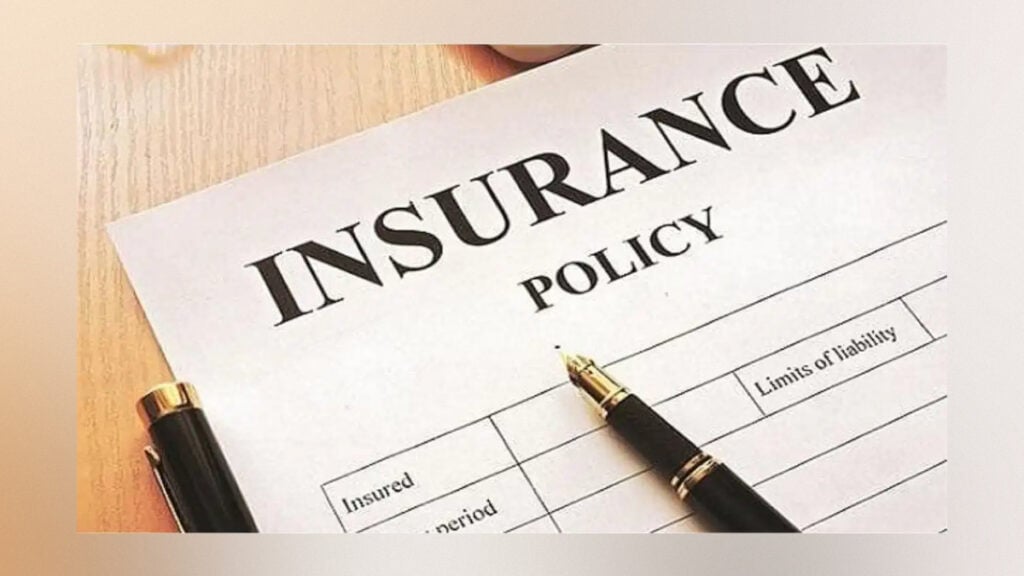
India’s central government is preparing a new revival strategy for three loss-making state-owned general insurers, with future financial support set to depend on measurable improvements in their operations and financial performance.
The companies — National Insurance Company Ltd (NICL), Oriental Insurance Company Ltd (OICL) and United India Insurance Company Ltd (UICL) — have received substantial government capital in recent years. However, their financial position has continued to deteriorate, prompting the government to consider a more performance-linked approach to future funding.
According to a report by Business Standard, the proposed revival plan will focus on reforms in underwriting, the development of new insurance products and performance-based management of employees. The broader objective is to address operational weaknesses before providing further capital and to put the three insurers on a more sustainable financial footing.
The three companies are currently loss-making and have negative solvency ratios. The Reserve Bank of India, in its Financial Stability Report published in June 2026, highlighted the deterioration in their financial condition as a concern for financial stability. New India Assurance, the fourth state-owned general insurer in the country, remains profitable.
Earlier capital injections failed to reverse deterioration
Between financial years 2020 and 2022, the Indian government injected a combined ₹17,450 crore into the three insurers to strengthen their capital position and improve solvency.
National Insurance received ₹9,275 crore, while Oriental Insurance was provided ₹4,420 crore. United India Insurance received ₹3,755 crore.
Despite that support, their solvency positions weakened further by the end of financial year 2026.
United India’s solvency ratio fell from minus 65 per cent a year earlier to minus 136 per cent. National Insurance’s ratio deteriorated from minus 67 per cent to minus 111 per cent, while Oriental Insurance’s fell from minus 103 per cent to minus 163 per cent.
India’s insurance regulator, the Insurance Regulatory and Development Authority of India (IRDAI), requires insurers to maintain a minimum solvency ratio of 150 per cent. The measure indicates an insurer’s ability to meet future claims and other financial obligations from its available capital and resources.
The sharp deterioration among the three insurers therefore presents a significant challenge, particularly because their previous capital injections have not translated into a sustained improvement in solvency.
Underwriting losses remain a major concern
The financial pressure is also visible in the insurers’ underwriting performance.
In financial year 2026, combined underwriting losses among public-sector multiline general insurers increased by 58.3 per cent from the previous year to ₹29,070.57 crore. United India Insurance recorded an underwriting loss of ₹8,335.70 crore, an increase of 113 per cent.
Oriental Insurance’s underwriting loss rose by 84 per cent to ₹7,307.77 crore, while National Insurance’s loss increased by around 6 per cent to ₹4,625.16 crore.
Underwriting performance is particularly important for general insurers because it reflects whether their core insurance business is generating sufficient income from premiums to cover claims and associated expenses. Persistent underwriting losses can place additional pressure on capital and solvency.
Under the proposed approach, future government support will therefore be linked more closely to operational performance. The three companies are expected to undergo quarterly performance monitoring, alongside internal reviews of their financial and operational progress. The amount and timing of any additional capital injection will be decided after assessing their performance over the coming quarters.
Share sale could provide additional funds
The insurers are also considering the sale of part of their holdings in the National Stock Exchange (NSE) as another source of funds.
The three companies collectively hold 9 crore NSE shares. Under the current plan, 1.496 crore shares are proposed to be sold at ₹1,785 apiece. The planned sale was initially larger, at 1.8 crore shares, but the proposed quantity was subsequently reduced.
The proceeds could provide some additional financial support as the insurers work to strengthen their balance sheets. However, the scale of the financial requirement remains substantial.
Rating agency Icra has estimated that, if the existing operational and solvency trends continue, the three insurers could require around ₹39,000 crore by March 2027 to reach the minimum solvency requirement set by the regulator.
Focus shifts towards underwriting and technology
The proposed restructuring is not limited to capital support. The government also wants the insurers to make changes to the way they assess and price risk.
The plan includes restructuring insurance portfolios based on improved risk assessment, expanding technology-driven underwriting and developing new products. Greater attention could also be given to customers and market segments that remain inadequately insured.
Artificial intelligence could form part of the insurers’ technology strategy. Alongside conventional actuarial models, AI-based systems could be used to analyse customer risk profiles and identify ways of reducing potential losses while maintaining comparable levels of insurance coverage.
Technology could also have a role in government-backed agricultural insurance schemes. Weather-related Internet of Things (IoT) data and satellite imagery could provide additional information for assessing risks associated with crops and weather conditions.
The emphasis on technology reflects the wider transformation taking place across the insurance industry, where insurers are increasingly using data to improve risk assessment, pricing and claims management.
Retaining skilled staff remains a challenge
Human resources are another area being considered under the proposed revival strategy.
The state-owned insurers face growing competition in the general insurance market, making it more difficult to retain experienced and skilled employees. Their financial losses have also limited their ability to offer competitive pay and incentives, according to the report.
The proposed performance-based approach to employee management is therefore intended to improve accountability while creating stronger incentives for operational improvement.
At the same time, changes to underwriting practices and product development will require employees with specialised expertise in areas such as actuarial analysis, risk management, technology and insurance operations.
Losses have accumulated over several years
Data from the General Insurance Council shows the scale of the challenge facing the three companies. Their combined net loss over the past five years stood at ₹31,200.86 crore.
In financial year 2026 alone, their combined net loss reached ₹11,434.38 crore, the highest level during the period. Their net incurred claims ratios have also remained around or above 100 per cent, indicating continued pressure from claims relative to the premiums earned.
The latest strategy consequently represents a shift in the government’s approach. Rather than relying primarily on repeated capital injections, the authorities are seeking evidence that the insurers can improve their core operations and move towards financial sustainability.
For National Insurance, Oriental Insurance and United India Insurance, the immediate challenge will be to improve underwriting performance, strengthen risk management, address operational weaknesses and retain skilled employees while restoring solvency.
Future government funding is expected to be assessed against those improvements, making operational reform a central part of the effort to put the three state-owned insurers on a more sustainable financial path.