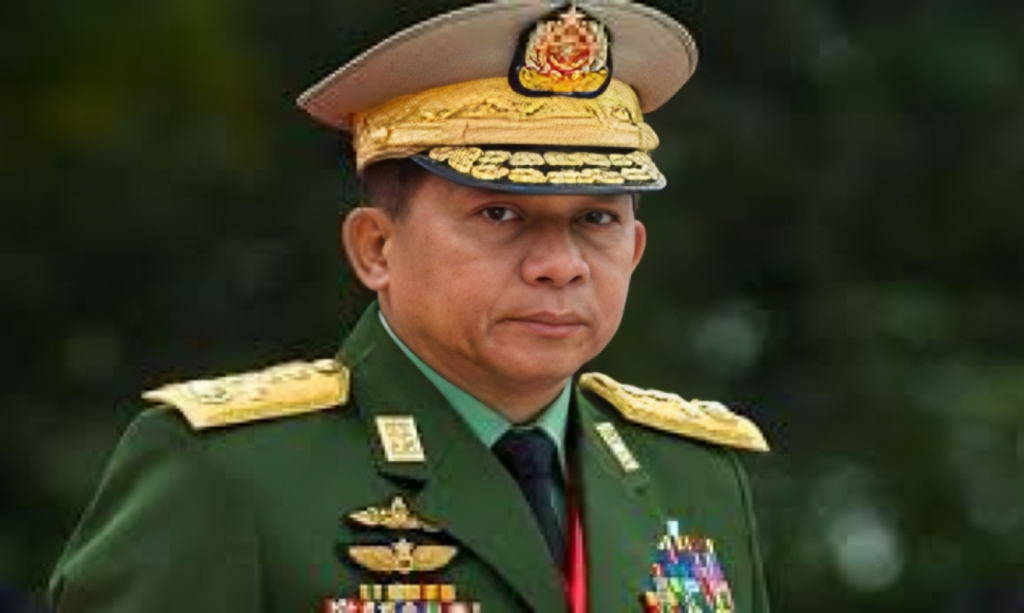
Myanmar’s military government has announced the end of the long-standing state of emergency and plans to hold national elections in December 2025, according to state television and media reports cited by Reuters on 31 July (Thursday).
Reuters reports that the junta has formed an 11-member electoral commission, led by Commander-in-Chief Min Aung Hlaing, to oversee the electoral process. However, an exact date for the elections has not yet been disclosed.
According to state broadcaster MRTV, Min Aung Hlaing will serve as the interim president while simultaneously retaining his post as army chief and assuming overall supervision of the upcoming election.
Background: Coup and Political Climate
In February 2021, the military seized power by overthrowing the democratically elected government of Aung San Suu Kyi, alleging widespread fraud in the 2020 general election. The forthcoming vote would be the first national election since that coup.
Since the takeover, the junta has imposed increasingly authoritarian laws, and has been accused of widespread human rights abuses. Thousands of leaders and activists from Suu Kyi’s National League for Democracy (NLD) have been detained, with many still imprisoned.
New Electoral Law: Severe Penalties for Opposition
To control dissent and criticism surrounding the elections, the military has implemented a new law titled:
“Protection of Multiparty Democratic Election from Obstruction, Disruption and Destruction”
(Enacted: 29 August 2024)
This law introduces harsh penalties for actions perceived as obstructing or criticising the election process.
Legal Provisions under the New Election Law
| Offence | Penalty (Individuals) | Penalty (Organisations) |
| Provocative speeches, leaflet distribution, protests, or criticism | 3 to 7 years’ imprisonment | 5 to 10 years’ imprisonment |
| Damaging ballots, threatening voters or election officials | Up to 20 years’ imprisonment | N/A |
| Involvement in election-related violence resulting in fatalities | Death penalty | N/A |
International Reaction and Opposition
The upcoming elections have been widely condemned by opposition groups, human rights organisations, and segments of the international community, who view the move as an attempt by the military to legitimise its rule under a façade of democracy.
concerns include:
- Continued imprisonment of Aung San Suu Kyi and other top NLD leaders
- Suppression of dissent and criminalisation of peaceful political activism
- Lack of transparency, fairness, or inclusion in the electoral process
As the country heads toward its first election since the 2021 coup, questions remain over its credibility, freedom, and legitimacy under military oversight.