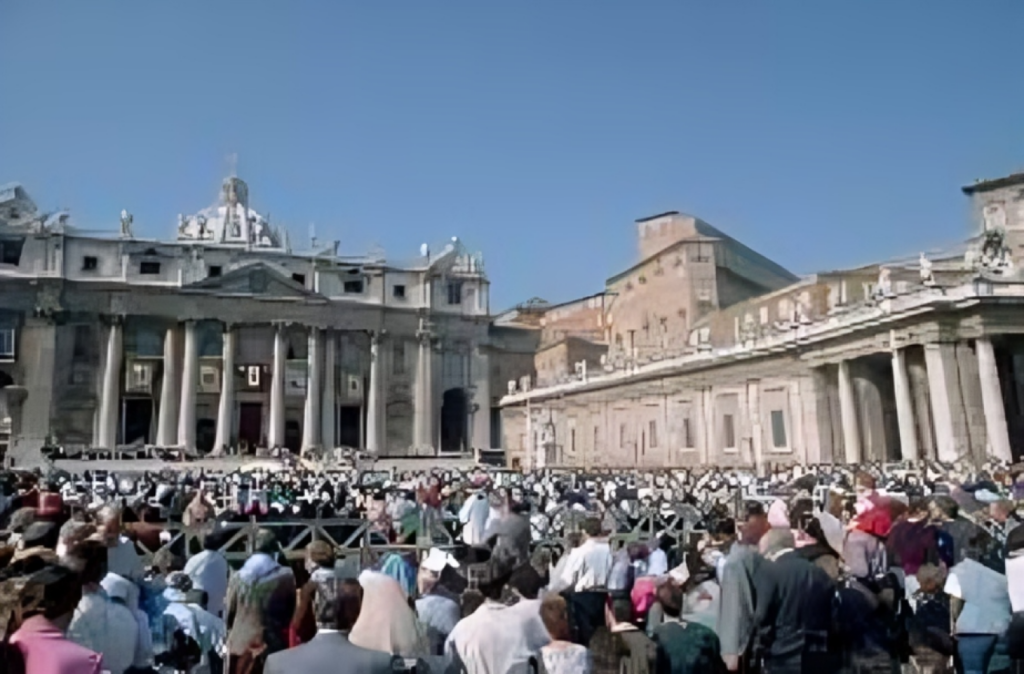
Khader Qassis, a 20-year-old from Bethlehem in the West Bank, travelled an arduous 32 hours, crossing military checkpoints in three countries, to reach Rome for a week-long pilgrimage alongside hundreds of thousands of other young Catholics.
As the Italian capital buzzed with songs and celebrations, Qassis couldn’t ignore the contrast between his journey and the suffering in Gaza, besieged for months by Israeli forces.
“It’s hard when there are people in Gaza dreaming just to eat, and I’m travelling,” he told AFP, expressing quiet guilt amid joy.
The Jubilee of Youth: A Gathering of Faith Amidst Turmoil
This year’s “Jubilee of Youth”, organised by the Vatican, has drawn an estimated one million participants aged 18 to 35. The Holy See particularly highlighted the presence of young pilgrims from conflict-ridden countries such as Iraq, Lebanon, Syria, and Ukraine, recognising their extraordinary sacrifices to make the journey.
Voices from Conflict Zones
| Name | Country/Region | Age | Testimony |
| Khader Qassis | West Bank (Palestine) | 20 | Felt conflicted enjoying Rome while people in Gaza suffer from hunger. |
| Jessie Khair | West Bank (Palestine) | 18 | Felt “free” in Rome, far from checkpoints, border tensions and threats. |
| Father Fadi Syriani | Syria | – | Led 11 Syrian youths, most leaving the country for the first time. |
| Svitlana Tryhub | Ukraine (Zaporizhzhia) | 23 | Praised improved Vatican communication under Pope Leo XIV; called for boldness and balance. |
| Valerie Fabianska | Ukraine | 18 | Said she could only forgive Russians if justice was served and their crimes acknowledged. |
| Maria Khrystofora (Nun) | Ukraine (Western) | – | Observed increased church attendance during the war, as people turned to God. |
A Taste of Freedom and Unity
For many from war-affected regions, the pilgrimage provided a rare experience of peace, safety, and belonging.
“Being here lets us feel that we’re free,” said Jessie Khair, who wore a black kufiyah scarf as a symbol of Palestinian identity.
At St Peter’s Square, the grand epicentre of the Catholic world, Syrian pilgrims proudly waved their national flag, some having never before left their homeland. Fr Syriani, who led them, said:
“This generation grew up amidst war since 2011. Many feel isolated from the wider Church. But here, they witness that there is still hope.”
Ukraine: Hope Amid Attacks and Faith in Crisis
As Russia’s war on Ukraine continues with escalating violence, the pilgrimage served as a moment of spiritual relief for many Ukrainians, most of whom came from the country’s religious western regions.
Due to martial law banning men of military age from travelling, most Ukrainian pilgrims were women.
- At Rome’s Ukrainian Greek Catholic Church, an all-women choir performed hymns and prayed for peace in Ukraine.
- Sister Maria Khrystofora, a young nun, observed a rise in religious devotion, saying:
“When people have nothing human to rely on, they turn to God to help them.”
Valerie Fabianska, a university student, shared a more resolute sentiment:
“I could only forgive or pray beside Russians if their leaders are jailed and Russia acknowledges its crimes.
A New Papal Approach Brings Renewed Trust
Since the appointment of Pope Leo XIV in May, Ukrainian pilgrims expressed a restored sense of alignment with the Vatican. His clearer stance compared to his predecessor, Pope Francis—whose remarks were often criticised as lenient towards Russia—has been met with cautious optimism.
“Communication is better now than it was before,” said Svitlana Tryhub.
She urged the Church to remain balanced, yet brave and vocal in its response to aggression
A Shared Sanctuary of Hope
Despite their diverse backgrounds and distinct struggles, all the pilgrims shared in a common theme: faith as a refuge in crisis.
Whether fleeing the scars of war, mourning loss, or searching for spiritual belonging, these young Catholics found in Rome a temporary sanctuary, united in prayer, music, and mutual compassion.
Their presence, amid the grandeur of the Eternal City, stands as a living testimony that hope, though tested, endures.