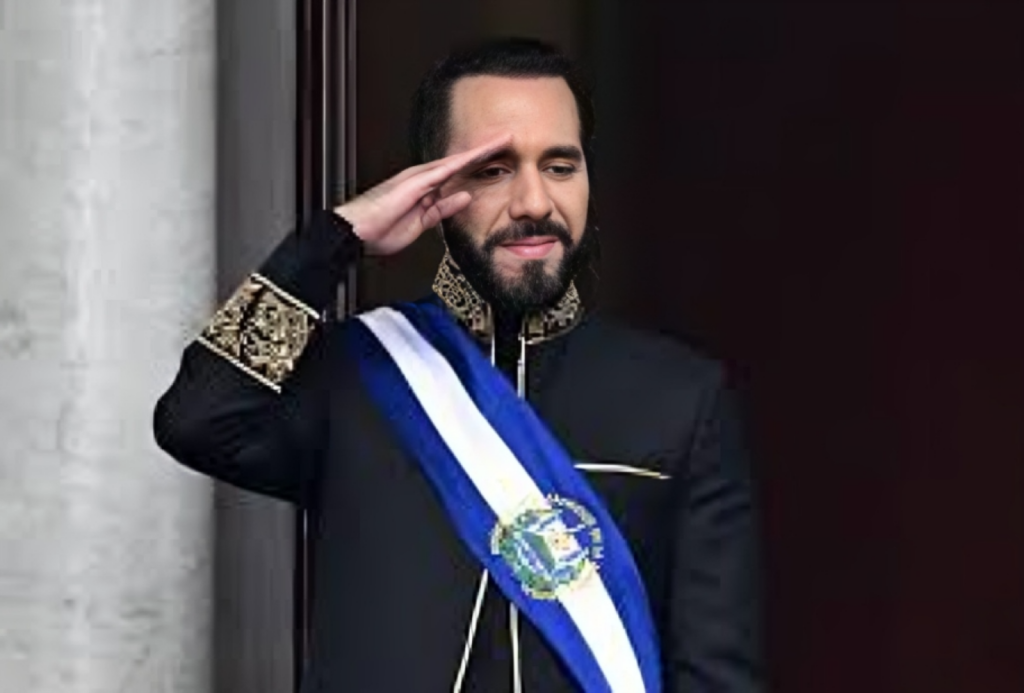
El Salvador’s Legislative Assembly has passed a constitutional reform allowing President Nayib Bukele to seek indefinite re-election, a move that dramatically reshapes the country’s democratic framework.
The reform, pushed through under an expedited procedure, was supported by 57 legislators from Bukele’s ruling Nuevas Ideas party, while only three opposition members voted against it.
Features of the Reform
| Provision | Description |
| Presidential Term Limit Removed | Bukele can now seek re-election indefinitely, without restriction. |
| Term Length Extended | Presidential terms extended from 5 to 6 years. |
| Second Round Voting Eliminated | No run-off election required, even in case of a close contest. |
| Elections Synchronized | Legislative, municipal, and presidential elections to be held simultaneously. |
| Current Term Shortened | Bukele’s current term will end in 2027 instead of 2029 to align with the new schedule. |
Political Context and Reactions
Bukele, 44, who calls himself a “cool dictator”, has led El Salvador since 2019 and was re-elected in 2024, following a controversial Supreme Court ruling that enabled him to bypass the previous ban on consecutive terms.
His government, boasting a supermajority in parliament, debated and passed the reform on the same day, raising alarm over democratic erosion.
Supporters’ Position:
- Ernesto Castro, President of the Legislative Assembly (Nuevas Ideas), declared:
“Thank you for making history, fellow deputies.”
Opposition Criticism:
- Marcela Villatoro, opposition MP, condemned the vote:
“This day, democracy has died in El Salvador… The masks were removed.”
- Claudia Ortiz, another opposition figure, labelled the reform:
“An abuse of power and a caricature of democracy.”
The opposition further criticised the timing, as the reform was introduced just as the country entered its summer holiday period, limiting public discourse and scrutiny.
Domestic Support vs International Alarm
While the reform faces intense opposition at home and abroad, Bukele continues to enjoy immense domestic popularity due to his tough anti-gang policies, which have significantly reduced crime in one of the world’s previously most violent countries.
However, these policies have come with a human rights cost:
| Accusations Against Bukele’s Government | Details |
| Authoritarianism | Use of emergency powers and weakening of democratic institutions. |
| Media Suppression | Dozens of journalists and rights defenders forced into exile. |
| Silencing Dissent | Crackdown on opposition, arrests of government critics, restricted protests. |
Human rights organisations, including El Salvador’s Human Rights Commission, have raised alarms.
- Miguel Montenegro, Director of the NGO, stated:
“The reforms lead to a total imbalance in the democracy that no longer exists.
Legal Maneuvering for Lasting Change
In a preceding move in April 2024, parliament amended the constitution so that future constitutional changes no longer require ratification in a separate legislative session, eliminating a long-standing check on power.
This procedural change cleared the path for Thursday’s vote, solidifying Bukele’s grasp over the nation’s political architecture.
Implications
- General elections are now scheduled for March 2027, earlier than the previous 2029 deadline.
- Bukele is now legally able to seek multiple additional terms, raising fears of entrenched autocracy.
Despite the criticism, Bukele’s grip on power appears firm, backed by an electorate grateful for improved security, but increasingly distant from democratic norms.
This latest constitutional shift may well mark the most significant transformation in El Salvador’s political system since its civil war-era peace accords – with global eyes closely watching the country’s democratic trajectory.