Tuesday, 4th August 2026

Khabor Wala Desk
Published: 1st August 2025, 3:38 PM
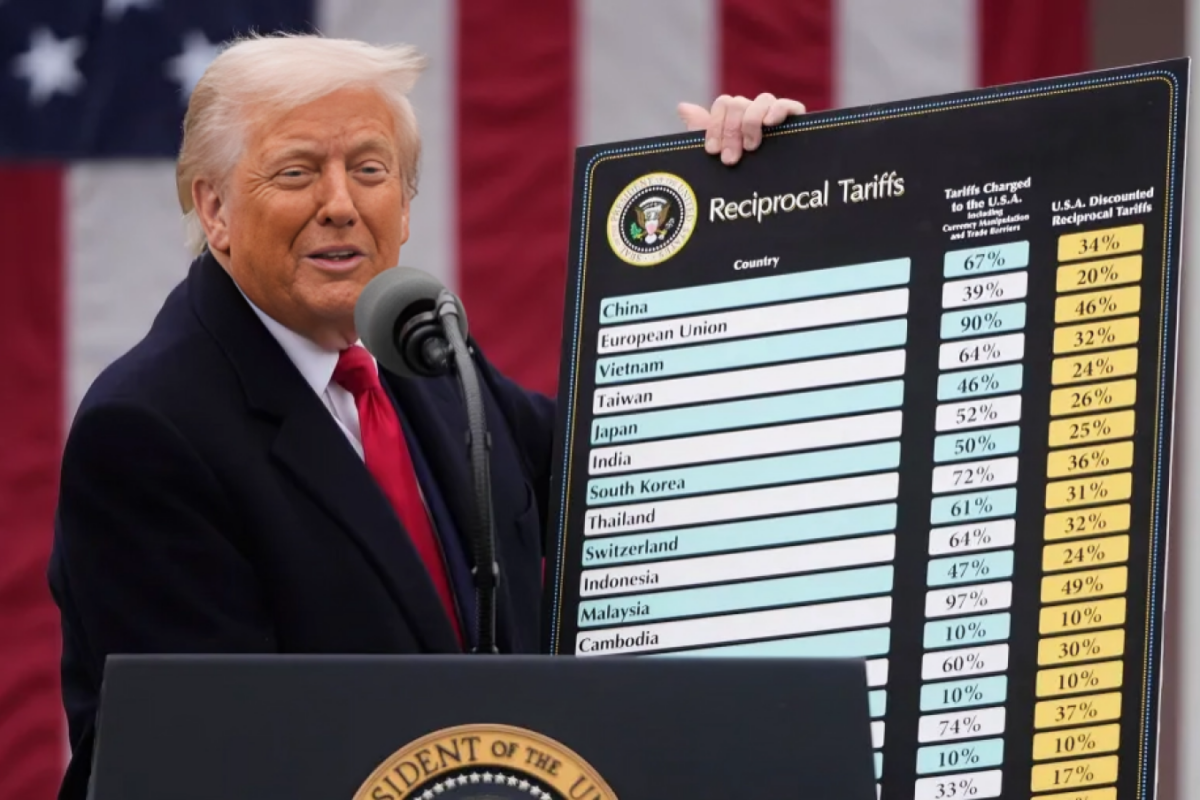
A new wave of US tariffs—announced by President Donald Trump on Thursday—is set to take effect within one week. These include a sweeping set of country-specific and sector-based levies, with rates reaching as high as 50 percent on some nations and industries.
In addition to general trade sanctions, targeted duties on copper and other strategic goods are being introduced. The tariffs reflect Trump’s latest move in reshaping America’s global trade posture ahead of the upcoming US elections.
Below is an organised breakdown of who is affected and how:
Overview of New Tariff Measures
| Country/Region | Previous Tariff Rate | New Tariff Rate | Effective Date | Exemptions / Notes |
| Canada | 25% | 35% | Immediately (Friday) | USMCA-covered items exempt |
| Mexico | 25% | 30% (delayed) | 90-day delay | USMCA items exempt |
| South Korea | Threatened 25% | 15% | August 1 | Investment & LNG deal sealed |
| Brazil | — | 50% | August 6 | Exempt: orange juice, civil aircraft |
| India | Threatened 30% | 25% | August 1 | Faces additional ‘unspecified’ penalties |
| European Union | Threatened 30% | 15% | August 1 | Some agricultural goods exempt |
Canada
President Trump announced an immediate tariff increase from 25% to 35% on Canadian goods, in response to Prime Minister Mark Carney’s decision to support Palestinian statehood at the upcoming UN General Assembly in September.
“Wow! Canada has just announced that it is backing statehood for Palestine. That will make it very hard for us to make a Trade Deal with them.”
— Donald Trump on Truth Social
According to a White House fact sheet, there is no grace period for Canada. However, items covered under the 2020 United States-Mexico-Canada Agreement (USMCA) will be exempt from these new duties.
Mexico
Although the US had threatened to raise tariffs on Mexican imports from 25% to 30%, Trump announced a 90-day postponement following a conversation with Mexican President Claudia Sheinbaum.
The original hike was linked to Mexico’s alleged failure to stem fentanyl trafficking. Goods imported under USMCA provisions will continue to be exempt.
South Korea
In a last-minute agreement before the tariff deadline, Washington and Seoul finalised a deal to reduce a threatened 25% tariff down to 15%.
South Korea also pledged:
The 15% tariff rate aligns with agreements recently concluded with Japan and the EU. Additionally, automobile tariffs will remain unchanged at 15%, according to South Korean officials.
Brazil
The newly imposed 50% tariffs on Brazilian goods are politically charged, stemming from President Trump’s personal feud with Brazilian judicial figures and their pursuit of former President Jair Bolsonaro.
Although the new tariffs will be enforced from 6 August, several key Brazilian exports—such as orange juice and civil aircraft—are exempt.
This marks a rare escalation in US–Brazil trade, despite historically strong ties between the two economies
India
President Trump announced a 25% tariff on Indian goods, just slightly less than earlier warnings. The duties will take effect on 1 August.
India will also face an additional, unspecified penalty for its continued military and energy dealings with Russia.
“I don’t care what India does with Russia. They can take their dead economies down together, for all I care.”
— Donald Trump on social media
This marks another point of friction in US–India relations, which have been strained over geopolitical alignments
European Union
Following difficult negotiations, the EU and US agreed to a 15% tariff on most EU exports to the United States—averting a 30% rate.
European Commission President Ursula von der Leyen confirmed that some agricultural products would be exempt, though specific items were not disclosed.
Meanwhile, French President Emmanuel Macron signalled that future talks would be anything but smooth:
“It’s not the end of it,” Macron warned during a cabinet meeting. “We must remain firm.
Strategic Observations
These tariffs form part of a broader strategy by the Trump administration to:
President Trump’s new tariff framework is accompanied by bilateral agreements that tie tariff reductions to commitments on:
Each country’s final rate has been carefully calculated based on its compliance level with these strategic demands.
This global tariff overhaul is set to reshape trade flows, test international alliances, and deepen economic polarisation—all under the umbrella of Trump’s “America First” doctrine.




Comments