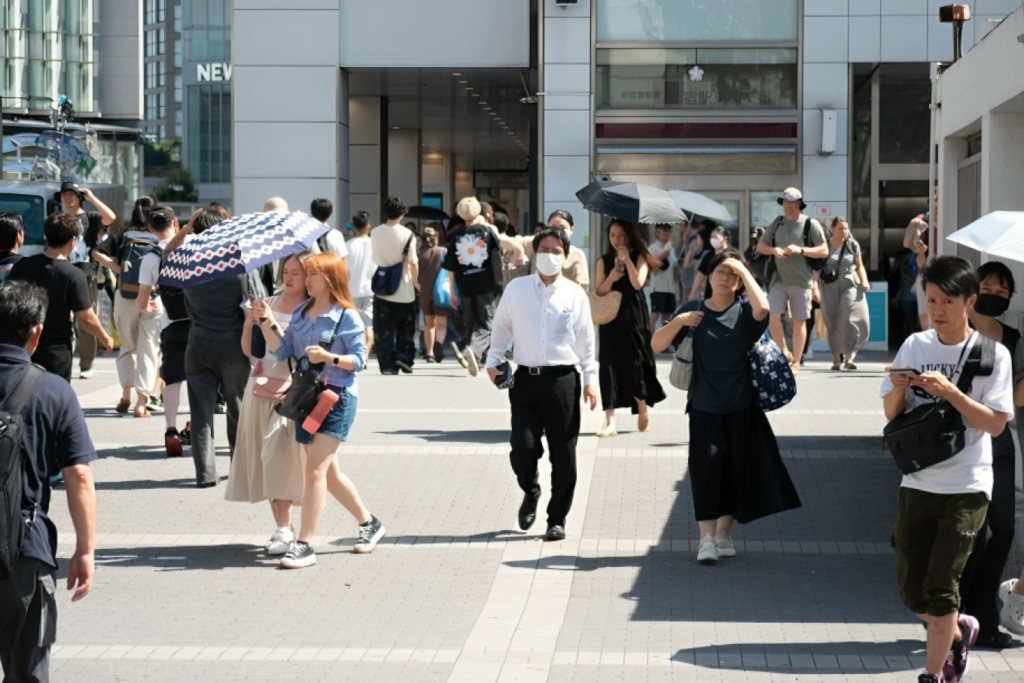
Japan has officially recorded its hottest July since meteorological records began in 1898, according to the Japan Meteorological Agency (JMA), which has also warned of further “severe heat” in the weeks ahead. The data underscores a growing trend of intensifying and more frequent heatwaves, driven by human-induced climate change, scientists affirm.
July 2025 Temperature Overview
| Metric | Data |
| Record Year Began | 1898 |
| Temperature Rise (vs. 1991–2020 avg.) | +2.89°C |
| Highest Recorded Temperature | 41.2°C (Hyogo, 30 July) |
| Consecutive Record Years | 3rd year in a row of record-breaking July temps |
| Forecast for August | Continued severe heat nationwide |
Weather Anomalies and Regional Impact
- Low Precipitation: Broad areas of Japan experienced significantly reduced rainfall, particularly in northern regions along the Sea of Japan, which recorded historic lows in July.
- Early End to Rainy Season:
In western Japan, the rainy season ended three weeks earlier than usual, marking another unprecedented event.
Environmental Impacts of the Heat
Japan’s ongoing warming trend is causing noticeable shifts in seasonal and ecological patterns, affecting the country’s iconic natural symbols:
| Phenomenon | Impact |
| Cherry Blossom Season | Blossoming earlier or incompletely due to insufficient winter chill |
| Mount Fuji’s Snowcap | In 2024, appeared in early November, a full month later than average |
“The next month is expected to continue to bring severe heat throughout the country.”
— Japan Meteorological Agency
Climate Change Context
The pattern in Japan reflects a global trend of rising temperatures and shifting weather norms, with climate scientists worldwide warning that such extreme conditions are a direct consequence of anthropogenic (human-caused) climate change.
This historic July not only adds to the mounting climate data but also prompts urgent questions about national adaptation, infrastructure resilience, and long-term sustainability as heat events increasingly challenge public health and the environment.