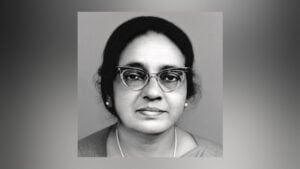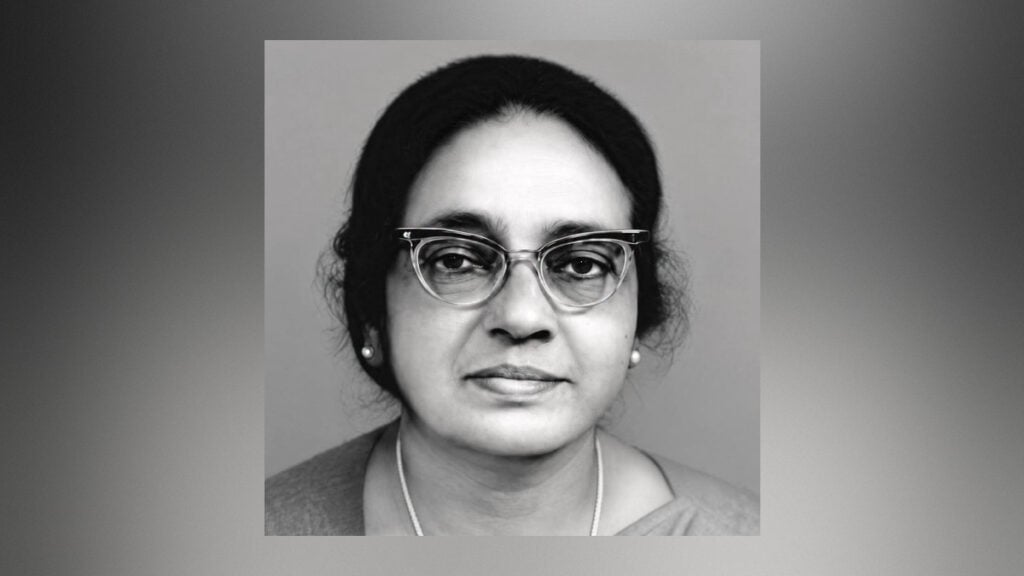
Some people leave more than their names on the pages of history. They bequeath courage, humanity, conscience and an enduring sense of responsibility. Their lives become a source of resistance against injustice, a refuge for the vulnerable and a guiding light for future generations. Dr Nilima Ibrahim was one such remarkable woman. An eminent educationist, literary figure, social reformer and compassionate advocate for women who suffered during the Bangladesh Liberation War, she occupies a distinguished place in the country’s history. Her contribution to preserving the experiences of the Birangonas, the women subjected to sexual violence during the war, remains an enduring part of Bangladesh’s collective memory.
Dr Ibrahim did more than support the cause of liberation. She stood beside those whose suffering society often preferred not to acknowledge, whose wounds were concealed by prejudice, social conservatism and misplaced notions of honour. She listened to their stories, worked to restore their dignity and brought their experiences into the public consciousness through her literary work. Her legacy, therefore, extends beyond academia and literature. She remains one of the most important human witnesses to the painful realities of Bangladesh’s Liberation War.
Early Life and Education
Dr Nilima Ibrahim was born on 11 October 1921 in Mulghar village, under Fakirhat upazila in Bagerhat district. Her father was Prafulla Kumar Roy Chowdhury and her mother was Kusum Kumari Devi. From an early age, she demonstrated intellectual ability, discipline and a strong commitment to learning.
In 1935, she passed her matriculation examination in the first division from Coronation Girls’ School in Khulna. She subsequently studied at Victoria Institution in Calcutta, where she completed her higher secondary education and an honours degree in economics. She later obtained a master’s degree in Bengali from the University of Calcutta and a Bachelor of Teaching degree from Scottish Church College.
Her educational background was unusually broad, encompassing economics, Bengali literature and education. This interdisciplinary foundation helped shape her intellectual outlook and informed her subsequent work as a teacher, researcher, writer and social activist. Her academic achievements also reflected a lifelong commitment to intellectual independence and the pursuit of knowledge.
From Nilima Roy Chowdhury to Nilima Ibrahim
In December 1945, she married Captain Mohammad Ibrahim, a physician serving in the Indian Army Medical Corps. Following her marriage, she became known as Nilima Ibrahim. Her husband’s professional postings took the family to several places, including Pirojpur, Jashore, Barishal and Khulna.
Despite the changes associated with family life, her commitment to education remained undiminished. In 1956, she moved to Dhaka to pursue advanced research and joined the Bengali Department of the University of Dhaka as a lecturer in June of that year. Her academic ability and dedication earned her promotion to professor in 1972.
The University of Dhaka became the principal centre of her professional life. She served as head of the Bengali Department, provost of Rokeya Hall and head of the Department of Sanskrit and Pali. In these roles, she contributed not only to academic development but also to the intellectual and personal growth of her students.
For Dr Ibrahim, teaching extended beyond lectures, examinations and academic qualifications. She believed in nurturing independent thought, patriotism, cultural awareness and humane values among young people. Her approach to education was closely connected to her understanding of society and the responsibilities of an educated citizen.
Standing Firm During the Liberation War
From the mass uprising of 1969 to the struggle for independence in 1971, Dr Ibrahim consistently supported the cause of freedom and the rights of the people of what was then East Pakistan.
On the night of 25 March 1971, when the Pakistani military launched its brutal crackdown in Dhaka, she was on the university campus. The violence that followed, including the systematic killing of civilians and attacks on the university community, exposed the devastating scale of the military operation.
She left the campus on 27 March and took shelter in Narinda before departing Dhaka on 30 March. She returned to the capital in August. During the war, she helped raise funds for freedom fighters, distributed leaflets and encouraged students to participate in the liberation struggle.
Her activities brought her under the scrutiny of the Pakistani military authorities. Accounts of her wartime life state that she received a warning letter from the authorities associated with military ruler Tikka Khan, accusing her of involvement in subversive activities. The letter has also been reported to be preserved at the National Museum.
Her actions demonstrated that resistance to oppression was not confined to the battlefield. Teachers, students, writers and other civilians also played vital roles in the struggle for independence. Dr Ibrahim used her position, personal courage and social connections to support the liberation movement despite the dangers involved.
She did not remain a detached observer of events. At a time when expressing support for independence could invite severe consequences, she made her position clear through practical action. Her contribution formed part of the wider civilian effort that sustained the struggle for a free Bangladesh.
A Compassionate Ally of the Birangonas
The Liberation War left countless women traumatised by sexual violence and other forms of brutal treatment inflicted by Pakistani forces and their local collaborators. For many survivors, the end of the war did not bring an immediate end to their suffering.
In the newly independent country, numerous women faced social exclusion, humiliation, prejudice and isolation. Instead of receiving unconditional support, many encountered attitudes that treated their experiences as a source of shame. Their struggle to rebuild their lives was made more difficult by deeply rooted social conventions and the reluctance of communities to confront the violence committed against them.
Dr Ibrahim recognised that these women deserved compassion, justice and respect, rather than stigma. She played an important role in the work of the Women’s Rehabilitation Board, established after independence to support survivors and help them rebuild their lives.
As a member of the board, she visited rehabilitation centres, spoke directly with survivors and listened to their accounts of suffering. Her engagement went beyond formal responsibilities. She sought to provide emotional support and encourage women who had endured experiences that were difficult to communicate, even in the aftermath of liberation.
Her understanding of the Birangonas was fundamentally different from the prejudices prevalent in much of society. She regarded them not as objects of pity but as survivors of wartime atrocities and indispensable participants in the history of national liberation. Their right to live with dignity was inseparable from the principles for which Bangladesh had fought.
Through her personal initiatives, she also sought to help survivors find opportunities to lead dignified lives in the newly independent country. At a time when many people were unwilling to discuss the subject openly, her willingness to engage with the women and their experiences represented a courageous challenge to social silence.
Her work highlighted a central truth about the aftermath of war: political independence does not automatically deliver personal freedom, social acceptance or psychological recovery. Rebuilding a country also requires confronting injustice within society and ensuring that those who suffered are not abandoned once the fighting ends.
‘Ami Birangona Bolchhi’: Testimonies That Challenged Silence
Dr Ibrahim’s close contact with survivors gave her direct insight into the violence they had experienced, the people they had lost, the humiliation they endured and the immense difficulties involved in rebuilding their lives. Their accounts deeply affected her and strengthened her conviction that their experiences had to be recorded.
She understood that their suffering was not merely a collection of individual tragedies. It was an essential part of Bangladesh’s history. To exclude their voices from the national narrative would leave any account of the Liberation War incomplete.
This conviction found its most powerful literary expression in her landmark book, Ami Birangona Bolchhi (I, the Birangona, Speak).
Through the work, she brought the experiences and accounts of several Birangonas before a wider readership. Their individual stories revealed the brutality of wartime violence, the devastating consequences of sexual abuse and the additional hardships survivors faced after independence.
The book occupies a distinctive place in Bangladesh’s liberation literature because it confronts aspects of the war that were often obscured by silence and social discomfort. While accounts of military victories, political leadership and national sacrifice are essential to understanding the struggle, the experiences of women subjected to sexual violence are equally important to a complete historical record.
Dr Ibrahim used literature to make those experiences visible. She presented the survivors’ suffering with sensitivity without diminishing its gravity. By allowing their stories to reach a wider audience, she challenged readers to confront uncomfortable truths about both wartime atrocities and the society that followed them.
Ami Birangona Bolchhi is more than a literary achievement. It is a testament to the courage of survivors, a challenge to the stigma surrounding sexual violence and a reminder of the moral responsibility to preserve the testimony of those who have been marginalised.
The book also raises questions that remain relevant to discussions of war, gender and human rights. How should a society recognise those who suffered in its struggle for independence? What responsibilities does a nation bear towards survivors after a conflict ends? And how can historical memory be preserved without allowing prejudice to silence those who experienced its darkest moments?
By placing the Birangonas’ voices at the centre of her work, Dr Ibrahim helped ensure that these questions could not easily be dismissed. Her contribution transformed the act of listening into a form of historical responsibility.
Preserving the Memory of Martyred Intellectuals
The final phase of the Liberation War witnessed the systematic killing of many of the country’s leading intellectuals by Pakistani forces and their local collaborators. Teachers, doctors, journalists, writers and other prominent figures were targeted in an attempt to deprive the emerging nation of some of its most capable minds.
After independence, preserving their memory became an important national responsibility. Dr Ibrahim recognised the significance of commemorating those who had sacrificed their lives and ensuring that future generations understood the scale of the loss.
She is remembered for her efforts in initiatives associated with the construction of the Martyred Intellectuals’ Cemetery and memorial in Mirpur. Such commemorative work helped establish spaces where the nation could honour the dead, reflect on the consequences of political violence and reaffirm its commitment to remembering the Liberation War.
Memorials serve a purpose beyond marking burial places or recording names. They connect historical events with public consciousness and provide future generations with an opportunity to understand the human cost of independence. Dr Ibrahim’s involvement in preserving the memory of the intellectuals reflected her broader belief that national history must acknowledge both sacrifice and suffering.
Following independence, she did not restrict herself to remembering the past. She sought to translate that memory into a continuing commitment to education, culture, social welfare and the development of a more humane society.
Academic Leadership, Social Service and International Engagement
Dr Ibrahim’s professional life extended well beyond university teaching and literary research. She was actively involved in women’s education, social development, cultural affairs and organisational leadership.
She served as founding president of the Bangladesh Mahila Samiti and president of the Family Planning Association of Bangladesh. Her work with these organisations reflected an interest in improving women’s social position and addressing broader questions of family welfare and public well-being.
She also held international responsibilities, serving as area president for South-East Asia of the Associated Country Women of the World and as vice-president of the International Alliance of Women. These positions placed her within wider networks concerned with women’s participation, welfare and social advancement.
In 1975, she attended an international women’s congress in Mexico as Bangladesh’s sole female representative. Her participation represented an important dimension of her professional life, bringing her experience and perspective into an international forum at a time when the country was still establishing its identity following independence.
Her contribution to literary and cultural institutions was equally significant. In 1974–75, she served as director-general of Bangla Academy, one of Bangladesh’s principal institutions for Bengali language, literature and cultural research.
Accounts of her tenure state that she accepted no salary or honorarium for the position. The reported decision reflected her commitment to public service and her willingness to place institutional and cultural responsibilities above personal financial gain.
Her leadership demonstrated that intellectual life and public service need not be separate pursuits. She brought her academic knowledge to institutional responsibilities while continuing to advocate for the social and cultural development of the country.
Literary Achievements and Intellectual Legacy
Dr Nilima Ibrahim was a researcher, essayist, playwright and literary critic whose work enriched Bengali scholarship. Her writings examined Bengali literature, dramatic traditions, cultural identity and the intellectual development of Bengali society.
Her notable publications include:
-
Sharatchandra Pratibha
-
Banglar Kobi Madhusudan
-
Bangla Natak: Uts O Dhara
-
Bangali Manas O Bangla Sahitya
-
Ami Birangona Bolchhi
These works reflect the breadth of her intellectual interests. Her scholarship combined literary analysis with historical awareness, social consciousness and a concern for human dignity. She did not approach literature solely as an exercise in aesthetic appreciation. She also examined how literary expression reflects society, preserves cultural memory and engages with questions of inequality, identity and justice.
Her work on Bengali literature and drama contributed to the understanding of the region’s cultural traditions. At the same time, her writing about the Birangonas demonstrated how literary methods could preserve experiences that might otherwise remain excluded from mainstream historical accounts.
Her achievements were recognised through honours including the Bangla Academy Literary Award and the Independence Award, among the significant national recognitions associated with her career.
Yet her legacy cannot be measured solely through awards, academic appointments or organisational positions. Her most enduring contribution lies in the moral purpose that informed her work: a commitment to truth, a willingness to confront injustice and a determination to bring neglected voices into public view.
She demonstrated that intellectual achievement carries responsibilities beyond the classroom and the printed page. Knowledge, in her understanding, had value when it helped people recognise injustice, understand their history and act with greater humanity.
A Legacy That Lives Beyond Her Lifetime
Dr Nilima Ibrahim died on 18 June 2002, but her work and ideals continue to resonate in Bangladesh’s cultural and historical consciousness.
Reading Ami Birangona Bolchhi means encountering more than the individual experiences of women who endured wartime violence. It means confronting the human cost of liberation, the struggle for women’s dignity and the responsibility of society towards those who have suffered.
Her life also offers a broader understanding of patriotism. Love for one’s country is not expressed solely through the celebration of national achievements or the recollection of glorious moments in history. It also demands solidarity with vulnerable people, resistance to injustice and sustained efforts to uphold the dignity of every individual.
Dr Ibrahim embodied these principles through her work as an educationist, writer and social activist. She stood beside the Birangonas when their experiences were difficult to discuss, helped preserve the memory of those who sacrificed their lives for the country and devoted much of her professional life to education and cultural development.
Her example reminds Bangladesh that a nation cannot fully come to terms with its past by remembering only its victories. It must also acknowledge its wounds, listen to survivors and confront the prejudices that deepen their suffering.
On the anniversary of her birth, Dr Nilima Ibrahim deserves to be remembered with profound respect. Her life offers a continuing lesson in courage, compassion and public responsibility. Her contribution to the history of the Liberation War, particularly her efforts to restore the voices and dignity of the Birangonas, remains a vital part of Bangladesh’s national legacy.
Dr Nilima Ibrahim was a friend of the liberation struggle, a trusted ally of the Birangonas and an unwavering voice for humanity. Through her scholarship, literature and service, she demonstrated that truth must be acknowledged, suffering must not be concealed and human dignity must stand above social prejudice.
Her memory continues to illuminate Bangladesh’s history, strengthening the spirit of liberation and inspiring future generations to defend the rights and dignity of all people.
A humble tribute to Dr Nilima Ibrahim, whose courage and compassion remain an enduring inspiration.