Shai Hope and Shubman Gill have exchanged playful remarks on social media ahead of the third Twenty20 international, reflecting a series in which huge totals and aggressive batting have left bowlers struggling to keep control. Hope’s response to Gill’s earlier post came after the West Indies chased down a daunting target of 250 in Ranchi, levelling the series and exposing India’s difficulties in defending a substantial score.
After India recorded a record-breaking victory in the second one-day international in Guwahati, Gill took to Instagram and wrote, ‘406? Cool!’ Nine days later, Hope delivered his own version of the message after the West Indies completed their remarkable run chase. ‘250? Cool!’ he posted, echoing Gill’s words and adding a touch of humour to the rivalry.
The exchange has attracted attention, but it also captures the central theme of the series: batting-friendly conditions are making it increasingly difficult for bowling attacks to contain their opponents. Flat pitches, aggressive stroke play and costly fielding errors have combined to produce contests in which even a formidable total offers little guarantee of victory.
India had previously secured a comfortable eight-wicket win in Lucknow, with Shreyas Iyer scoring an unbeaten 102. His commanding innings helped India dominate the match and put the West Indies under pressure. The visitors responded emphatically in Ranchi, however, as Hope’s unbeaten century inspired them to chase down 250 and level the series.
The scale of the West Indies’ achievement was underlined by their early setbacks. They lost three wickets within the first six overs, leaving themselves in a difficult position during a demanding chase. Rather than allowing the situation to dictate the outcome, Hope helped his side recover and maintain the required scoring rate. The successful pursuit is likely to strengthen the visitors’ confidence as they prepare for the next encounter.
For India, the defeat has raised questions about their ability to defend large totals. In modern T20 cricket, posting a high score is only one part of the challenge. Bowlers must also adapt quickly to conditions, vary their approach and prevent well-set batters from dictating the pace of an innings. On a flat surface, errors in line and length can be punished immediately, particularly by players who are prepared to attack from the outset.
India head coach Gautam Gambhir has emphasised the need to maintain a proper balance between bat and ball. His side must find ways to restrict opponents even when the pitch offers considerable assistance to stroke-makers. Effective bowling plans, suitable field placements and disciplined execution will be essential if India are to avoid another defeat after setting a substantial target.
Fielding, meanwhile, has become a concern for both teams. Since the beginning of 2025, India and the West Indies have been among the full-member nations with the poorest catching records in international T20 cricket. In a format where momentum can shift within a few deliveries, a dropped catch or a misfield can have consequences far beyond the immediate loss of an opportunity.
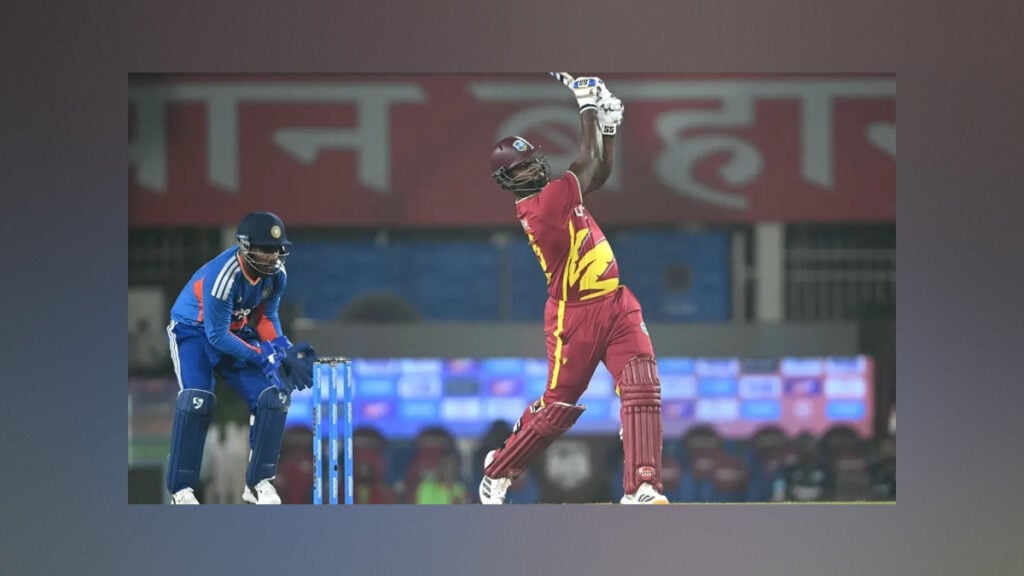
India experienced this at first hand in Ranchi when they dropped a catch offered by Sherfane Rutherford. The left-handed batter made them pay, smashing 84 off just 37 deliveries to help drive the West Indies towards victory. His aggressive innings demonstrated the potential cost of allowing a dangerous batter to remain at the crease.
The broader fielding figures also highlight the scale of India’s problems. Since the start of 2025, the team have dropped 79 catches and recorded 168 misfields, the highest figures among full-member sides in the respective categories cited in the report. India have also conceded 10 overthrows, the joint second-highest figure, and missed four stumpings, the second-highest total. They have also failed to convert 95 run-out opportunities, according to the figures reported.
Such mistakes place additional pressure on bowlers, who may execute their plans only to see their efforts undone by lapses in the field. A missed catch can give an established batter more time to settle, while a misfield allows opponents to collect runs without taking risks. In high-scoring matches, these seemingly small errors can prove decisive.
The West Indies cannot afford to overlook their own fielding shortcomings either. Their victory in Ranchi demonstrated the strength of their batting and their ability to recover under pressure, but consistent performances across all three departments will be necessary to sustain that momentum. Strong batting alone may not be enough if avoidable mistakes continue to give opponents extra opportunities.
Attention now turns to the third T20 international in Indore. If the batting-friendly conditions persist, another high-scoring contest could be on the cards. India will seek to improve their bowling discipline and fielding standards, while the West Indies will aim to build on the confidence gained from their successful chase.
Gill and Hope may have turned the exchange into a light-hearted social media contest, but the stakes on the field remain serious. The team that manages its resources better, controls the scoring rate and capitalises on fielding opportunities could gain the decisive advantage.

/ Oct 11, 2026
Breaking News :