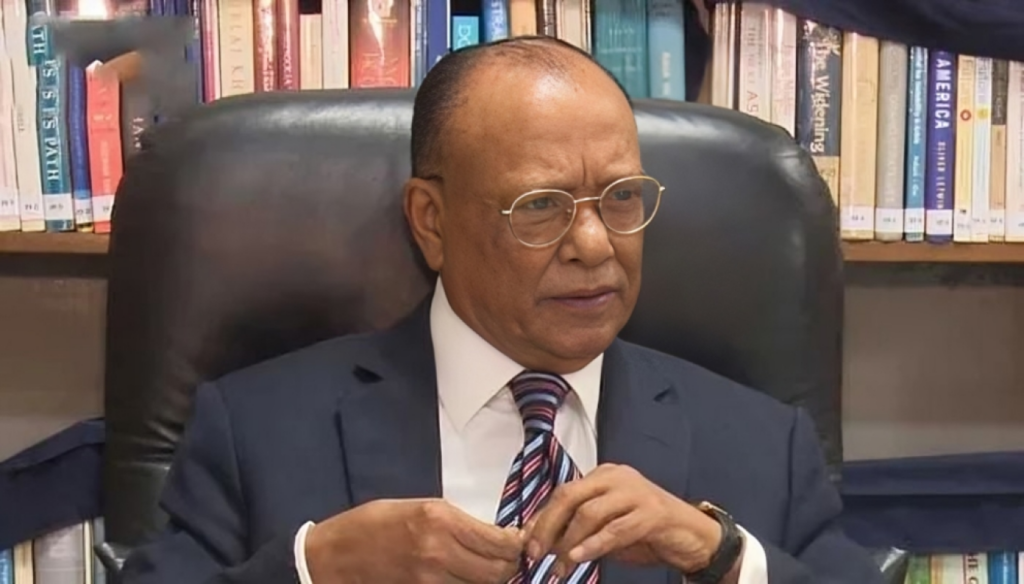
Abdul Awal Mintu, Vice Chairman of the BNP and former President of FBCCI, has stated that the National Consensus Commission has failed to achieve any success; instead, it has sown discord among the country’s political forces.
Remarks from Roundtable Discussion
| Event | ‘One Year of Government: Expectations and Achievements’ Roundtable |
| Date | Saturday, 2 July |
| Organiser | Daily Jugantor |
| Participant | Abdul Awal Mintu |
Criticism of the Consensus Commission
Mintu was highly critical of the commission’s work, saying:
- “It would be better to call it the Discord Commission rather than the Consensus Commission, as it has failed to build consensus in the country.”
- “Their discussions focus solely on political power — who will hold how much power and how power will be shared.”
- “The most important issue for the people, the equitable distribution of income, is completely ignored.”
Economic Concerns
During the discussion, some economic indicators such as dollar price control and reserve growth under the caretaker government were mentioned. However, Mintu expressed doubt:
- “There have been no real economic achievements. In fact, the economy is deteriorating further.
Law, Order, and Social Stability
Mintu also voiced deep disappointment regarding:
- The rule of law
- Social discipline
- Overall law and order situation
Call for Free and Fair Elections
He emphasised the urgent need for:
- Prompt, free, fair, and participatory elections
- Establishing democracy
- Ensuring the social rights of the people
Mintu concluded by stating:
- “The elections we seek are essential for democracy and to restore people’s social rights, which is why the people have taken to the streets in protest.”
This comprehensive critique highlights concerns over political fragmentation, economic decline, and governance challenges, urging immediate democratic reforms.