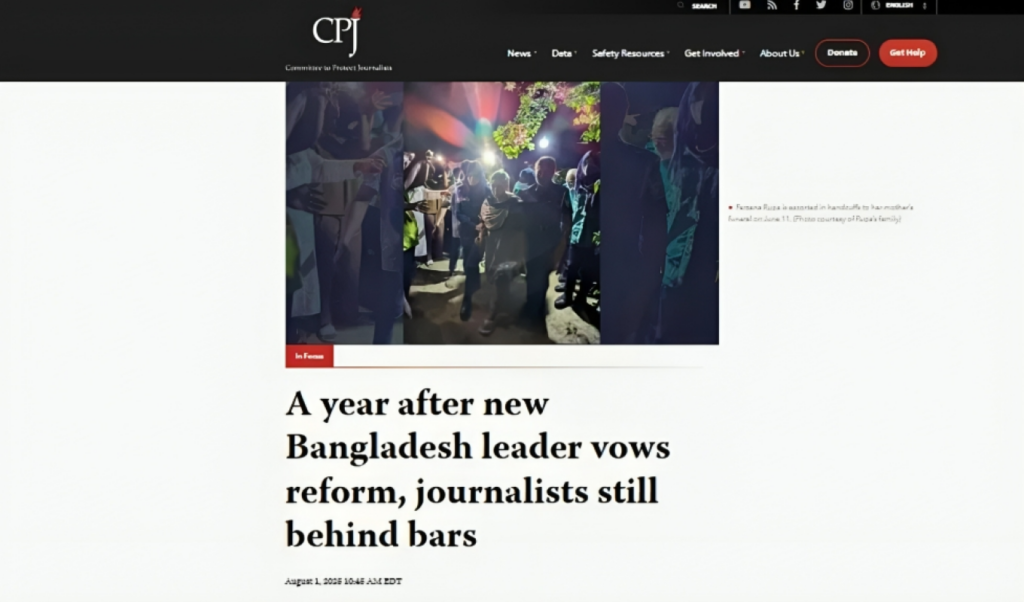
On 5th March 2025, journalist Farzana Rupa stood alone without legal counsel in a crowded courtroom in Dhaka as the judge began a preliminary hearing into another murder case against her. Despite being incarcerated, Rupa simply bowed her head and applied for bail. The judge described this as a mere formality.
Rupa, former chief reporter for Ekattor Television, revealed that she is currently facing around a dozen cases. She believes that even a single murder case can be used to implicate someone falsely. The names of her husband, Shakil Ahmed—former chief of Ekattor’s news department—also appear in eight cases. At present, nine murder cases are filed against Rupa.
Background: Political Upheaval and Promises
| Date | Event |
| March 2024 | Sheikh Hasina resigns amid student protests; flees the country. |
| Post-March 2024 | Nobel laureate Dr Muhammad Yunus assumes interim government role. |
| During Interim Government | Two journalists killed; media reforms announced, including repeal of Cybersecurity Law. |
| November 2024 | Yunus admits many murder cases against journalists were rushed; committee formed to review cases. |
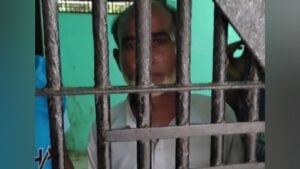
More than a year has passed, yet Farzana Rupa, Shakil Ahmed, Shyamal Dutta, and Mozammel Haque Babu remain imprisoned. It is widely believed that these cases are politically motivated, as all four were closely associated with Sheikh Hasina’s government.
Ongoing Journalist Repression and CPJ Findings
The Committee to Protect Journalists (CPJ) reports that journalists continue to suffer physical assaults, political threats, and exile within Bangladesh. Additionally, the International Crimes Tribunal is investigating genocide charges against 25 journalists—a charge historically wielded against opposition figures.
Beha Leahy, CPJ Regional Director, criticised the prolonged detention of journalists without concrete evidence, stating:
“Keeping journalists imprisoned for years without clear proof challenges the interim government’s commitment to press freedom. True reform means breaking free from past abuses—not repeating them.”
CPJ’s review also found that journalists’ names are often added to First Information Reports (FIRs) well after the fact, preventing them from even applying for bail. According to UN experts, at least 140 journalists faced murder charges related to last year’s protests.
Personal Accounts from Families
Shyamal Dutta’s daughter, Shashi, said:
“We do not know exactly how many cases my father is charged with. We have been informed of six, but the family believes there are ten.”
Families of Rupa and Shakil have stated that they have yet to receive the FIRs for five of the cases against them.
Attempts to contact Dr Yunus’s press secretary Shafiqul Alam and police spokesperson Enayetul Haque Sagar yielded no response.
Attacks and Harassment of Journalists in 2025
Throughout 2025, journalists covering political news across Bangladesh have faced violence and intimidation. CPJ records at least ten incidents involving physical assault, phone confiscations, and deletion of video footage—most attributed to activists from BNP and the student wing.
Mahdi Amin, advisor to BNP’s acting chairman Tarique Rahman, acknowledged:
“Such isolated incidents may occur, but the party does not protect offenders.”
Following Sheikh Hasina’s departure, journalists have also been threatened by student groups involved in protests. Reports on Jamaat-e-Islami’s student wing, Islami Chhatra Shibir, have put journalists under intense pressure.
In June, Hasnat Kamal, editor of EyeNews.news, fled to the UK after being falsely accused. Anowar Hossain, journalist at the local daily Dabanaal, reported threats to his family after publishing reports on a Jamaat leader.
Attempts to reach Jamaat spokesperson Abdus Sattar Sumon were unsuccessful.
Media Suppression During 2024 Protests
In November 2024, student protests outside Dhaka’s Prothom Alo office and military presence made international headlines. Newspapers including Prothom Alo and Daily Star were besieged. The Anti-Discrimination Students Movement (ADSM) targeted journalists, resulting in the dismissal of five.
Efforts to contact ADSM leader Rifat Rashid were unsuccessful.
Summary of the Situation
On 14th July 2025, exiled investigative journalist Zulkar Nain Saye Khan wrote:
“No matter how much changes, some things remain the same.”
His words encapsulate the ongoing challenges faced by journalists in Bangladesh