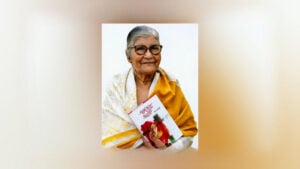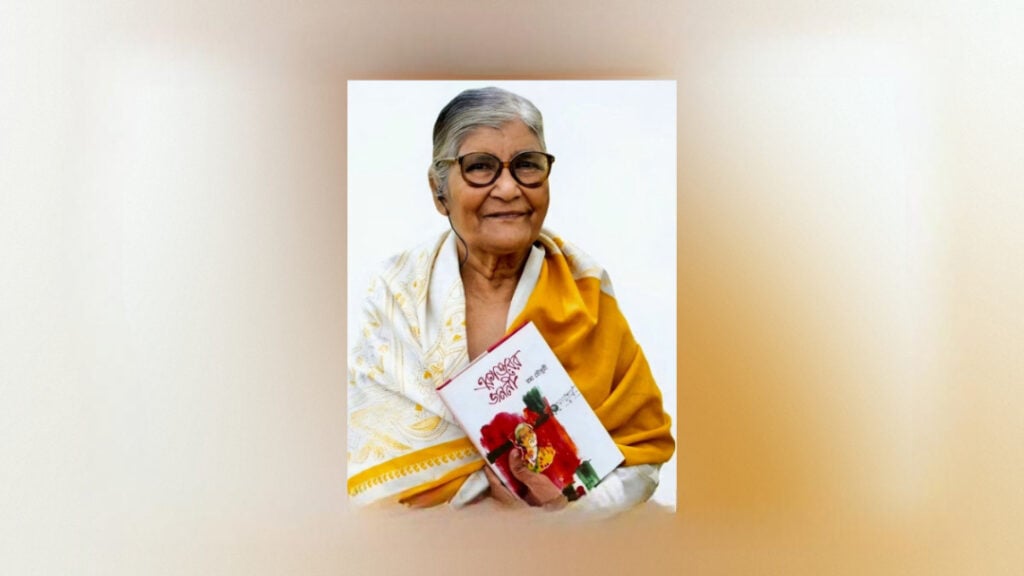
Rama Chowdhury, a writer and a survivor of sexual violence during Bangladesh’s Liberation War, remains one of the most poignant figures in the country’s history. Her life was marked by extraordinary courage, profound personal loss, poverty and an unwavering commitment to preserving the memories of 1971. Known as the author of Ekattorer Janani (Mother of 1971), she transformed her painful experiences into a powerful literary testimony, giving voice to the suffering of women and families during and after the war.
Born on 14 October 1941 in Popadia village, Boalkhali, in Chattogram, Chowdhury was a gifted student who pursued higher education at a time when opportunities for women were considerably more limited. She earned a master’s degree in Bengali language and literature from the University of Dhaka in 1961. A year later, she began her professional career as headteacher of Cox’s Bazar Girls’ High School. Over the following years, she served as headteacher at several secondary schools, holding the position for a total of 16 years.
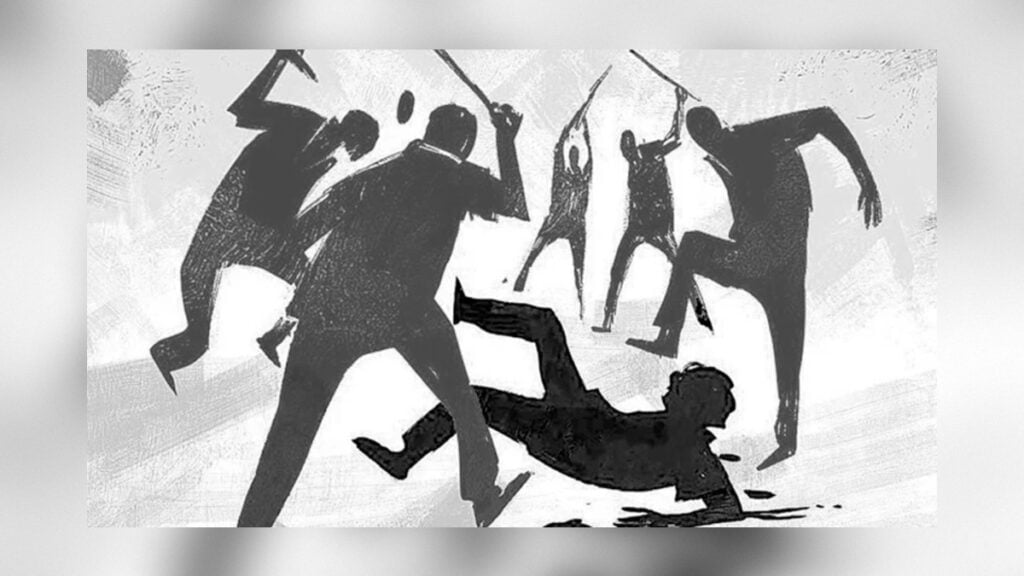
Her promising career and ordinary family life were shattered by the Liberation War in 1971. As Pakistani forces carried out widespread killings, destruction and sexual violence across the country, Chowdhury became one of the women whose lives were irrevocably changed by the atrocities.
The horrors of war and a woman’s courage
At dawn on 13 May 1971, Pakistani soldiers subjected Chowdhury to sexual violence at her own home. In an attempt to escape them, she sought refuge in a pond. Her ordeal did not end there. Her house and possessions were subsequently set on fire with gunpowder, leaving her without the security of a home or the resources needed to rebuild her life.
At the time, she was the mother of three young sons and lived with her elderly mother. With their home destroyed, she spent the remaining eight months of the war struggling to find shelter for herself, her children and her mother. The constant threat of violence, uncertainty over food and shelter, and fear for her children’s safety turned each day into a fight for survival.
Yet the experiences that might have silenced her became the foundation of her later literary work. Rather than allowing her suffering to disappear into private memory, she eventually documented it through her writing.
Her autobiographical book, Ekattorer Janani, stands as a deeply personal account of the Liberation War and its devastating consequences, particularly the violence inflicted on women. The work offers a perspective that conventional accounts of military operations and political developments can overlook: the experiences of ordinary people whose lives were destroyed by the conflict.
Independence brought no end to her suffering
Bangladesh achieved victory on 16 December 1971, ending months of war and paving the way for an independent nation. For Chowdhury, however, the arrival of freedom did not bring the peace she had hoped for. The physical and emotional wounds of the war remained, while further personal tragedies awaited her.
Her son Sagar began suffering from breathing difficulties on the night of 15 December, just before the country’s victory. On the night of 20 December, the child died.
In Ekattorer Janani, on page 211, Chowdhury recalled the devastating moment when she realised that her son was no longer moving. Describing the scene under the light of a hurricane lantern, she wrote:
“ঘরে আলো জ্বলছিল হারিকেনের। সেই আলোয় সাগরকে দেখে ছটফট করে উঠি। দেখি তার নড়াচড়া নেই, সোজা চিৎ হয়ে শুয়ে আছে সে, নড়চড় নেই।”
The passage captures the unbearable shock of a mother confronted with the death of her child. Her elderly mother’s anguished cry, expressing that her beloved child was gone, further conveys the grief that engulfed the family.
The tragedy did not end with Sagar’s death. Her son Togar subsequently suffered from a similar illness. On 15 February 1972, during a period of severe emotional distress, Chowdhury accidentally obstructed the child’s breathing while administering medicine. Togar died as well.
Losing two sons within such a short period deepened her suffering and left her struggling to cope with an almost unimaginable burden of grief.
Her personal life remained troubled in the years that followed. After the end of her first marriage, she entered a second marriage but reportedly experienced deception in that relationship too. Her third son, Tunu, was killed in a road accident at Kanungopara in Boalkhali on 16 December 1998.
The loss of all three children became one of the defining tragedies of her life. The woman who had endured the violence of war and fought to protect her family was forced to live through the deaths of the three sons she had cherished. Her story reflects the suffering that can continue long after a war has formally ended.
Writing became her means of survival
In the years following independence, Chowdhury gradually made writing her principal occupation. For nearly two decades, she relied on literary work to support herself, despite the financial difficulties she faced.
Initially, she contributed to a fortnightly publication. Instead of receiving payment for her writing, she was given 50 copies of the publication, which she sold to earn money for her daily needs.
She later began publishing her own books and selling them herself. Carrying her works from place to place, she approached readers directly, determined to sustain herself through her writing rather than depend on charity.
Her decision to sell books on the streets was an expression of both necessity and personal dignity. Poverty followed her for much of her life, but she remained determined to preserve her independence and communicate her experiences to others.
According to published accounts, she wrote 18 books, including essays, novels and poetry. Her literary works drew heavily on the Liberation War, personal bereavement, social realities and the emotional experiences of ordinary people.
Among these works, Ekattorer Janani holds particular significance. It is more than an account of her own suffering. Through her recollections, Chowdhury documented the violence endured by women during the war and the lasting psychological and social consequences of those experiences.
Her writing helped bring individual suffering into the broader national narrative. The history of Bangladesh’s independence is often recounted through political developments, military operations and the eventual victory. Her work reminds readers that the same history also encompasses shattered homes, bereaved mothers, traumatised survivors and families left to rebuild their lives amid profound loss.
A life shaped by grief and personal conviction
Several aspects of Chowdhury’s personal life reflected the depth of her grief and her determination to live according to her own convictions.
In contrast to the Hindu funeral custom of cremation, she chose to bury her children. She also went without shoes for four consecutive years after the Liberation War. Although she later wore footwear occasionally following requests from people close to her, she abandoned it again after Tunu’s death in 1998.
Accounts of her life state that she remained barefoot during the final 15 years of her life.
These decisions were deeply personal and formed part of the way she expressed her sorrow and individuality. They also became closely associated with her public image. Her life cannot be understood solely through these outward practices, however; they must be considered alongside the profound emotional pain and repeated bereavements she endured.
Chowdhury did not wish to live by seeking sympathy. Instead, she continued to carry her books to readers, sharing her experiences and preserving memories that she believed should not be forgotten. Her circumstances were often difficult, but her commitment to self-respect remained central to her identity.
Her determination to continue writing despite hardship demonstrated a form of resilience that was neither loud nor theatrical. It was expressed through the daily effort to survive, the persistence to keep working and the refusal to allow personal tragedy to erase her voice.
Ekattorer Janani: A testimony beyond one life
Chowdhury’s life illustrates why the history of Bangladesh’s independence cannot be separated from the experiences of women who endured violence during the war. The birth of an independent country brought hope to millions, but it did not immediately end the suffering of those whose lives had been devastated by the conflict.
Women subjected to sexual violence often faced additional social and emotional burdens in the aftermath of war. Their experiences were not always adequately represented in public narratives, while many survivors struggled with trauma, isolation and the challenge of rebuilding their lives.
Chowdhury’s willingness to write about her experiences gave these realities a lasting place in the country’s collective memory. By recording her suffering, she helped preserve a personal account of the war that could be read and understood by generations who had not experienced it themselves.
Her book also demonstrates the importance of personal testimony in documenting history. Official accounts can establish dates, military movements and political decisions, but the testimony of survivors reveals how those events affected individual lives. Through her writing, Chowdhury brought the human consequences of the Liberation War into focus.
Her contribution was not limited to recounting the past. She also embodied the difficult struggle to rebuild a life after devastating loss. Her experiences as a survivor, mother and writer reveal the complicated relationship between remembrance, grief and resilience.
For this reason, she remains an important figure in the cultural memory of Bangladesh. Her life represents both the suffering endured by women during the Liberation War and the determination of those who sought to ensure that their experiences would not be forgotten.
A legacy that continues to speak
Rama Chowdhury died on 3 September 2018 while receiving treatment at Chattogram Medical College Hospital. Her death brought an end to a life marked by extraordinary hardship, but it did not silence the testimony she had left behind.
Her writings continue to offer insight into the experiences of a woman whose personal tragedies were inseparable from the history of her country. Her story serves as a reminder that national independence, however momentous, does not automatically heal the wounds of those who suffer during conflict.
On the occasion of her birth anniversary, Chowdhury deserves to be remembered with deep respect. She endured sexual violence during the Liberation War, lost her home, mourned the deaths of all three of her sons and struggled with poverty for much of her life. Yet she continued to write, turning her experiences into a record of suffering, courage and determination.
Her life was marked by sorrow, but it should not be remembered through tragedy alone. She was an educated woman who built a career in teaching, a writer who preserved painful memories and an individual who remained committed to her own principles despite severe adversity.
Rama Chowdhury will continue to be remembered as the Mother of 1971 — a survivor of wartime atrocities, a bereaved mother and a courageous writer whose words gave lasting expression to the human cost of Bangladesh’s struggle for independence.
Her story belongs not only to the history of the Liberation War but also to the wider history of women who have endured violence and fought to reclaim their voices. Through Ekattorer Janani and her other writings, she ensured that the suffering she witnessed and experienced would remain part of the national consciousness.
On her birth anniversary, the nation remembers Rama Chowdhury with profound respect and humility. Her life stands as a solemn testament to the endurance of the human spirit and the enduring power of words to preserve the truth of history.