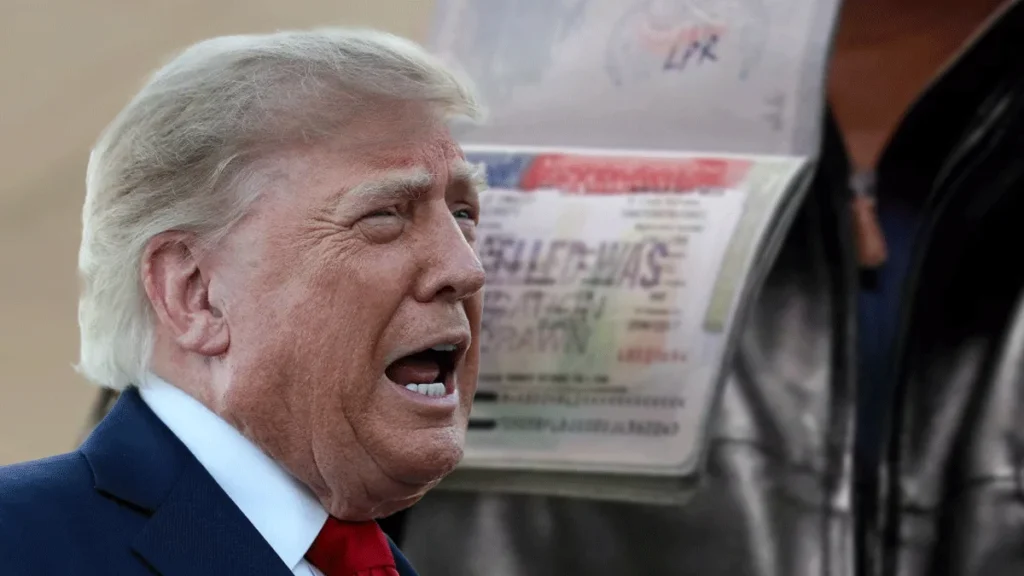
The United States Department of State announced on Tuesday, 20 October, that the Trump administration has revoked more than 300,000 visas since the president assumed his second term in office in January 2025.
The figure reflects an extraordinary acceleration in visa cancellations in recent weeks as part of a sweeping, hardline immigration crackdown. Just two months earlier, an official update issued by the State Department on 10 August placed the number of revoked visas at over 175,000. The latest disclosure demonstrates that officials cancelled at least 125,000 additional visas in approximately ten weeks, highlighting the unprecedented speed and scale of enforcement.
State Department Spokesperson Tommy Pigott reaffirmed the administration’s stance, asserting that the US maintains a zero-tolerance policy towards foreign nationals who violate domestic laws, engage in immigration fraud, or pose threats to national security. However, civil rights advocates and immigration analysts point out that the enforcement drive extends far beyond traditional border control, impacting legal visa holders, political protesters, foreign students, and prospective migrants.
According to administration officials, law enforcement records and criminal infractions account for a substantial portion of the cancellations. In its August report, the State Department listed assault, driving under the influence (DUI), theft, and narcotics offences as primary grounds for visa revocations. Federal agencies argue that holding temporary visa holders strictly accountable for criminal conduct is essential for protecting public safety.
Simultaneously, the administration has expanded its definition of national security threats to include political expression and online discourse. Among the most controversial aspects of the policy is the targeting of foreign nationals who participated in pro-Palestinian demonstrations protesting military actions in Gaza. Authorities have also cancelled visas over digital communications; several foreign citizens lost their visas after making social media comments regarding the killing of conservative political commentator Charlie Kirk, with news reports confirming at least six such instances.
Enhanced digital surveillance now forms a core pillar of the vetting process. State Department screeners and immigration officials routinely monitor the social media accounts of visa applicants and active visa holders. Human rights organisations contend that using online speech and political assembly as grounds for revocation severely undermines fundamental freedoms of expression and creates a chilling effect among international visitors and students.
Efforts to eradicate fraud within the immigration system have similarly intensified. Federal agencies maintain that holding a US visa is a conditional privilege rather than an entitlement, subject to immediate termination if terms are breached. Critics, however, argue that isolated instances of fraud are being leveraged to justify disproportionate scrutiny over entire immigrant populations, pointing to heightened surveillance targeting Somali-American communities in Minnesota as evidence of systemic overreach.
The administration’s aggressive approach has also reshaped legal immigration channels. Fulfilling key promises from the 2024 presidential campaign, officials have implemented stringent vetting protocols alongside substantial fee hikes on specific work visa categories, creating formidable hurdles for skilled professionals and students seeking legitimate entry.
While the State Department frames the mass revocations as a necessary measure to uphold rule of law and safeguard national security, legal experts note that the published statistics lack granular breakdowns detailing how many cancellations stemmed from proven criminal convictions versus administrative flags or ideological screening. As a result, the policy continues to draw sharp criticism from advocacy groups warning of diminished due process and potential racial profiling.