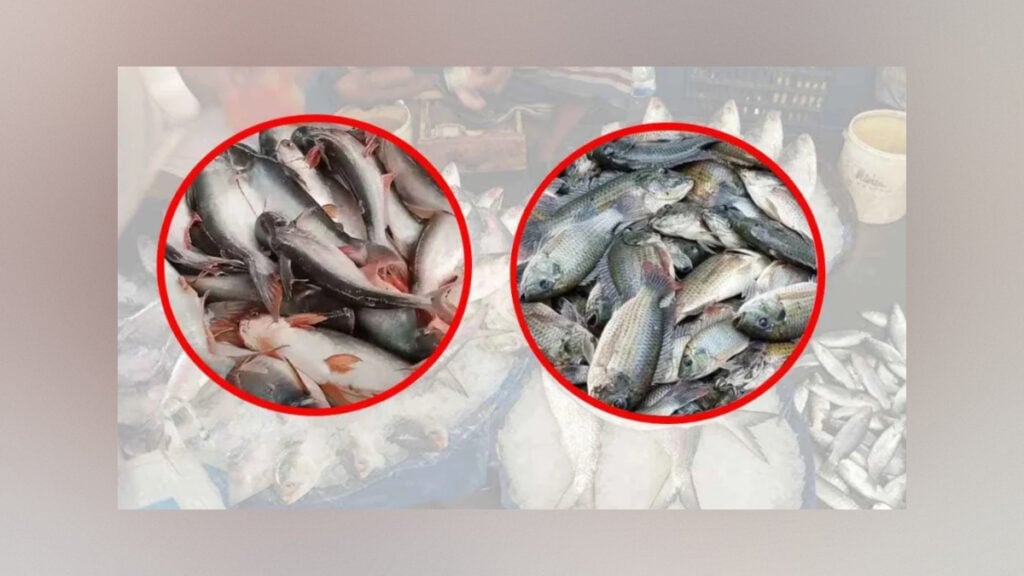
Pangasius and tilapia have long been among the most affordable sources of animal protein for low-income and middle-class households in Bangladesh. For families unable to buy more expensive varieties such as rohu and catla regularly, these farmed fish offered a practical way to keep fish on the daily menu. That option is becoming increasingly difficult to sustain. With prices reaching Tk 250 per kilogram in markets across Dhaka, even these once-budget-friendly varieties are putting pressure on household food budgets.
A survey of several fresh markets in the capital found pangasius selling for Tk 180 to Tk 220 per kilogram, depending on its size. Fish weighing between two and three kilograms were priced at Tk 220 to Tk 250 per kilogram, while larger specimens cost even more. Just a few years ago, small and medium-sized pangasius could be bought for between Tk 120 and Tk 150 per kilogram.
Tilapia has also become significantly more expensive. Medium-sized fish are selling for around Tk 220 per kilogram, while larger specimens weighing more than one kilogram cost between Tk 240 and Tk 250. In 2022, prices started at approximately Tk 140 per kilogram. Compared with that level, current prices represent an increase of around 25 to 57 per cent, depending on the size and prevailing market rate.
The narrowing price difference between medium-sized tilapia and larger pangasius has further reduced the choices available to budget-conscious consumers. For families already struggling to manage spending on essential food items, buying enough fish for regular meals is becoming an increasing challenge.
High Production Has Not Kept Prices Down
Farmed freshwater fish account for a substantial share of Bangladesh’s fish supply. Commercial aquaculture is particularly prominent in districts including Mymensingh, Jashore, Bogura, Rajshahi and Cumilla.
According to the Department of Fisheries, eight species are commonly cultivated in commercial ponds: pangasius, tilapia, rohu, catla, silver carp, mrigal, common carp and koi. Pangasius and tilapia are among the leading species in terms of production.
In the 2023–24 financial year, Bangladesh produced 405,000 tonnes of pangasius and 354,000 tonnes of tilapia. Their combined output reached 759,000 tonnes, highlighting the importance of these two species to the country’s aquaculture industry.
Despite this substantial production, consumers are not enjoying the affordability that might be expected from widely cultivated fish. Production volume alone does not determine retail prices. Feed, labour, transport and other distribution expenses all contribute to the final cost paid by consumers.
Fish farmers must manage the cost of feed and other inputs throughout the production cycle. Once harvested, fish must be transported from farms to wholesale markets and then distributed to retailers. Rising expenses at any stage can increase the price at which fish is sold to the public.
For low-income households, the gap between high production and affordable retail prices is particularly concerning. Even when supplies are substantial, consumers may struggle to buy fish if the costs of bringing it to market remain high.
Rising Prices Force Consumers to Buy Less
The impact of higher prices is already evident in retail sales. Aminul Islam, a fish seller at Badda Market in Dhaka, said customers continued to visit the market, but the quantities they purchased had fallen by almost half.
According to him, customers who previously bought one or two kilograms of fish were increasingly limiting their purchases to half a kilogram or one kilogram.
The change is creating difficulties for retailers as well. Higher wholesale prices leave sellers with limited room to keep fish affordable, while customers respond by buying smaller quantities. As a result, the volume of sales can fall even as prices rise, making it harder for traders to maintain their profits.
For families with limited incomes, reducing the quantity of fish purchased is often one of the quickest ways to manage food expenditure. Yet repeated reductions in consumption can affect dietary diversity, particularly in households where fish has traditionally been a regular source of animal protein.
The pressure is not confined to the fish counter. Households must also allocate money for rice, pulses, cooking oil, vegetables and other essentials. When several food items compete for the same limited budget, more expensive fish can become an occasional purchase rather than a regular part of family meals.
Feed and Transport Costs Add to the Burden
Abul Kalam, a wholesale fish trader at Karwan Bazar, identified rising fish-feed prices as a major factor behind the increase in retail costs. Higher feed expenses have pushed up production costs for farmers, putting pressure on the prices at which they sell their harvests.
Transport expenses have also risen sharply, he said. The cost of hiring a truck, which previously stood at Tk 15,000 to Tk 16,000, has now exceeded Tk 20,000. Additional expenses at various points along transport routes, including payments to intermediaries described as line operators, add to the overall burden.
Fish passes through several stages before reaching consumers. It is transported from farms to wholesale markets and then distributed to retailers, with costs accumulating along the way. Fuel, vehicle hire, handling and other distribution expenses can all influence the final retail price.
Because fish is perishable, prompt transportation and appropriate handling are essential. Disruptions or higher costs in the distribution process can create additional pressure on traders and consumers alike.
The accounts provided by market participants point to feed and transport expenses as important contributors to higher prices. However, establishing the precise contribution of each factor would require a detailed assessment of production costs, wholesale transactions, transport charges and retail margins.
Affordable Fish Becomes a Nutritional Concern
The rising cost of pangasius and tilapia has implications beyond household spending. For many families, these fish are among the most accessible sources of animal protein. If prices remain high, lower-income consumers may reduce their fish consumption or turn to other foods that fit within their budgets.
Experts at the Bangladesh Fisheries Research Institute have warned that sustained price increases for these widely available fish could reduce consumption among ordinary people and create longer-term challenges for national nutritional security.
They have called for measures to reduce fish-feed costs and for effective research into affordable alternative feeds. Developing less expensive feed without compromising nutritional quality could help farmers manage production expenses, although the benefits would depend on its suitability, availability and practical use in commercial aquaculture.
Improving production efficiency and distribution could also help ease the pressure. Reviewing expenses at different stages of the supply chain would make it easier to identify where costs are rising and whether unnecessary charges can be reduced.
The challenge is to ensure that Bangladesh’s substantial aquaculture output translates into affordable food for consumers. Increasing production is important, but it may not be enough if the cost of farming, transporting and selling fish continues to rise.
Pangasius and tilapia once offered families a relatively inexpensive way to include fish in their regular meals. Their rising prices now threaten that role. Without effective steps to address production and distribution costs, one of the most accessible sources of animal protein for lower-income households could become increasingly difficult to afford, placing additional pressure on both household budgets and the country’s wider nutritional security.