US President Donald Trump has signalled that Washington could take fresh military action against Iran as early as Sunday, 25 October, while leaving open the possibility of reaching a new agreement with Tehran. His remarks come amid heightened regional tensions, concerns over the security of American diplomatic personnel and continuing disputes over the strategically important Strait of Hormuz.
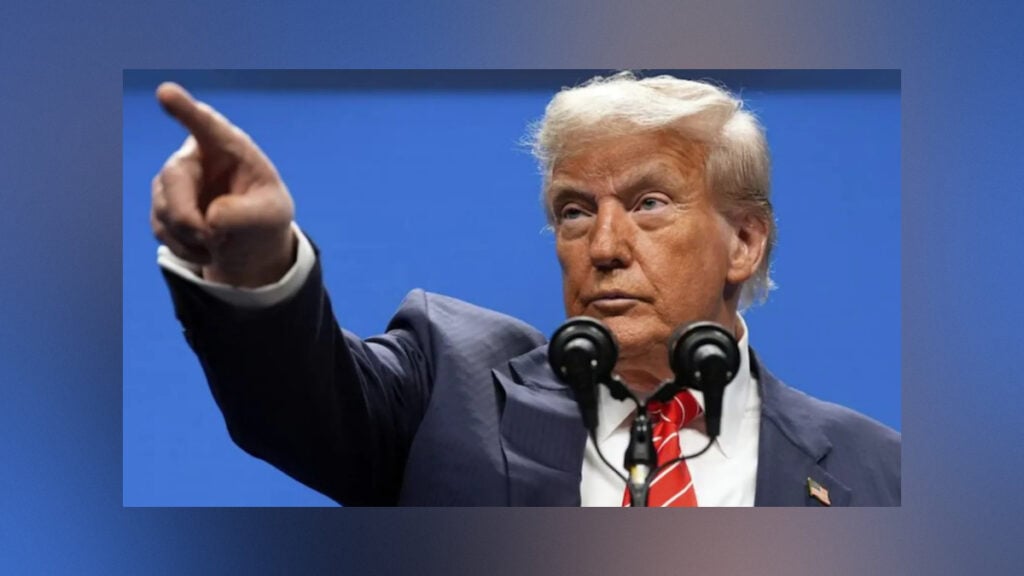
Speaking to journalists in Florida on Saturday, 24 October, Trump suggested that a decision on Iran could come within hours. However, he also indicated that military action was not the only option available to his administration.
“There’s also a possibility that we’ll have a great, beautiful deal,” Trump said, according to the remarks reported in the original account. He claimed that Iran wanted an agreement but questioned whether the country would honour its commitments if a deal were reached.
Trump also defended his administration’s military strategy in the Middle East, claiming that US naval and air forces had conducted successful operations against Iran. He asserted that most of Iran’s warplanes and around 259 vessels had been destroyed or sunk. The president also said Iran was facing record inflation.
These claims could not be independently verified from the information available in the original report. The precise extent of the reported military damage and the economic situation described by Trump therefore remain matters requiring independent confirmation.
Tehran Rejects Report of a Hormuz Proposal
Meanwhile, Iran has rejected reports that it offered to reopen the strategically significant Strait of Hormuz in exchange for Washington lifting its naval blockade.
According to Iran’s Tasnim news agency, Tehran denied sending any such proposal to the United States through Pakistan. The denial casts further uncertainty over reports of possible diplomatic efforts to ease tensions between the two countries.
The Strait of Hormuz is one of the world’s most important maritime energy routes, connecting the Persian Gulf with the Gulf of Oman. Large volumes of crude oil and other energy supplies pass through the narrow waterway on their way to international markets. Any disruption to shipping in the area could affect energy prices, trade flows and the wider global economy.
The waterway’s strategic importance means that any confrontation involving Iran and the United States could have consequences well beyond the Middle East. However, the latest report does not establish whether the two sides are engaged in direct negotiations over the strait.
Washington Raises Concerns Over Diplomatic Security
Alongside the possibility of further military action, Washington is facing concerns about the safety of its diplomats and officials stationed across the Middle East and other locations.
Sources within US intelligence agencies have reportedly indicated that Tehran has significantly increased efforts to target American diplomatic personnel and officials. Some alleged attack plans were said to have reached an advanced stage, prompting the US State Department to decide to reduce staffing levels at several American embassies in the Middle East.
The reported measures reflect concerns that the confrontation could extend beyond direct military operations to diplomatic facilities and personnel. Reducing staffing at vulnerable locations is one way governments seek to limit exposure when intelligence assessments indicate an elevated security threat.
US officials are also monitoring the possibility of intensified attacks by Yemen’s Houthi rebels, who are supported by Iran. The group has previously been involved in regional hostilities and attacks affecting maritime security, making its potential involvement another concern for Washington.
Any escalation involving the Houthis could add to existing security pressures along key shipping routes and increase the risk of a wider regional confrontation. Nevertheless, the available report does not provide details of specific planned attacks or establish whether an escalation is imminent.
Military Pressure and Diplomacy Remain in Play
Trump’s latest remarks highlight the uncertainty surrounding Washington’s next move. His reference to possible action by Sunday suggests that the administration is considering a short timeframe, while his comments about a potential agreement indicate that negotiations have not been ruled out.
The central questions are whether the two countries can establish terms acceptable to both sides and whether any agreement would be supported by credible assurances of compliance. Tehran’s rejection of the reported proposal concerning the Strait of Hormuz adds another complication to an already tense situation.
For regional governments, the immediate concerns include the security of diplomatic missions, the stability of maritime trade and the possibility that hostilities could spread to additional fronts. International energy markets could also face renewed uncertainty if the Strait of Hormuz becomes a focal point of military confrontation.
As of the statements cited in the report, no confirmed decision to launch a new US attack had been established. Whether Washington proceeds with military action or pursues a diplomatic settlement remains uncertain, leaving the region facing the prospect of further escalation alongside the possibility of a negotiated outcome.