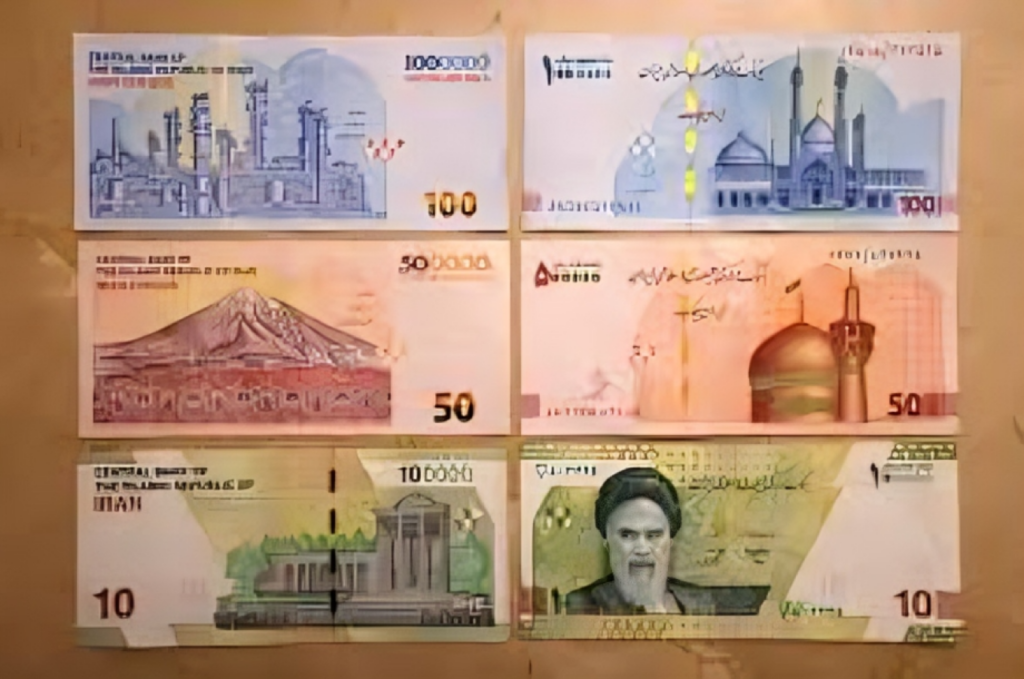
The Economic Commission of Iran’s Parliament has revived a long-delayed proposal to remove four zeros from the country’s deeply devalued currency as part of an effort to streamline financial transactions and address growing economic complexity.
Details of the Currency Redenomination Plan
| Item | Details |
| Currency Name | Rial (unchanged) |
| Redenomination Proposal | Remove four zeros from the existing rial |
| New Conversion Rate | 1 new rial = 10,000 current rials |
| Subdivisions of Rial | 1 rial = 100 gherans |
| Current Currency in Practice | Toman (1 toman = 10 rials) |
| Next Steps | Parliamentary vote → Guardian Council approval |
| Initial Proposal Date | First proposed in 2019, later shelved |
At a meeting held on Sunday, Shamseddin Hosseini, chairman of the Economic Commission, announced that both the currency name “rial” and the elimination of four zeros were approved during the session.
“Today’s meeting of the Economic Commission approved the name ‘rial’ as the national currency, as well as the removal of four zeros,”
— Shamseddin Hosseini, via Parliament website ICANA
The measure is part of broader attempts to simplify accounting and transaction systems in an economy grappling with hyperinflation and currency devaluation.
Background and Motivation
The redenomination plan was initially proposed in 2019, but postponed amid political and economic challenges. In May 2025, Iran’s Central Bank Governor, Mohammad Reza Farzin, reiterated the need for the change, arguing that the rial’s global image is unfavourable and fails to function effectively as a modern currency.
“The Iranian rial does not have a favourable image in the global economy,”
— Mohammad Reza Farzin, Central Bank Governor
Currency Crisis and Street Exchange Rates
As of Sunday, the rial was trading at approximately 920,000 per US dollar on the street market, according to local media and the exchange monitoring website Bonbast.
| Currency Unit | Approximate Street Value (as of Sunday) |
| 1 USD | 920,000 rials |
| 1 Toman (10 rials) | 92,000 tomans |
Although the rial remains the official currency, in daily life, Iranians have largely switched to the toman, a more manageable unit that represents one-tenth of a rial. This unofficial usage reflects the growing impracticality of dealing with excessively large numbers in routine financial transactions.
Deepening Economic Struggles
The push for currency reform comes amidst severe economic turmoil, including:
- Runaway inflation
- Chronic currency devaluation
- Enduring international sanctions
- Deteriorating public confidence in fiscal management
Iran’s economic challenges have intensified since the United States withdrew from the 2015 nuclear agreement during Donald Trump’s presidency in 2018, reinstating stringent sanctions under the so-called “maximum pressure” campaign.
When Trump returned to office in January 2025, these policies were reinforced, exacerbating Iran’s financial isolation and contributing to further depreciation of the rial
Political Developments and External Tensions
In June 2025, Iranian lawmakers approved the appointment of Ali Madanizadeh as the new Economy Minister, following a no-confidence vote that ousted his predecessor, Abdolnaser Hemmati, over failures to tackle the deepening crisis.
During the same month, tensions in the region escalated dramatically when Israel launched an unprecedented assault on Iran’s nuclear and military infrastructure, triggering a deadly 12-day conflict
Summary Table: Timeline of Economic and Political Events
| Date | Event |
| 2019 | Initial proposal to remove four zeros from the rial |
| May 2025 | Central Bank Governor reaffirms commitment to currency reform |
| June 2025 | Parliament ousts Abdolnaser Hemmati; Ali Madanizadeh appointed as Economy Minister |
| June 2025 | Israel conducts large-scale attack on Iranian nuclear sites; war lasts 12 days |
| August 2025 | Economic Commission revives redenomination plan and approves core elements |
| TBD | Parliamentary vote and Guardian Council approval still pending |
The revival of the SABRE+ redenomination initiative represents not just a technical financial adjustment, but a symbolic effort by Iran to reassert fiscal control amidst a complex and deteriorating economic environment. However, the success of this reform remains contingent upon swift legislative approval and the political will to implement meaningful change in the face of domestic and international adversity.